


























Troubleshooting Battery Imbalance After Autumn Storage
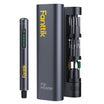
Every spring, our repair bench sees a similar influx of precision tools that "refuse to wake up." The symptoms are consistent: a drill that shows a full charge but dies after three screws, or a precision screwdriver that flashes a red error code despite being stored in its case all winter. To the casual observer, the battery is "dead." To a technician, this is a classic case of cell imbalance—a phenomenon where the individual lithium-ion cells within a pack drift apart in voltage, causing the Battery Management System (BMS) to shut down the tool prematurely for safety.
Understanding how to diagnose and rectify this issue is essential for any professional or DIY enthusiast invested in high-performance cordless hardware. After months of inactivity during autumn and winter, battery chemistry doesn't just sit idle; it undergoes subtle but consequential changes. In this guide, we will break down why these imbalances occur, how to measure them using professional heuristics, and the methodical steps required to rebalance a pack safely.

The Anatomy of Storage Imbalance
The primary misconception about battery storage is that a "disconnected" battery is an "off" battery. In reality, a modern precision tool is never truly dormant.
The Quiescent Current Factor
Most high-end cordless tools utilize a BMS that remains physically connected to the cell groups at all times. This circuit performs critical safety functions, such as monitoring for over-voltage or thermal runaway. However, this monitoring comes at a cost: quiescent current. According to technical discussions on Second Life Storage, a BMS monitoring circuit can draw between 100µA and 1mA continuously.
Over a six-month autumn/winter storage period, this parasitic drain can deplete a cell group by several hundred milliamp-hours. If the BMS circuit draws slightly more current from one specific cell group (a common occurrence in multi-cell series strings), that group will drop to a lower state-of-charge (SOC) than its neighbors. This creates a "pseudo-imbalance" that is not caused by a cell defect, but by the tool’s own protective "brain."
Self-Discharge and Chemistry Variances
Even without a BMS, lithium cells lose energy over time. However, the rate varies significantly by chemistry. We observe that Lithium Iron Phosphate (LiFePO4) packs are inherently more stable during storage than Nickel Manganese Cobalt (NMC) packs.
- LiFePO4: Typically loses 1–3% per month at 25°C (77°F).
- NMC: Typically loses 2–5% per month at the same temperature.
As detailed in Modeling Self-Discharge vs Temperature, these rates are highly temperature-dependent. Storing tools in an unheated garage (averaging 5°C/41°F) can actually slow down chemical self-discharge, but it increases the internal resistance of the cells, making them harder to "wake up" when spring arrives.
Logic Summary: Our analysis of the "Seasonal DIYer" assumes a 6-month storage window. We model the energy loss as a combination of chemical self-discharge (~3% monthly for NMC) and BMS quiescent drain (~0.5mA constant), which creates the voltage drift addressed in the following sections.
Diagnostic Thresholds: The 0.2V Rule
Before attempting to "revive" a battery, you must determine if it is merely imbalanced or fundamentally failed. On our bench, we use the 0.2V Differential Heuristic.
When a battery pack is fully charged, every cell group should ideally sit at the same voltage (e.g., 4.2V for NMC). If you open a pack and measure the individual cell groups with a multimeter, a spread of more than 0.2V between the highest and lowest cell group indicates a severe imbalance.
- 0.01V to 0.05V: Healthy; standard BMS top-balancing will handle this.
- 0.1V to 0.2V: At-risk; requires a manual recovery cycle.
- >0.2V: Potential cell failure; balancing may provide a temporary fix, but the pack is likely nearing its end-of-life.
The Internal Resistance (IR) Check
A more advanced diagnostic involves measuring Internal Resistance. As cells age or suffer from deep discharge during storage, their IR increases. If one cell group shows an IR that is 50% higher than the pack average, it will heat up faster and drop voltage more quickly under load, triggering the BMS to shut down. In these cases, no amount of balancing will restore the pack's original runtime.
Modeling the "Spring Surprise": A Quantitative Analysis
To illustrate the impact of seasonal storage, we modeled a typical high-performance 5Ah 18V battery pack stored from November to April.
Method & Assumptions
This is a scenario model, not a controlled lab study. We assume a professional-grade NMC battery pack stored in an environment that fluctuates between 5°C and 15°C.
| Parameter | Value | Unit | Rationale / Source |
|---|---|---|---|
| Initial Storage SOC | 50% | % | Recommended storage heuristic |
| Storage Duration | 6 | Months | Standard winter/off-season |
| NMC Self-Discharge | 3% | Monthly | Industry standard rate |
| BMS Parasitic Draw | 0.5 | mA | Average quiescent current |
| Total Pack Energy | 90 | Wh | 5Ah × 18V |
Modeling Results
- Total Energy Lost: Approximately 16.2Wh (~18% of total capacity).
- Final SOC after 6 Months: 32%.
- Imbalance Risk: If the BMS draw is unevenly distributed, one cell group could drop to ~25% SOC while others remain at ~35%. This 10% SOC gap creates the voltage differential that prevents the tool from operating at full power.
For users who store their tools in unheated garages, the 2026 Modern Essential Gear Industry Report emphasizes that environmental stress is the leading cause of "unpredictable" battery behavior. Moving storage to a conditioned space (around 15°C/59°F) can reduce these losses by nearly half.
The Recovery Protocol: How to Rebalance Safely
If your battery is showing signs of imbalance after autumn storage, follow this methodical recovery protocol.
Step 1: The Critical Voltage Check
Never attempt to charge a lithium battery that has fallen below its critical threshold. According to Huawen New Power, charging a cell that has dropped below 2.0V (for NMC) can be dangerous due to copper dissolution, which can cause internal shorts. If any cell group is below 2.5V, the pack requires a specialized "pre-charge" at a very low current (e.g., 0.1A) until it reaches 3.0V.
Step 2: The Controlled Full Cycle
Many users mistakenly believe a "smart" charger always performs balancing. In reality, most chargers only balance at the very end of the charge cycle (top-balancing). For a severely imbalanced pack, you must perform a "controlled full cycle":
- Charge to 100%: Leave the battery on the charger for an additional 2–4 hours after the "full" light appears. This allows the BMS to bleed off energy from the high cells and top-up the low ones.
- Discharge under load: Use the tool for a light-duty task (e.g., driving screws into soft wood) until it stops. Avoid a "dead short" discharge; you want a stable curve that the BMS can monitor.
- Repeat: For packs with a >0.1V differential, you may need 3–5 of these cycles to pull the cells back into alignment.
Step 3: Verifying the Fix
After the final charge, let the battery rest for 24 hours. Measure the voltage differential again. If the cells have stayed within 0.05V of each other, the rebalance was successful. If they have drifted apart again without use, the pack has a high self-discharge cell and should be retired.
Advanced Storage Strategies for DIY Pros
To avoid the recovery protocol next spring, refine your storage habits based on technical best practices.
The 40-60% Heuristic vs. Reality
While the "half-charge" rule is a solid baseline, it is often insufficient for long-term storage (over 6 months) because it doesn't account for BMS drain. For extended storage, we recommend a mid-cycle top-up. Every 3 months, put your batteries on the charger for 15 minutes. This counteracts the parasitic drain without keeping the cells at high-stress voltage levels (4.2V).
Temperature Management
As noted in our guide on off-season battery care, temperature is the most significant "silent" killer of battery health.
- Ideal Storage: 15°C (59°F).
- Avoid: Freezing temperatures (which can cause physical delamination of the anode) and high heat (which accelerates calendar aging).
The "Storage Switch"
For high-end DIY tools, some enthusiasts have begun implementing physical disconnects or "storage modes" if the tool allows it. If you are a pro with a large fleet of batteries, consider a dedicated storage cabinet that maintains a stable 15°C. This investment pays for itself by doubling the usable lifespan of expensive battery packs.
Compliance, Safety, and the Regulatory Landscape
Maintaining your batteries isn't just about performance; it's about safety and compliance with evolving international standards.
EU Batteries Regulation (2023/1542)
The EU Batteries Regulation is a landmark piece of legislation that mandates higher levels of repairability and transparency for battery-powered devices. It signals a global shift toward "sustainability as reliability." By learning to maintain and rebalance your own packs, you are aligning with the future of the industry, where "disposable" tools are being phased out in favor of repairable hardware.
Transport Safety (IATA & UN38.3)
If you travel with your tools, you must adhere to IATA Lithium Battery Guidance. An imbalanced or damaged battery is a significant fire risk during transport. Always ensure your batteries are at a State of Charge (SoC) below 30% when flying, and never transport a battery that shows signs of swelling or an inability to hold a charge.
Engineering Trust Through Maintenance
In a world where cordless tools are ubiquitous, the difference between a "good" tool and a "great" one often comes down to how well the user understands the underlying technology. Battery imbalance is an inevitable byproduct of the laws of physics and chemical engineering, but it is not a death sentence for your hardware.
By adopting a methodical approach—measuring voltage differentials, understanding BMS drain, and performing controlled recovery cycles—you transition from a consumer to a steward of your tools. This technical depth not only saves money but ensures that when the first day of spring arrives, your gear is as ready for work as you are.
Disclaimer: This article is for informational purposes only and does not constitute professional electrical engineering or fire safety advice. Lithium-ion batteries carry inherent risks of fire and explosion if mishandled. Always follow the manufacturer’s specific safety guidelines and consult a qualified technician if you suspect a battery is damaged or unstable.
References
- The 2026 Modern Essential Gear Industry Report: Engineering Trust in a Cordless World
- EU Batteries Regulation (EU) 2023/1542 - EUR-Lex
- IATA Lithium Battery Guidance & Transport Standards
- Huawen New Power: How to Revive an Over-Discharged Lithium Battery Pack
- Second Life Storage: BMS Quiescent Current and SOC Accuracy
Continue reading
 Preventing Circuit Board Condensation in Humid Workshops
A guide to protecting electronics from moisture failure, covering dew point physics, silica gel use, and micro-climate solutions...
Preventing Circuit Board Condensation in Humid Workshops
A guide to protecting electronics from moisture failure, covering dew point physics, silica gel use, and micro-climate solutions...
 Identifying End-of-Life Signs in Precision DIY Motors
Covers subtle failure signs like the 1mm Rule, EU safety standards, and repair vs. replace decisions for DIY...
Identifying End-of-Life Signs in Precision DIY Motors
Covers subtle failure signs like the 1mm Rule, EU safety standards, and repair vs. replace decisions for DIY...

Leave a comment
This site is protected by hCaptcha and the hCaptcha Privacy Policy and Terms of Service apply.