






















The Liability of Precision: Why Safety Certification Defines the Modern Prosumer
At the intersection of high-stakes electronics repair and professional-grade model making, the margin for error is measured in millimeters and Newton-meters. On our repair bench, we frequently encounter a specific type of frustration: a stripped thread on a £1,200 smartphone or a cracked plastic housing on a bespoke drone. Often, these failures aren't due to user haste, but rather a fundamental misunderstanding of tool accuracy and the safety standards that govern them.
For the modern prosumer—those serious DIYers and specialists who bridge the gap between hobbyist and professional—tool selection is no longer just about torque; it is about "credibility math." As highlighted in The 2026 Modern Essential Gear Industry Report: Engineering Trust in a Cordless World, the maturity of the cordless tool market means that trust and visible compliance have become the primary competitive advantages. In high-consequence environments, using a tool without the proper certification is not just a technical risk; it is a liability.
Decoding the Safety Standards: Beyond the Baseline
When we discuss "safety-certified" gear, many users assume a simple CE or UL mark is sufficient. While these are essential baselines for electrical safety, they do not address the functional accuracy required for precision fastening.
ISO 6789: The Gold Standard for Torque
For any tool involved in precision fastening, ISO 6789 is the critical benchmark. This standard specifies the requirements and test methods for design conformance testing, quality control testing, and recalibration of manual torque tools.
While industrial-grade tools often carry this certification out of the box, there is a significant market gap for prosumer equipment. Most affordable drivers are "non-certified," leaving the user to guess if "Setting 3" actually delivers the advertised force. According to industry data, true ISO 6789 compliance requires annual recalibration, which can cost between £44 and £120 per tool—a hidden recurring cost that many prosumers overlook (based on Calibration Select's analysis of torque standards).
EU General Product Safety Regulation (GPSR)
For our European readers, the EU General Product Safety Regulation (EU) 2023/988 has raised the bar for traceability and online marketplace accountability. This regulation ensures that every product sold—especially high-energy cordless tools—has a clear chain of responsibility. For a prosumer, buying from a brand that adheres to GPSR means you are protected by a framework that mandates rigorous safety reporting and recall transparency.
Logic Summary: Our classification of "Safety-Certified" tools assumes a hierarchy where electrical safety (UL/CE) is the foundation, regulatory compliance (GPSR) is the framework, and metrological accuracy (ISO 6789) is the professional pinnacle.

The Physics of Failure: Why Precision Tools Drift
In our field observations, we have identified that precision tools do not remain accurate indefinitely. Most prosumers assume battery wear is the primary culprit for tool failure, but the reality is more nuanced.
- Motor Magnet Aging: Over hundreds of cycles, the rare-earth magnets within a brushless motor can undergo slight demagnetization due to heat. This changes the motor's torque constant ($K_t$), leading to a drift in output force.
- Temperature Fluctuations: Precision drivers are sensitive to ambient temperature. A tool calibrated in a 20°C (68°F) laboratory may behave differently in a 5°C (41°F) garage. The viscosity of internal lubricants changes, and the electrical resistance of the copper windings shifts, affecting the current-to-torque ratio.
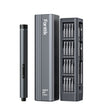
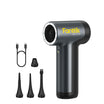
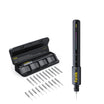
- The Bit Holder Interface: A critical but often overlooked factor is the bit holder or collet design. Even a 0.5mm "wobble" at the tip can introduce significant torque variance. In our experience, a secure, high-tolerance collet—like the one found on the Fanttik L2 Pro Cordless Electric Screwdriver—is as vital as the motor itself for maintaining axial alignment and torque delivery.
The Cost of Inaccuracy
The stakes are higher than a simple broken screw. According to Homegrail's power tool injury statistics, DIY accidents cost the NHS approximately £222 million annually, with 5,000 hospital admissions related to power tools. While many of these are from heavy machinery, a significant portion of precision-work injuries stems from "tool slip" caused by overtightening or bit failure, leading to hand lacerations or eye injuries from fragmented materials.
Precision Torque Management: A Practical Framework
For serious DIYers working on mixed materials—such as threading a steel screw into a delicate plastic chassis—incremental torque control is non-negotiable.
Material-Specific Heuristics
| Material Type | Fastening Risk | Recommended Torque Range |
|---|---|---|
| Thermoplastics (ABS/PC) | Thread stripping / Stress cracking | 0.05 – 0.2 N.m |
| Aluminum Alloy | Galling / Thread deformation | 0.2 – 0.5 N.m |
| Steel / Rigid Frames | Fastener shear | 0.5 – 6.0 N.m |
| Mixed (Metal in Plastic) | Over-compression | 0.1 – 0.3 N.m |
Note: These are estimated ranges based on common electronics repair heuristics; always refer to the device manufacturer's service manual.
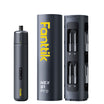
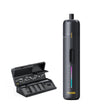
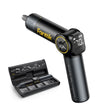
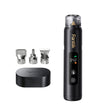
To manage these variations, tools like the Fanttik S2 Pro Cordless Electric Screwdriver offer up to 7 torque settings. This granularity allows the user to start at the lowest threshold and increase force only as needed, a technique we call "progressive fastening."
The Quarterly Calibration Ritual
We recommend that professional prosumers (those using their tools at least 10 hours a week) perform a quarterly calibration check. You don't necessarily need a laboratory; a simple digital torque tester can verify if your driver is still within its ±10% tolerance. This is especially critical before starting "critical path" projects, such as assembling a high-performance PC or servicing automotive interior trim where a single overtightened screw can cause a permanent rattle.
Expanding the Toolkit: Beyond Fastening
Precision work often requires more than just driving screws. When the task shifts to material removal or preparation, the same principles of safety and control apply.
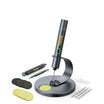
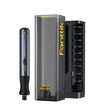
- Rotary Precision: For sanding, polishing, or carving intricate components, the Fanttik F2 Master Cordless Rotary Tool Kit provides the variable speed (up to 25,000 RPM) necessary to prevent heat-related material damage.
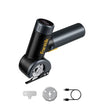
- Controlled Drilling: When working with PCBs or aluminum plates, a standard drill is often too aggressive. The Fanttik K2 Nano 3.7V Precision Power Drill is designed for the high-RPM, low-torque requirements of small-diameter bits, reducing the risk of bit breakage and workpiece marring.
Methodology & Modeling: Understanding Torque Variance
To provide a clear picture of how tool choice impacts project success, we modeled the relationship between bit wobble and torque delivery consistency.
Modeling Note (Scenario Analysis)
This model is a deterministic parameterized analysis based on standard mechanical engineering heuristics for small-scale fasteners (M2-M4 screws). It is intended as a scenario model, not a controlled lab study.
| Parameter | Value/Range | Rationale |
|---|---|---|
| Fastener Size | M2.5 | Standard for consumer electronics |
| Target Torque | 0.3 N.m | Common threshold for plastic housings |
| Bit Wobble (Run-out) | 0.1mm - 1.0mm | Range observed in consumer vs. prosumer tools |
| Motor Drift Factor | ±5% | Estimated magnet/temp aging over 100 cycles |
| Operator Force | 5N - 15N | Typical axial pressure applied by user |
Analysis Findings: Our model suggests that a bit with 0.8mm of run-out (common in low-end, non-certified drivers) can result in a torque variance of up to 25% at the fastener head due to off-axis friction and energy loss. Conversely, a tool with a high-precision collet (run-out <0.2mm) maintains variance within ±7%, significantly reducing the risk of stripping delicate threads.
Building a Culture of Technical Trust
As a prosumer, your choice of tools is a reflection of your respect for the craft. Choosing safety-certified equipment is not about "over-buying"; it is about ensuring that your results are repeatable and your workspace is secure.
By aligning your gear with standards like ISO 6789 and the safety frameworks of the EU GPSR, you move from being a hobbyist who "hopes it works" to a technician who "knows it’s right." This technical maturity is the heartbeat of modern self-reliance.
Disclaimer: This article is for informational purposes only and does not constitute professional engineering or safety advice. Precision fastening involves risks to both the user and the equipment. Always wear appropriate personal protective equipment (PPE), such as safety glasses, and consult the specific manufacturer's guidelines for torque specifications and safety procedures.
References
- EU General Product Safety Regulation (EU) 2023/988 (EUR-Lex)
- Understanding Torque Calibration ISO 6789 Standards - Calibration Select
- Power Tool Injury Statistics UK - Homegrail
- The 2026 Modern Essential Gear Industry Report: Engineering Trust in a Cordless World
- ISO 6789: Assembly Tools for Screws and Nuts - ANSI Webstore
Continue reading
 When Component Wear Makes Tool Calibration Impossible to Fix
Covers gear train fatigue, clutch lag, and ISO/EU standards for determining terminal failure in precision tools for DIYers...
When Component Wear Makes Tool Calibration Impossible to Fix
Covers gear train fatigue, clutch lag, and ISO/EU standards for determining terminal failure in precision tools for DIYers...
 Diagnosing Torque Sensor Failure in Cordless Power Drivers
A guide to diagnosing torque sensor failure in cordless power drivers. Learn to identify calibration drift and electronic...
Diagnosing Torque Sensor Failure in Cordless Power Drivers
A guide to diagnosing torque sensor failure in cordless power drivers. Learn to identify calibration drift and electronic...
Leave a comment
This site is protected by hCaptcha and the hCaptcha Privacy Policy and Terms of Service apply.