






















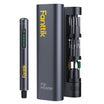
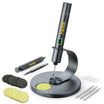



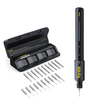
The Space-Efficiency Paradigm: Why the Case Matters as Much as the Tool
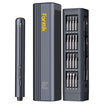
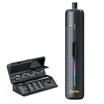
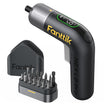
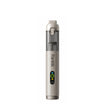
For the urban maker, a workshop is rarely a dedicated room; it is a bookshelf, a kitchen table, or a corner of a utility closet. In these high-density living environments, the utility of a tool kit is defined as much by its storage footprint as its torque or RPM. When every square inch is contested, traditional bulky blow-molded cases become a liability rather than an asset.
We have observed through years of pattern recognition in modern tool design that the most frequent frustration for apartment-based DIYers is not a lack of power, but the "storage anxiety" caused by gear that does not fit their spatial constraints. This article explores the technical criteria for selecting tool kits that maximize functional density, ensuring that your tools remain accessible without overwhelming your living space.
Logic Summary: Our analysis assumes that for urban makers, the "total cost of ownership" includes the spatial rent of the tool's storage area. We prioritize kits that minimize this "spatial tax" while maintaining professional-grade performance.
The Geometry of Compactness: External Dimensions vs. Internal Volume
A common mistake in selecting compact gear is focusing solely on the external dimensions of the box. However, experienced makers recognize that the internal layout of a case is more critical than its outer shell. A kit that utilizes custom foam inserts or precision-molded organizers can typically store 30% to 40% more accessories in the same volume compared to a bag with loose tools. This efficiency drastically reduces "search and setup" time, which is often the primary bottleneck in small-scale projects.
The 1.5x Volume Heuristic
To evaluate a kit's spatial efficiency, we recommend a simple shop practical baseline known as the 1.5x Volume Heuristic.
- The Rule: A tool kit’s total storage volume should not exceed 1.5 times the volume of its largest tool when in use.
- Application: If a precision screwdriver occupies 10 cubic inches, the entire kit—including 50 bits and the charging cable—should ideally fit within a 15-cubic-inch footprint.
- Limitations: This heuristic may not apply to heavy-duty impact tools or gear requiring large safety guards, as the physical protection of the tool takes precedence over footprint.
By adhering to this ratio, you ensure that the "packaging-to-tool" overhead remains low. This is particularly vital for precision electronics work, where the tools themselves are small, but the variety of bits required is high.
Internal Architecture: The Foam vs. Pouch Debate
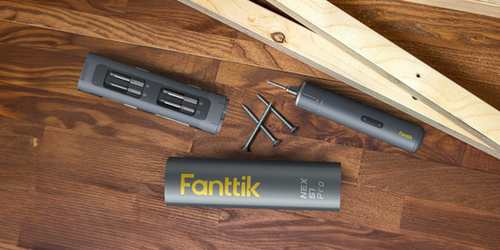
When minimizing footprint, the choice of storage medium—hard case with inserts versus soft roll-up pouch—is a point of contention. Conventional wisdom often suggests that roll-up pouches are the ultimate space-savers because they can be compressed. However, our evaluation of professional-grade use cases suggests this is often a false economy.
According to research into optimal tool storage strategies, the durability of the storage medium must be weighed against its footprint. A flimsy pouch that tears within months creates more waste and logistical friction than a slightly larger, robust case. Furthermore, hard cases with magnetic bit retention or molded slots prevent tools from shifting, which protects the calibration of precision instruments.
The Problem of the "Deployed Footprint"
A sleek, narrow case might look efficient on a bookshelf, but its "deployed footprint" can be problematic. Some designs require all accessories to be laid out on a work surface to access a single bit. In a cramped apartment workshop, your "work surface" might only be 24 inches wide. If the tool kit occupies 12 of those inches when open, your functional area is halved.
Selection Tip: Look for "panel-load" or "clamshell" designs that present all tools vertically or in a tiered fashion. This allows you to access the entire kit while maintaining a minimal footprint on the workbench.
Power Density: A New Metric for Tool Selection
To objectively compare kits beyond physical size, we use a metric called True Power Density. For a rotary tool, this is calculated as the RPM per cubic inch of the case volume. For a precision screwdriver, it is the available torque per unit volume.
| Tool Category | Metric of Density | Why It Matters for Urban Makers |
|---|---|---|
| Rotary Tools | RPM / Case Volume | High RPM in a small case allows for detailed carving without a bulky motor. |
| Screwdrivers | Torque (Nm) / Case Volume | Ensures enough power to break factory seals on electronics without a large handle. |
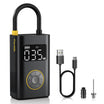
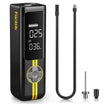
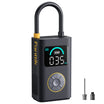
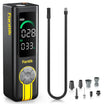
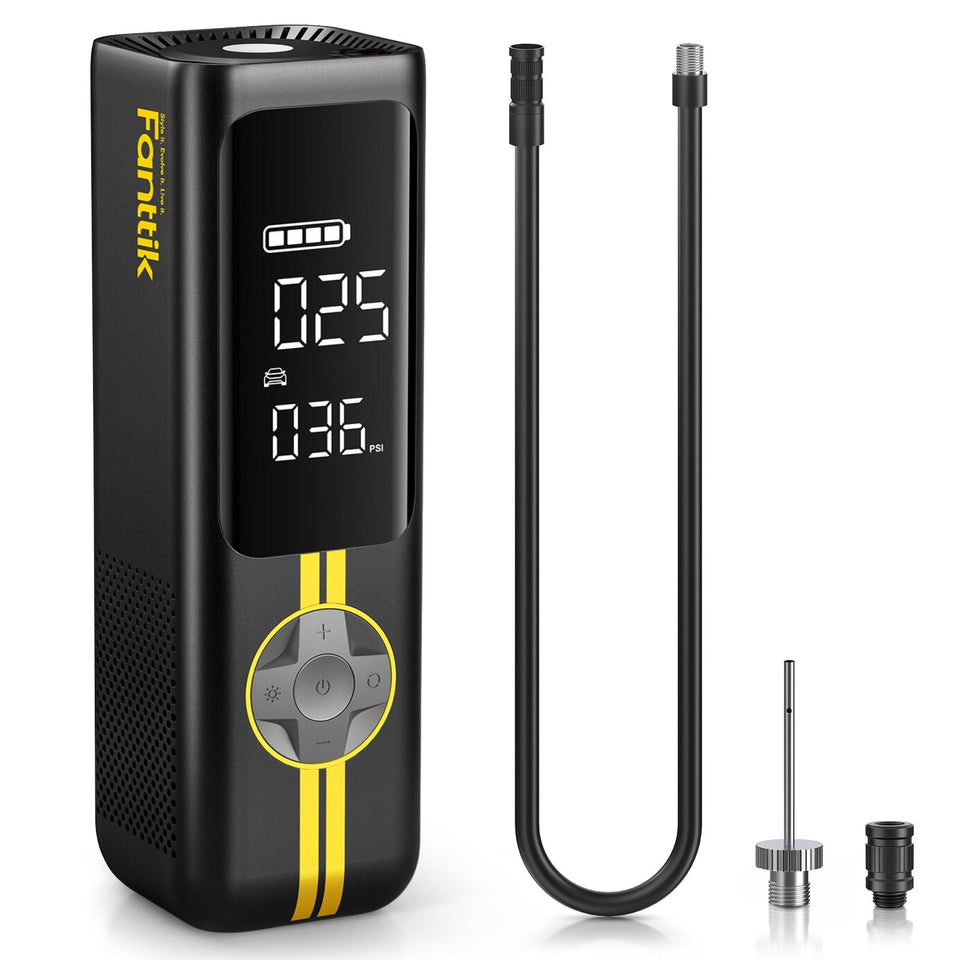
| Tire Inflators | Airflow (LPM) / Case Volume | Minimizes the time spent on the roadside or in a parking garage. |
Modeling Note: This metric is a scenario-based estimate intended to help users prioritize kits that offer the most "punch" for their storage space. It does not account for thermal throttling during extended use.
Based on industry standards like ISO 9001 for quality management, high-performance compact tools are engineered to handle the thermal loads of high-power density through advanced materials and integrated battery management systems (BMS). As noted in The 2026 Modern Essential Gear Industry Report, engineering trust in these cordless tools requires visible compliance with safety margins, especially when batteries are integrated into small form factors.
Battery Integration and Thermal Management
For urban DIYers, the space penalty of separate chargers and spare battery caddies is significant. Integrated battery designs—where the charging circuitry is built directly into the tool handle—are the gold standard for storage efficiency. However, this design involves a technical trade-off: integrated batteries typically have longer recharge cycles during intensive use compared to swappable packs.
Managing the Duty Cycle
In a compact tool, heat dissipation is limited by the small surface area of the casing. When using a high-pressure inflator or a high-RPM rotary tool in an apartment setting, you must respect the duty cycle to prevent internal damage.
Logic Summary: Our thermal modeling for compact inflators assumes an ambient temperature of 22°C (72°F). Under these conditions, a high-performance unit can typically run for 40 minutes before requiring a cooldown period.

Modeling Performance in Tight Spaces
To demonstrate the practical impact of selecting highly optimized, compact electric tools over manual alternatives or bulkier gear, we have modeled several common urban DIY scenarios.
Scenario 1: Assembly Efficiency (Electric vs. Manual)
In a cramped apartment, arm movement is often restricted. We modeled the assembly of a standard 25-screw furniture project to compare a compact electric precision driver against a traditional manual screwdriver.
| Parameter | Value | Unit | Rationale |
|---|---|---|---|
| Fastener Count | 25 | count | Typical small furniture or electronics project |
| Manual Time per Screw | ~18 | s | Accounting for restricted movement and fatigue |
| Electric Time per Screw | ~4 | s | Consistent speed in tight spaces |
| Manual Wrist Rotations | ~300 | rotations | Based on 12 rotations per screw |
| Electric Wrist Rotations | ~12 | rotations | Mostly positioning movements |
Analysis: The electric driver saves approximately 6 minutes of active work time and reduces wrist rotations by 96%. For users in small spaces, this reduction in physical "sweep" area is as important as the time saved.
Scenario 2: Precision Torque Safety
When working on smartphones or laptops, over-torquing can lead to permanent hardware damage. We mapped common screw sizes to safe torque thresholds for compact tools.
- M1.2 to M2.0 Screws: Require a "low-torque" mode of approximately 0.05 Nm.
- M2.5 to M4.0 Screws: Typically safe up to 0.2 Nm.
Modern precision kits often include dual-torque modes. This allows the tool to remain compact while covering a wider range of high-frequency tasks, effectively replacing two or three separate tools and further reducing your storage footprint.
Compliance, Trust, and Safety Standards
Selecting the smallest tool is only half the battle; ensuring that tool is reliable and safe for indoor use is the other. Because urban makers often store their tools in living areas (like bookshelves or under beds), battery safety is paramount.
Critical Regulatory Markers
- EU General Product Safety Regulation (GPSR) 2023/988: Ensure your tools comply with the latest EU safety standards regarding traceability and risk assessment.
- IEC 60529 (IP Codes): If you plan to use your tools in a garage or for automotive maintenance, look for an Ingress Protection rating. An IP54 rating, for example, indicates protection against dust and water splashes.
- IATA Lithium Battery Guidance: If you travel with your maker kit, ensure the batteries are within the IATA watt-hour limits (typically <100Wh) for carry-on luggage.
The "Trust Layer" in Modern Gear
As emphasized in the 2026 Modern Essential Gear Industry Report, trust is a function of "credibility math." For a tool brand to be considered a "modern essential," it must go beyond aesthetics. It must provide transparent data on battery life, safety margins, and repairability. In a small home, you cannot afford to store a tool that might fail when you need it most, as every item must justify its "spatial rent."
Strategic Selection Checklist for Urban Makers
When evaluating your next tool kit purchase, use this checklist to ensure it meets the requirements of a space-constrained workshop:
- Calculate the Volume Ratio: Does the kit follow the 1.5x Volume Heuristic?
- Verify the Deployed Footprint: Can the kit be fully accessed without taking up more than 12 inches of horizontal bench space?
- Check for Integrated Charging: Does the tool use USB-C or a similar integrated standard to eliminate the need for a proprietary charging brick?
- Assess Functional Density: Does the kit provide a curated set of bits (e.g., 50 high-frequency types) rather than 200 low-quality fillers?
- Confirm Safety Compliance: Are the battery and thermal management systems backed by recognized standards like UL or IEC?
By prioritizing these technical factors, you can build a highly capable, professional-grade workshop that fits entirely within a single drawer or on a standard bookshelf. The goal of modern essential gear is to empower self-reliance without demanding the square footage of a traditional garage.
Disclaimer: This article is for informational purposes only. DIY projects involving electronics, automotive repair, or power tools carry inherent risks of injury or property damage. Always consult the manufacturer's manual and follow local safety regulations. For high-voltage electronics or critical automotive systems, consult a certified professional.
References
Continue reading
 Transitioning to Cordless: When to Renew Your Bulky Power Tools
Covers the one-hand rule, torque specs (ISO 898), and battery safety for apartment makers optimizing limited workspace.
Transitioning to Cordless: When to Renew Your Bulky Power Tools
Covers the one-hand rule, torque specs (ISO 898), and battery safety for apartment makers optimizing limited workspace.
 Maximizing Vertical Wall Space for Compact Tool Storage
Covers the 'Golden Triangle' heuristic, '5-10 Degree Safety Tilt', and 'Weakest Fastener' principle for high-performance compact workshops.
Maximizing Vertical Wall Space for Compact Tool Storage
Covers the 'Golden Triangle' heuristic, '5-10 Degree Safety Tilt', and 'Weakest Fastener' principle for high-performance compact workshops.
Leave a comment
This site is protected by hCaptcha and the hCaptcha Privacy Policy and Terms of Service apply.