





















Engineering Precision: Beyond the "Tight Enough" Mentality
In industrial assembly lines and aerospace hangars, the phrase "tight enough" does not exist. Every fastener is a data point, and every Newton-meter (N·m) of force is recorded in a digital or physical ledger. This isn't just for quality control; it is a legal and safety mandate. We are currently observing a significant shift where these same safety engineering principles—specifically documented torque calibration—are migrating into the world of prosumer DIY and small-scale workshops.
For the serious DIYer working on carbon fiber bike frames, sensitive electronics, or high-performance automotive trim, the stakes have risen. A single overtightened screw can hairline-fracture a $2,000 frame or strip a thread in a magnesium housing. At our repair bench, we’ve seen that the difference between a successful assembly and a costly failure often comes down to the tool's repeatability over time. To address this, we must adopt a "credibility math" approach to our toolkits, as outlined in The 2026 Modern Essential Gear Industry Report: Engineering Trust in a Cordless World.

The Hidden Reality of Torque Drift
A common pitfall we observe in many workshops is the gradual, unnoticed drift of a cordless screwdriver's torque clutch. Most users assume that if they set their tool to 5 N·m today, it will deliver 5 N·m next year. However, mechanical fatigue is a constant factor.
Internal clutch springs lose their "memory" over thousands of cycles. Lubricants in the planetary gearset can break down or migrate, changing the internal friction coefficients. Based on our practical observations of pattern recognition in tool maintenance, a tool set for 5 N·m can easily drift to deliver 6.5 N·m within a single year of regular use. On a sensitive electronic component, that 30% increase is often the difference between a secure fit and a cracked PCB.
The Mechanism of Clutch Fatigue
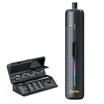
When a cordless driver like the Fanttik S2 Pro Cordless Electric Screwdriver reaches its torque limit, the internal clutch plates slip to prevent further rotation. This repetitive mechanical "clicking" or slipping creates heat and microscopic wear. Over time, the spring tension that holds these plates together weakens. This is why high-quality tools are designed to maintain repeatability within a narrow band (e.g., ±3%), but even they require verification to ensure they haven't drifted beyond their stated accuracy.
Modeling Note: Hypothetical Torque Drift Analysis This model estimates the variance in torque output over a 12-month period for a prosumer-grade cordless driver.
- Modeling Type: Deterministic parameterized model based on common workshop heuristics.
- Assumptions: Tool is used for 20 cycles/day, 5 days/week, in a climate-controlled (20°C) environment.
Parameter Value/Range Unit Rationale Initial Set Point 5.0 N·m Standard mid-range setting Cycle Count (Annual) ~5,200 Cycles Typical prosumer usage Spring Relaxation Rate 0.05 - 0.15 % per 1k cycles Heuristic for spring steel fatigue Friction Variance ±5 % Based on lubricant degradation Observed Drift (12mo) ~6.2 - 6.5 N·m Cumulative effect of fatigue Note: This is a scenario model, not a controlled lab study. Actual drift depends heavily on tool quality and environmental factors.
Calibration vs. Verification: A Practical Framework
In the world of metrology, there is a distinct difference between "calibration" and "verification." Understanding this distinction is the first step toward building a trustworthy workshop.
- Calibration: According to ISO 17025 standards, calibration involves linking a tool's readings across its entire range to a known national standard (like those maintained by NIST). This typically requires expensive, proprietary jigs and software.
- Verification: This is a simpler, single-point check. For a sensor or clutch that hasn't been mechanically stressed or dropped, a single-point verification at a mid-range setting is often a reliable indicator of health. According to experts at MS Matter, if the mid-range check is accurate, the drift across the rest of the range is likely uniform.
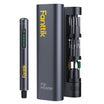
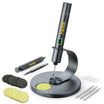
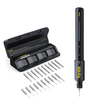
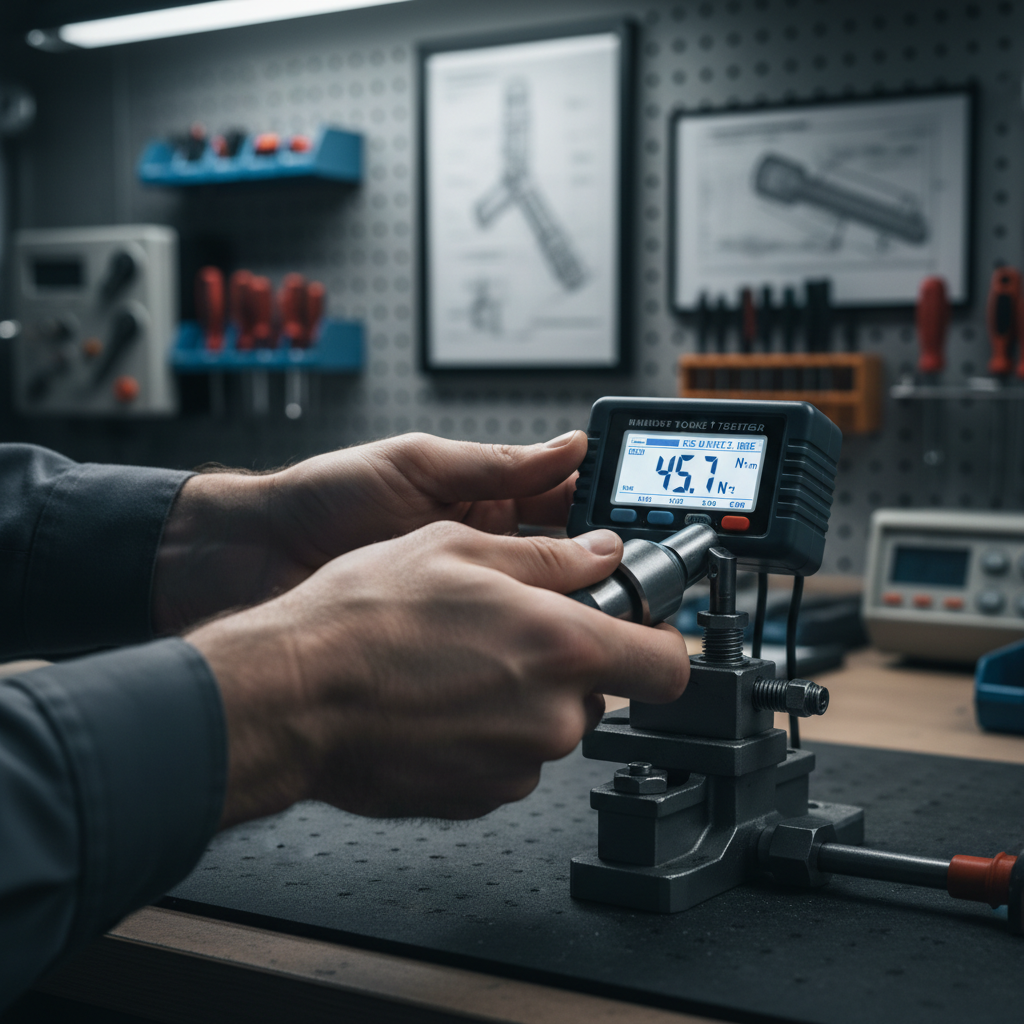
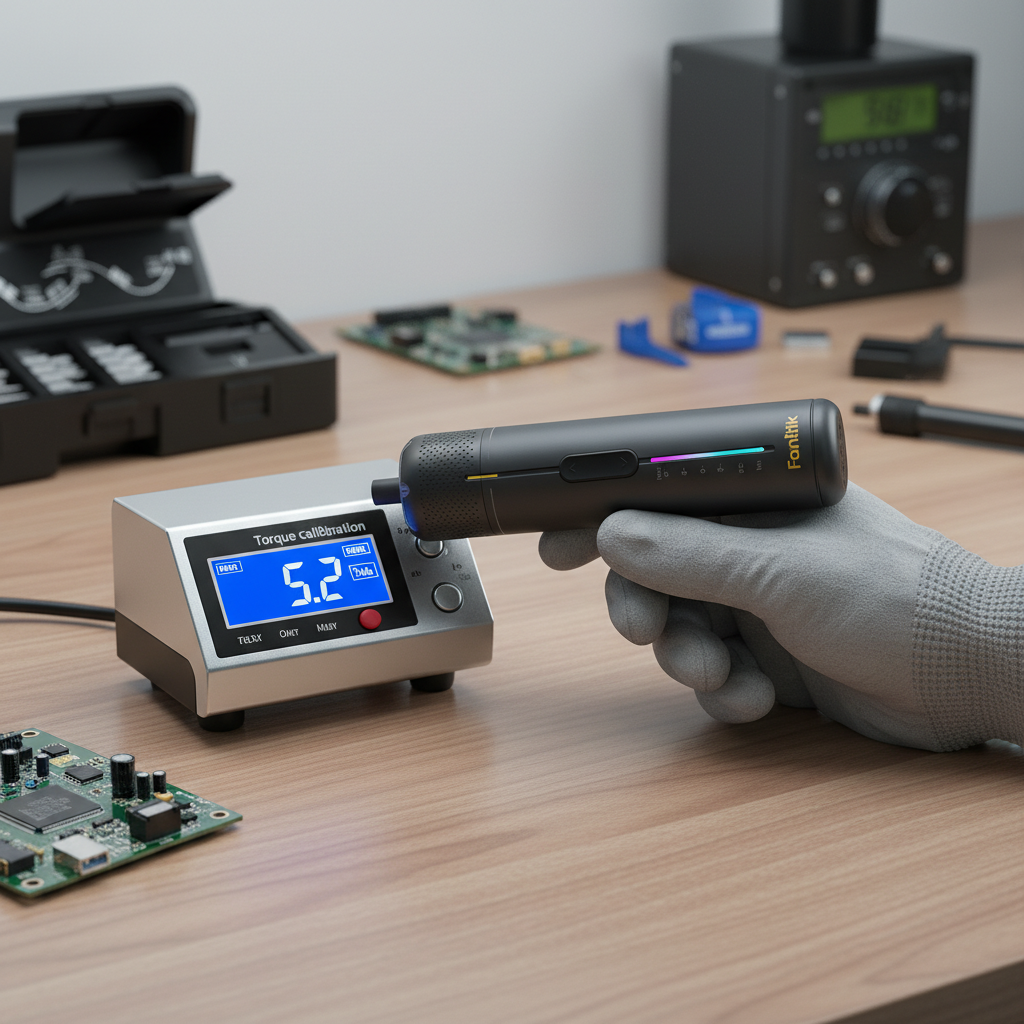
For the Fanttik E1 MAX Precision Electric Screwdriver, which is used for delicate electronics, verification is more practical than full-blown lab calibration. We recommend prosumers establish a quarterly verification routine using a dedicated, certified beam-type or digital torque tester.
Why Documentation is the "Paper Infrastructure" of Safety
Why bother writing it down? In the European Union, the EU General Product Safety Regulation (EU) 2023/988 emphasizes the importance of traceability and safety documentation. While this is a mandate for manufacturers, the same logic applies to the end-user.
Documenting your calibration (or verification) results creates a "Trust Layer." It allows you to:
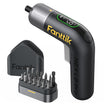
- Identify Trends: If your Fanttik L2 Pro Cordless Electric Screwdriver shows a 2% drift every quarter, you can predict when it will fall out of spec and plan for service.
- Ensure Joint Integrity: For critical assemblies (like brake calipers or suspension components), having a record that the tool was verified that morning provides peace of mind that cannot be achieved through guesswork.
- Legal/Insurance Protection: In the event of a mechanical failure, documented proof that tools were maintained to engineering standards is a powerful defense.

The Professional Hybrid Workflow
Experienced technicians rarely rely on a single tool for a high-stakes fastener. Instead, they employ a two-step "Hybrid Workflow" that balances the speed of cordless tools with the absolute accuracy of hand-calibrated instruments.
Step 1: The Controlled Run-Down
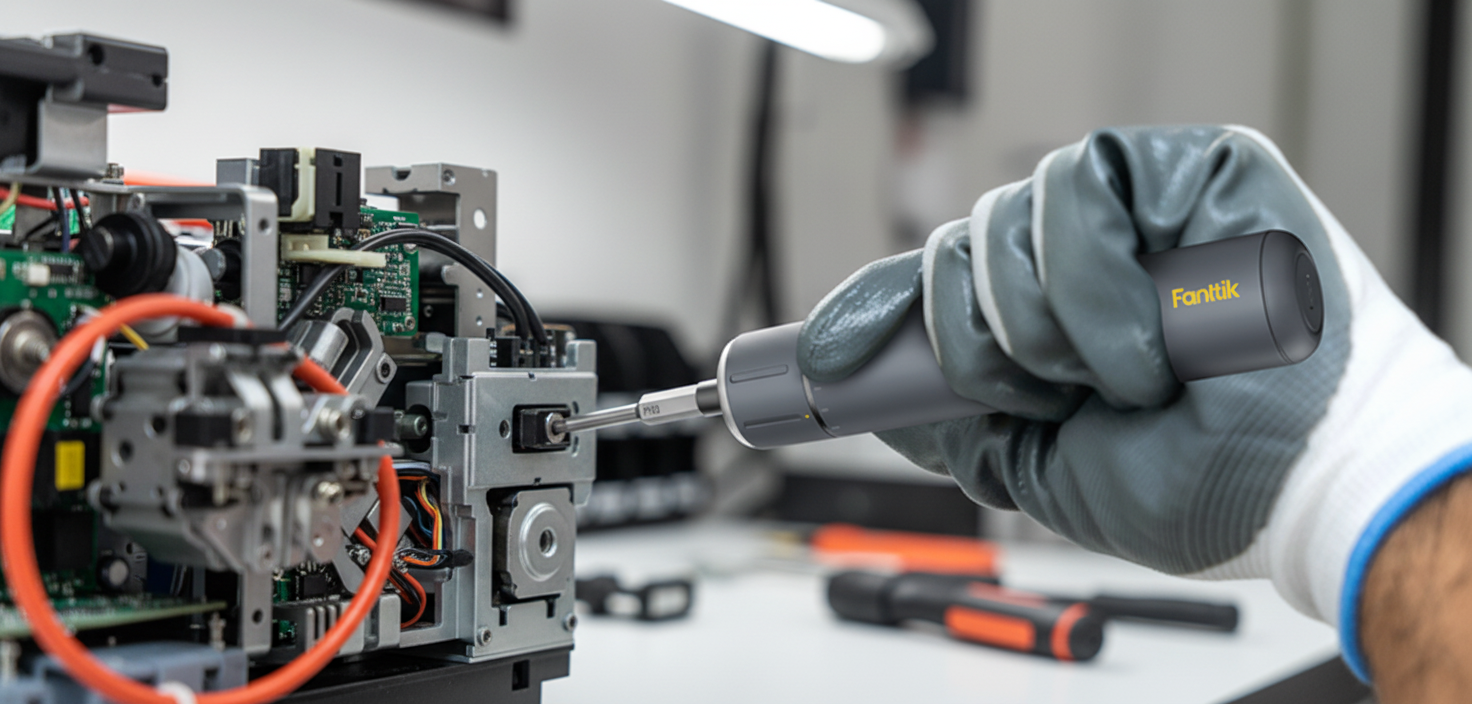
Use a precision cordless driver, such as the Fanttik S2 Pro Cordless Electric Screwdriver, to run the fastener down. Set the tool to approximately 70-80% of the final target torque. This stage handles the "friction" part of the job—spinning the screw through the threads—without the risk of overshooting the final mark.
Step 2: Final Specification Set
Finish the fastener with a hand-calibrated torque wrench or a high-precision manual driver. This manual step allows the technician to "feel" the fastener seat and ensures the final torque is applied with a tool that has a much tighter accuracy tolerance. This hybrid approach catches potential clutch slippage in the power tool and guarantees final fastener integrity.
Logic Summary: We recommend the 80% run-down heuristic because it leaves enough "headroom" for manual adjustment while significantly reducing the repetitive strain of long-thread fasteners. This is based on standard shop practices for high-consequence assemblies (not a controlled lab study).
Building Your Calibration Log
To operationalize trust in your workshop, we suggest creating a simple Calibration & Verification Log. This doesn't need to be complex; a spreadsheet or a dedicated notebook will suffice.
Recommended Log Format
| Date | Tool Model | Serial No. | Set Torque | Measured Torque | Deviation | Action Taken |
|---|---|---|---|---|---|---|
| 2024-01-15 | S2 Pro | #00123 | 2.0 N·m | 2.05 N·m | +2.5% | None (Within ±3%) |
| 2024-04-15 | S2 Pro | #00123 | 2.0 N·m | 2.15 N·m | +7.5% | Adjust/Service |
For more on setting up these routines, see our guide on Creating a Routine Calibration Schedule for DIY Tools.
Addressing the Human Factor
While metrology focuses on the tool, safety engineering must also account for the human element. According to the FHWA Human Factors Laboratory, human error—such as improper tool angle or incorrect bit selection—often outweighs tool inaccuracy as a cause of failure.
- Bit Alignment: Even a perfectly calibrated tool will deliver inaccurate torque if the bit is not seated flush. Proper bit alignment is critical for torque accuracy.
- Grip and Stance: The way you hold the tool impacts how much of the reaction torque is absorbed by your arm versus the fastener. For tools like the Fanttik K2 Nano 3.7V Precision Power Drill, a stable, perpendicular stance is essential for repeatable results.
Precision as a Competitive Advantage
In a market saturated with "disposable" tools, choosing to invest in precision and documented maintenance sets you apart. High-quality drivers maintain repeatability within a narrow band across hundreds of cycles, which is far more important for safety than a one-time high "peak torque" number.
By adopting documented torque calibration, you aren't just maintaining a tool; you are engineering reliability into every project you touch. Whether you are a prosumer or a small workshop owner, the shift toward traceable standards is the surest way to build a reputation for quality and safety.
For further reading on how to interpret the numbers on your tool's box, explore our deep dive into Decoding Torque Accuracy Ratings for Cordless Drivers.
Disclaimer: This article is for informational purposes only and does not constitute professional engineering, legal, or safety advice. Precision fastening requirements vary significantly by application (e.g., aerospace vs. furniture assembly). Always consult the manufacturer's specifications for your specific components and tools. If you are working on life-critical or high-consequence assemblies, seek verification from a certified professional.

Leave a comment
This site is protected by hCaptcha and the hCaptcha Privacy Policy and Terms of Service apply.