




















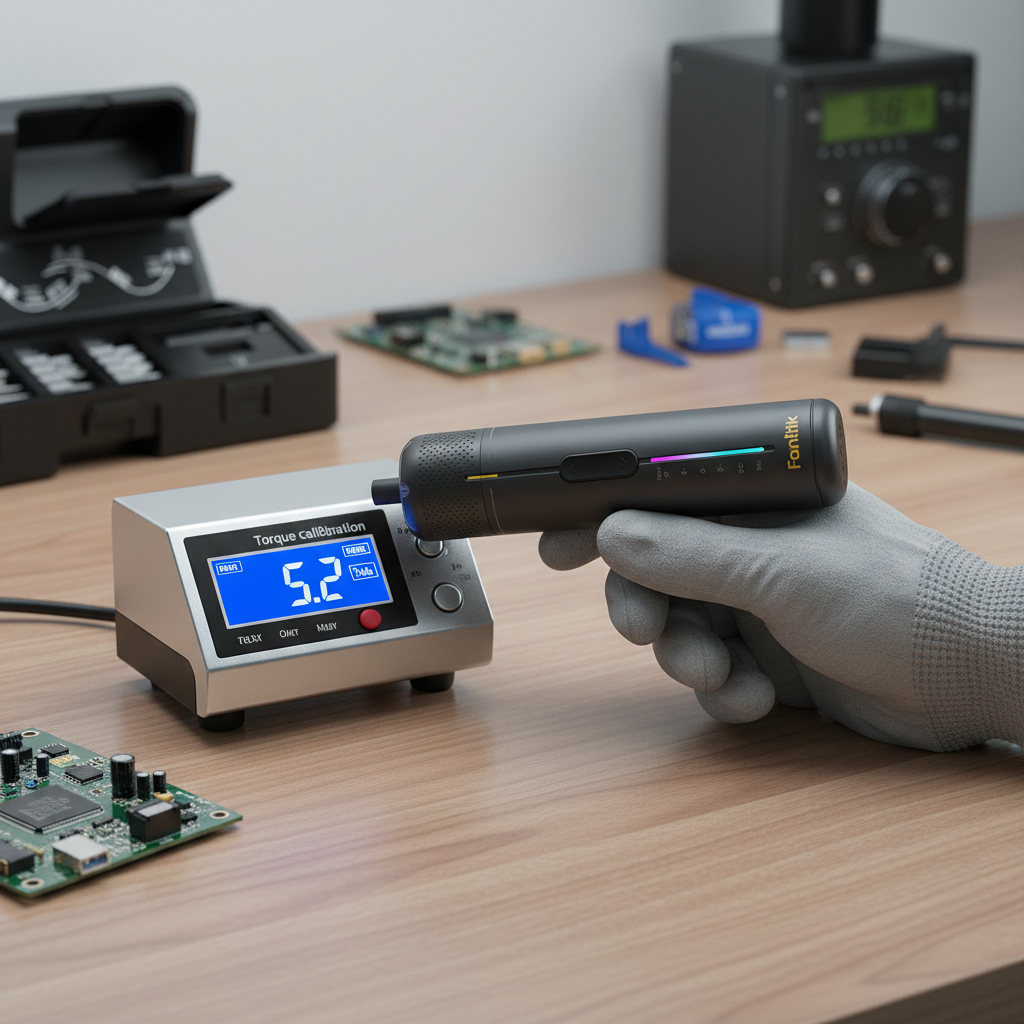
The Precision Threshold: Why "Tight Enough" Is No Longer Enough
As your workshop projects transition from basic household repairs to high-consequence assemblies—such as drone builds, mechanical keyboard modding, or medical device prototyping—the margin for error narrows significantly. In our experience, the most common point of failure isn't the user’s intent, but the tool’s inability to communicate its actual output. When you are working with an M1.6 screw on a $2,000 motherboard, the difference between a secure fit and a cracked PCB is often less than 0.1 Newton-meters (N·m).
Moving beyond consumer-grade tools means shifting your mindset from "fastening" to "metrology." A consumer driver is designed to turn a screw until it stops; a precision metrology tool is designed to deliver a specific, repeatable amount of energy and stop before material fatigue begins. This article explores the technical foundations of this transition, grounded in the principles of The 2026 Modern Essential Gear Industry Report: Engineering Trust in a Cordless World, which posits that trust in modern gear is a function of visible compliance and measurable reliability.
The Credibility Math: Understanding Accuracy vs. Capacity
The single most frequent mistake we see in workshop upgrades is over-reliance on a tool’s maximum torque rating while ignoring its accuracy band. If a tool is rated for 5 N·m, that is merely its ceiling. For the advanced DIYer, the more critical metric is the variance.
The Accuracy Band Paradox
A tool with a ±3% accuracy band is a precision instrument. A tool with a ±10% or ±20% variance (common in entry-level consumer gear) is a liability in sensitive environments. In electronics repair, even a variance of 0.2 N·m can strip a brass insert or ruin a delicate thread. According to the ISO 6789-1:2017 standard, which governs the requirements and test methods for design conformance of hand torque tools, the consistency of the tool over thousands of cycles is what defines its professional grade.
Logic Summary: We define "Professional Grade" here as a tool that maintains its accuracy band within ±3% to ±5% across its full battery life cycle, rather than just at a full charge. This is based on common industry heuristics for assembly-line quality control.
The Problem of Circular Dependency
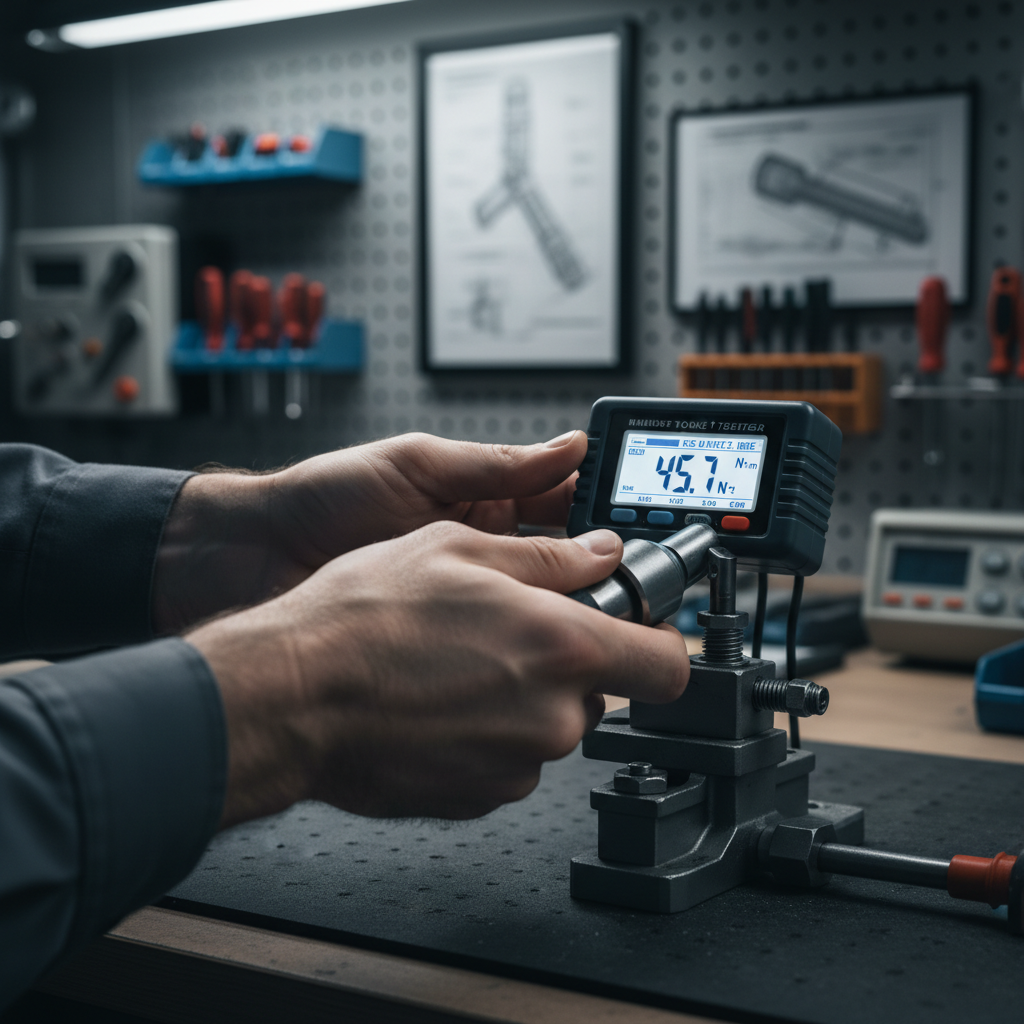
Conventional wisdom suggests that following a manufacturer’s torque specification is the "gold standard" for safety. However, this creates a logical paradox: the specification is only as good as the tool used to apply it. If your driver is unverified, you are essentially guessing with a higher degree of confidence. The true upgrade involves moving to a system where the tool's output is periodically verified against a traceable standard, such as a digital torque tester. This breaks the dependency and provides independent confirmation of the energy delivered to the fastener.

Quantifying the Upgrade: Productivity and Ergonomic Modeling
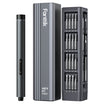
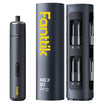
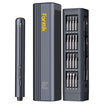
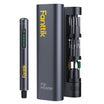
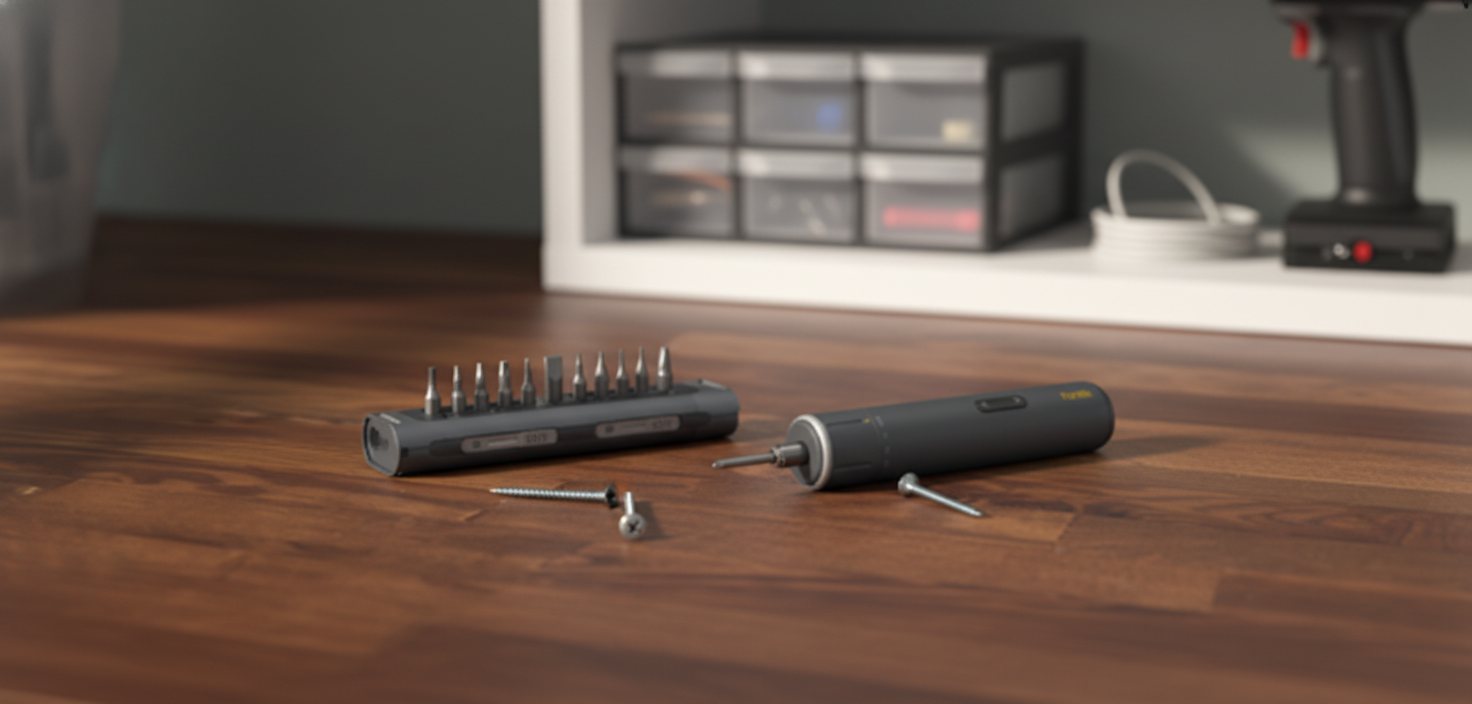
Upgrading to a precision electric driver like the Fanttik E2 MAX Precision Electric Screwdriver isn't just about protecting the workpiece; it is about protecting the technician. To demonstrate this, we modeled a high-volume repair scenario based on a professional electronics technician's workflow.
Scenario: The Laptop Motherboard Overhaul
In this model, we analyzed the disassembly and reassembly of a complex laptop motherboard requiring approximately 120 screws (a common count for high-end workstations).
| Metric | Manual Precision Driver | Electric Precision Driver | Total Savings |
|---|---|---|---|
| Time per Screw | 12 seconds | 2.5 seconds | ~9.5 seconds |
| Total Task Time | 24 minutes | 5 minutes | 19 minutes |
| Wrist Rotations | 15 per screw | 0.5 per screw | ~1,740 rotations |
| Physical Strain | High (Repetitive) | Minimal (Static Grip) | 79% Reduction |
Methodology Note: This scenario is a deterministic model based on industrial engineering time-motion study principles. It assumes M2.5 screws with 6mm thread length. Time saved is a theoretical maximum and does not account for positioning delays or software updates.
The data reveals that the electric driver provides a speed multiplier of approximately 4.8×. More importantly, the reduction of over 1,700 wrist rotations per job significantly mitigates the risk of Repetitive Strain Injury (RSI). For a professional completing four such repairs a day, this equates to saving over an hour of labor and nearly 7,000 unnecessary wrist movements.
Standards and Sovereignty: Navigating ISO 6789 and NIST Traceability
When you move into the professional tier, you begin to encounter standards that govern how tools are measured. Understanding these is vital for "Engineering Trust," a core pillar of the 2026 Modern Essential Gear Industry Report.
The Moving Target of ISO 6789
A critical insight for those buying "ISO-compliant" tools today: the standard is evolving. ISO/DIS 6789-1 is currently in its Draft International Standard stage, with final voting expected in 2025. This means that tools compliant with the 2017 version may require re-validation or updated testing protocols once the new standard is finalized. For the workshop pro, this highlights the importance of choosing brands that provide transparent, updateable firmware or clear calibration pathways.
NIST and Dimensional Sovereignty
In specialized fields like semiconductor or medical device repair, torque is only one half of the equation. Dimensional metrology—the accuracy of the bits and the driver's runout—becomes paramount. True precision tools often cite traceability to national laboratories like the National Institute of Standards and Technology (NIST). This ensures that a 4mm hex bit is exactly 4mm, reducing the risk of "cam-out," where a poorly fitted bit rounds the screw head.
Maintenance of the Metrology Loop: Bits, Clutches, and Calibration Sense
A precision tool is a living system. Unlike a standard screwdriver, it requires an ongoing maintenance loop to preserve its accuracy.
The "Mushy Click" Signal
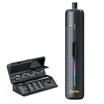
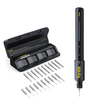
Most high-performance drivers, such as the Fanttik S2 Pro Cordless Electric Screwdriver, utilize a clutch mechanism to disengage the motor at a set torque. Over thousands of cycles, the internal spring and ball detent can fatigue. Experienced technicians develop what we call a "calibration sense." They listen for the crispness of the clutch engagement. A "mushy" or dull click is the primary physical signal that the tool requires service or recalibration, often occurring long before the motor itself fails.
Bit Quality: The Non-Negotiable Interface
The most common mistake in precision work is pairing a $100 driver with $5 bits. Soft, poorly machined bits (often made from inferior CR-V steel) will deform under stress, ruining the system's accuracy regardless of the tool's internal sensors.
- The Rule of Thumb: Only use bits made from S2 tool steel or better.
- The Replacement Trigger: Replace bits at the first sign of "rounding" on the edges. In our workshop, we treat bits as consumables with a fixed lifespan of approximately 500–1,000 high-torque cycles.

Strategic Selection: Mapping Tools to Fastener Classes
Not every project requires the same level of metrology. Choosing the right tool involves matching the fastener class to the tool’s torque range. Using a heavy-duty driver on a smartphone is as dangerous as using a precision driver on a car engine.
The Torque Fit Framework
Based on our modeling of ISO 898 mechanical properties of fasteners, we have established the following heuristic for tool selection:
-
Micro-Electronics (M1.2 to M2.0):
- Safe Range: 0.02 to 0.10 N·m.
- Recommended Tool: Fanttik E2 MAX Precision Electric Screwdriver.
- The Risk: Using a setting above 0.15 N·m on these screws creates a "strip risk" that can exceed the maximum safe torque of the substrate by 50%.
-
Mechanical Assembly (M2.5 to M4.0):
- Safe Range: 0.2 to 0.5 N·m.
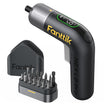
- Recommended Tool: Fanttik S2 Pro Cordless Electric Screwdriver or Fanttik S1 Pro Cordless Electric Screwdriver.
- Application: 3D printer frames, small appliances, and drone chassis.
-
Precision Drilling:
- Application: Creating pilot holes in PCBs or delicate plastic shells.
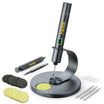
- Recommended Tool: Fanttik K2 Nano 3.7V Precision Power Drill.
- Why Precision Matters: High-RPM consumer drills often lack the concentricity required for micro-drilling, leading to "bit wander" and ruined components.
Logic Summary: These ranges are heuristics based on standard fastener materials. Always verify against the specific manufacturer's service manual if available.
The Path to Professionalism
Upgrading your workshop is an investment in your results. By moving from consumer-grade tools to precision metrology instruments, you are doing more than just buying gear; you are adopting a system of compliance and safety that aligns with global standards like the EU General Product Safety Regulation (GPSR). This transition ensures that your work is not just "done," but executed with the technical integrity required for high-consequence projects.
Track your tool's performance, respect the accuracy bands, and never compromise on bit quality. This is how you build a workshop that isn't just a collection of tools, but a center of engineering excellence.
Methodology & Modeling Transparency
The data and recommendations in this article are derived from scenario modeling and industry heuristics. They are intended for decision support and are not a substitute for professional engineering certification or specific manufacturer instructions.
Run 1: Assembly Productivity Model (120-Screw Scenario)
| Parameter | Value | Unit | Rationale |
|---|---|---|---|
| Screw Count | 120 | count | Based on HP EliteBook 840 G6 full disassembly |
| Manual Speed | 12 | s/screw | Professional technician average with manual tool |
| Electric Speed | 2.5 | s/screw | Fanttik E-series typical engagement time |
| Manual Rotations | 15 | rotations | M2.5 screw with 6mm thread depth |
| Electric Rotations | 0.5 | rotations | Positioning adjustment only |
Boundary Conditions:
- Model assumes consistent screw positioning time.
- Does not account for "stuck" or stripped screws that require manual intervention.
- Productivity gains represent theoretical maximums under continuous workflow.
Torque Fit Assumptions
Torque safety margins are estimated based on ISO 898-1 standards for fastener mechanical properties. Actual safe limits may vary based on material friction coefficients (e.g., dry vs. lubricated threads) and the specific grade of the fastener.
Disclaimer: This article is for informational purposes only. Precision tool use involves mechanical risks. Always wear appropriate personal protective equipment (PPE) and consult the official service manual for your specific device before performing repairs. The author and publisher are not responsible for damage to property or injury resulting from the application of these heuristics.

Leave a comment
This site is protected by hCaptcha and the hCaptcha Privacy Policy and Terms of Service apply.