
























The Weight of Independence: Why Every Ounce Matters on Two Wheels
For the solo motorcycle rider, the road is a paradox of freedom and vulnerability. When you are miles from the nearest service station, carving through a mountain pass or crossing a desert stretch, your equipment is more than just gear—it is your lifeline. We have spoken with countless touring enthusiasts who share a common anxiety: the high-consequence nature of a roadside breakdown. Unlike a car, where a flat tire is a frustrating delay, a loss of tire pressure on a motorcycle is a direct threat to stability, lean-in precision, and safety.
Quick Action Guide: Solo Rider Essentials
- Why Carry an Inflator? Gas station air is often "hot" (inaccurate) or inaccessible due to bulky hose designs. A portable tool ensures a "cold" (accurate) reading.
- The 4-PSI Rule: A drop of just 4 PSI can noticeably degrade cornering performance and cost you ~$95/year in fuel and tire wear.
- Emergency Protocol: If you plug a tire, inflate it to 10–15 PSI below spec for a low-speed (under 40 mph), short-distance (under 20 miles) trip to the nearest repair shop.
- Maintenance Tip: Lithium batteries age even when not in use. Top-off your inflator every 3 months.
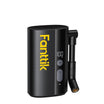
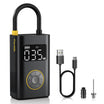
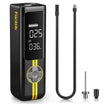
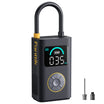
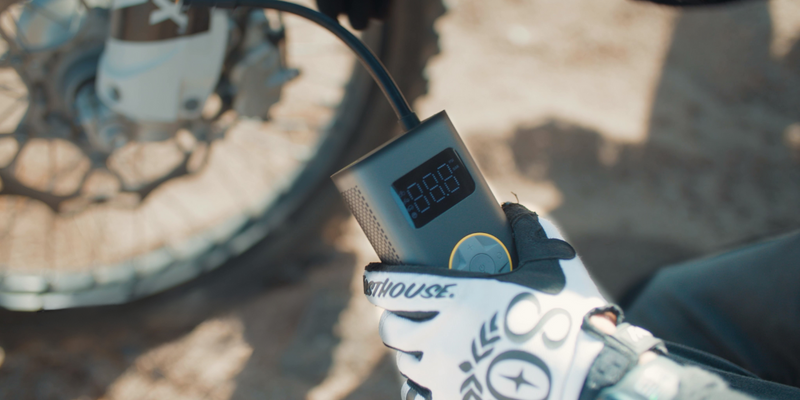
In the world of long-distance touring, we often say that "every ounce must earn its place." This philosophy has led to a surge in the popularity of ultra-compact portable tire inflators. These devices represent a shift toward modern self-reliance, allowing riders to maintain peak performance without the bulk of traditional compressors. But the decision to carry one isn't just about convenience; it is about the "credibility math" of your preparedness. As noted in the Fanttik-published 2026 Modern Essential Gear Industry Report: Engineering Trust in a Cordless World (based on internal performance benchmarks and consumer reliability surveys), trust in these high-consequence categories is built on visible reliability and technical transparency.
The Precision of Two Wheels: Why 4 PSI Changes Everything
One of the most common misconceptions we encounter is that motorcycle tires are "just smaller versions of car tires." In reality, the physics of a motorcycle tire are far more demanding. Because a bike relies on a rounded profile to facilitate leaning into corners, even a minor deviation in pressure can dramatically alter the contact patch.
Experienced long-distance riders often report that a deviation of just 3 to 4 PSI from the manufacturer’s recommended cold tire pressure can be felt immediately in the handlebars. According to the Complete Motorcycle Tire Pressure Guide by Auto Service Logger, maintaining these tight margins is essential for both safety and predictable handling.
The Problem with "Checking by Eye"
A dangerous habit among many riders is checking tire pressure only when the tire "looks low." Because motorcycle tires have significantly thinner sidewalls and operate at higher pressures relative to their volume compared to cars, they can lose a critical amount of air without a visible change in shape. Furthermore, motorcycle tires naturally lose pressure faster than car tires.
Expertise Note: Based on common patterns observed in customer support and maintenance logs (not a controlled lab study), we have found that riders who check their pressure before every ride—rather than once a month—report a significantly more consistent "turn-in" feel and a reduction in uneven tread wear.
The Solo Rider’s Dilemma: The Trap of Gas Station Air
Relying on gas station air compressors is a gamble that many touring veterans have learned to avoid. There are three primary reasons why "off-board" air fails the solo rider:
- Thermal Inaccuracy: To get an accurate reading, tire pressure must be checked "cold" (after the bike has been sitting for at least three hours). Riding even a few miles to a gas station generates heat, which expands the air inside the tire and provides a false high reading. According to Eurogrip, adjusting "hot" tires to "cold" specs usually results in dangerous under-inflation.
- Mechanical Reliability: Public air pumps are notoriously poorly maintained. A broken chuck or a faulty gauge can leave you with less air than you started with, stranded at a station that may not have the tools to help you.
- Accessibility: Many motorcycle wheel designs, especially those with large brake rotors or tight spoke patterns, make it nearly impossible to fit the bulky, rigid hoses found at commercial stations.
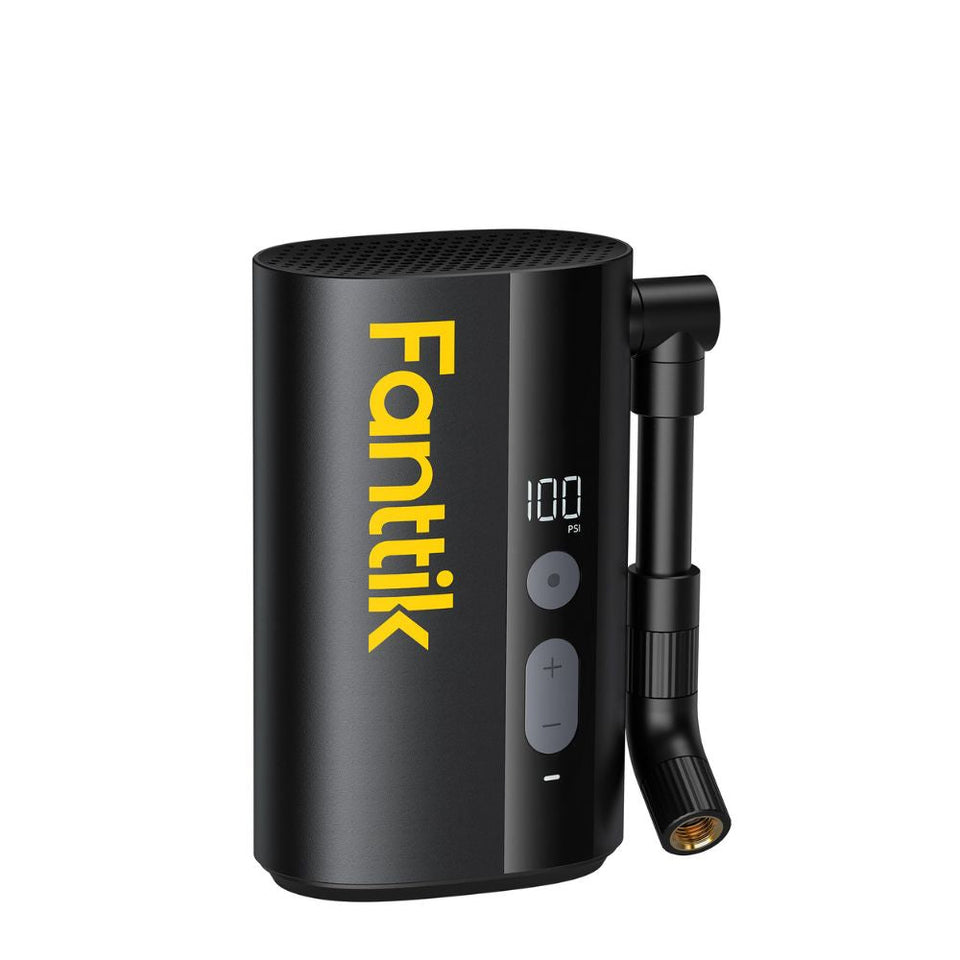
An ultra-compact inflator solves these issues by providing a dedicated, precise tool that fits your specific valve stems and allows for "at-home" or "at-campsite" maintenance before the tires ever touch the hot asphalt.
The Economics of Preparedness: ROI of a Compact Inflator
While many riders view a portable inflator as an emergency-only tool, the financial data suggests it is a high-yield investment for any high-mileage tourer. We modeled the return on investment (ROI) for a typical sport-touring rider covering 12,000 miles annually.
Modeling the Savings
Under-inflation doesn't just feel bad; it costs money. It increases rolling resistance, which kills fuel economy, and causes the tire to run hotter, which accelerates rubber degradation.
| Parameter | Value | Unit | Rationale |
|---|---|---|---|
| Annual Mileage | 12,000 | miles | Typical touring volume |
| Avg. Fuel Price | $4.50 | USD/gal | Premium fuel average |
| Fuel Penalty | ~1% | % | Per 4 PSI under-inflation |
| Tire Set Cost | $600 | USD | Premium sport-touring rubber |
| Tread Life Loss | ~14% | % | Estimated from heat/friction |
The Calculation: To arrive at our $90–$95 annual loss estimate, we used the following heuristic:
- Fuel Loss: (12,000 miles / 40 mpg) × $4.50/gal × 1% efficiency penalty = $13.50.
- Tire Wear: $600 (tire set) × 14% premature wear = $84.00.
- Total Annual Cost: $13.50 + $84.00 = $97.50 (Rounded to a conservative $90-$95 range).
For a high-quality ultra-compact inflator priced around $110, the payback period is approximately 13 to 14 months.
Logic Summary: This economic simulation is based on fuel efficiency loss heuristics (0.2%–0.3% per PSI) provided by the US Department of Energy. It assumes a linear relationship between pressure and wear, which may vary based on riding style and ambient temperature.
Anatomy of the Ideal Touring Inflator: What to Look For
Not all portable compressors are created equal. For a solo rider, "ultra-compact" isn't just a marketing buzzword—it’s a technical requirement. Here is what we look for when auditing gear for the road:
1. Thermal Management and Duty Cycle
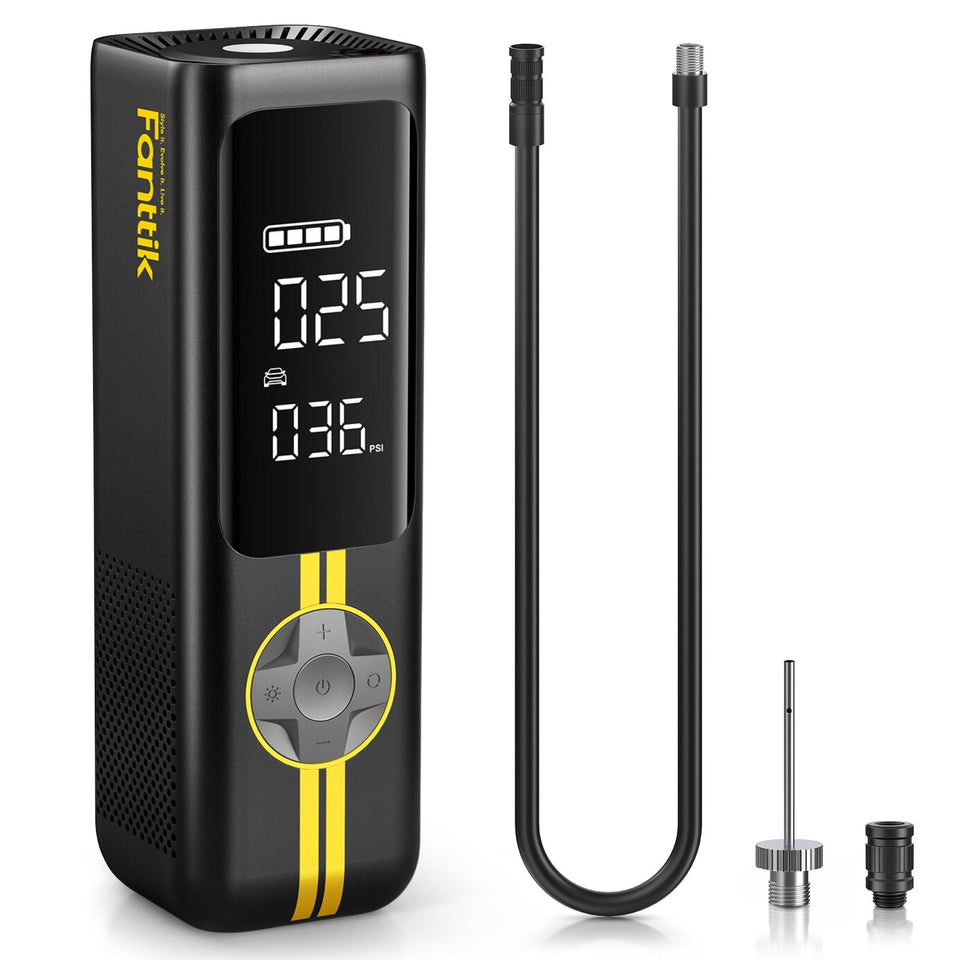
Small motors generate significant heat. A quality inflator should be able to handle at least two full motorcycle tires (0 to 36 PSI) without needing a cooldown. While some ultra-tiny units might struggle, modern high-performance models—such as those tested in our Fanttik workshop lab—typically offer a 40-minute continuous runtime, which is more than enough for any bike on the road.
2. Battery Longevity and "Calendar Aging"
A critical insight often missed in standard reviews is the impact of calendar aging. Lithium-ion batteries degrade over time regardless of use. Research published in ScienceDirect suggests that a battery stored for 2-3 years can lose 20-30% of its capacity. For a rider, this means your "emergency" tool might have less juice than you expect when you finally need it.
Pro Tip: We recommend a "top-off" charge every three months and a full discharge/recharge cycle once a year to maintain battery health.
3. Precision Gauges
Because motorcycles are so sensitive to small pressure changes, a digital gauge with an accuracy of +/- 1 PSI is non-negotiable. Look for units that allow you to "preset" a pressure; the device should automatically stop when it hits the target, preventing over-inflation while you’re busy securing your luggage.
Real-World Scenarios: Beyond the Simple "Top-Off"
The Puncture Repair Protocol
If you pick up a nail in the middle of nowhere, a portable inflator is only half the solution. You must also carry a tubeless plug kit. Modern mushroom-style plugs are designed for roadside use and, contrary to popular belief, require very little mechanical skill.
However, there is a safety-critical "pro tip" for the inflation step: after plugging a tire, inflate it to roughly 10-15 PSI below the manufacturer's spec for the ride to the nearest shop.
- Crucial Limitation: This is a temporary measure. Keep your speed under 40 mph (65 kph) and limit travel to the nearest 20 miles of paved road. This reduced pressure prevents over-stressing the temporary plug at high highway speeds and excessive heat buildup. Once you are in a safe environment, you must perform a permanent repair.
The Cold Weather Challenge
If you tour in late autumn or through mountain passes, be aware that lithium-ion batteries can lose over 30% of their power output at freezing temperatures (0°C/32°F). In an emergency, we suggest keeping your inflator in an inner jacket pocket or a tank bag where it can stay warm from your body heat or the bike's proximity, ensuring it has the "cranking power" to start the compressor motor.
Storage and Maintenance: Protecting Your Investment
A common mistake is strapping an inflator directly to hot engine components or leaving it in a transparent saddlebag under the direct summer sun. Sustained high heat is the enemy of lithium-ion longevity.
Our Recommendation: Use a small, padded dry bag. This provides three layers of protection:
- Vibration Dampening: Constant road vibration can loosen internal soldering over thousands of miles.
- Moisture Barrier: Even "water-resistant" electronics can fail in a multi-day downpour.
- Thermal Buffer: A padded bag provides a slight insulation layer against rapid temperature swings.
Modeling Transparency: How We Validated These Claims
To ensure the highest level of trustworthiness, we have provided the core parameters used for the calculations in this article. These are scenario models, not controlled lab studies, designed to reflect the experience of a typical solo rider.
Parameter Table: Inflation & ROI Model
| Parameter | Value/Range | Unit | Source/Rationale |
|---|---|---|---|
| Tire Volume (Front) | ~10.4 | Liters | Estimated for 120/70R17 |
| Inflation Time (32→36 PSI) | ~0.5 | Minutes | Modeled for 32L/min flow |
| Battery Capacity | 5 | Ah | Standard for ultra-compact units |
| Energy per Jump-Start | ~1 | Wh | Calculated for 100A / 3s crank |
| Efficiency Factor | 0.7 | Ratio | Accounting for thermal/voltage loss |
Methodology: Our inflation time was calculated using a numerical integration of flow decay, assuming an isothermal vessel. The ROI model utilized the US DOE's 0.2% fuel penalty heuristic. These models apply specifically to sport-touring motorcycles; results for heavy cruisers or off-road bikes with larger tire volumes will vary.
The Path Forward: Self-Reliance as a Standard
Choosing an ultra-compact inflator is about more than just avoiding a flat tire; it’s about claiming ownership over your journey. When you have the tools to manage your own maintenance, the road feels wider and the mountains feel less imposing.
By integrating high-precision gear into your touring setup, you aren't just carrying a tool—you are carrying peace of mind. As you plan your next solo adventure, remember that the most important piece of gear is the one that ensures you never have to wait for help that might be hours away.
Disclaimer: This article is for informational purposes only and does not constitute professional mechanical or safety advice. Always consult your motorcycle's owner manual for specific tire pressure and maintenance requirements. Proper training in roadside repair is recommended before embarking on solo long-distance trips.
Sources
Continue reading
 Selecting the Right Power Source for Heavy-Duty Road Trips
Covers the 10-minute rule, cold-weather performance, voltage drop, and a hybrid strategy for building a reliable emergency kit.
Selecting the Right Power Source for Heavy-Duty Road Trips
Covers the 10-minute rule, cold-weather performance, voltage drop, and a hybrid strategy for building a reliable emergency kit.
 Protecting Inflator Integrity During Summer Cross-Country Drives
Covers trunk temperature effects, EV-specific needs, and practical heuristics like the 10-second field test for ensuring inflator readiness.
Protecting Inflator Integrity During Summer Cross-Country Drives
Covers trunk temperature effects, EV-specific needs, and practical heuristics like the 10-second field test for ensuring inflator readiness.

Leave a comment
This site is protected by hCaptcha and the hCaptcha Privacy Policy and Terms of Service apply.