



























The Architecture of Verticality: Maximizing Apartment Workshops
In the context of modern urban living, the "maker" lifestyle often collides with the reality of square footage. When floor space is a finite resource, we must view walls not as boundaries, but as untapped structural foundations. A well-designed vertical storage system does more than just clear clutter; it serves as a functional interface between the user and their tools, reducing the friction of hands-on living.
Transitioning to a wall-mounted ecosystem requires a shift from static storage to dynamic organization. For those of us operating in compact apartments, every square inch of verticality must be engineered for accessibility, safety, and aesthetic integration. We have found that the most successful setups treat tool organization as a modular engineering problem, balancing load-bearing physics with ergonomic efficiency.

Structural Foundations: The "Weakest Fastener" Principle
The most common error we observe in apartment workshop setups is over-reliance on drywall anchors for high-frequency tool storage. While a toggle bolt may be rated for significant static weight, it is often insufficient for the dynamic loads of a workshop. Every time you remove or replace a cordless rotary tool or a heavy soldering station, you apply vibration and torque to the wall.
According to the Lowe’s Drywall Anchor Guide, anchor ratings are typically derived from static pull-out tests in controlled conditions. In a real-world maker environment, the true weight limit is determined by the weakest fastener, not the storage panel itself.
The Plywood Backer Solution
To ensure long-term integrity, we recommend a "backer board" strategy. By securing a 3/4" (approx. 19mm) furniture-grade plywood sheet directly into the wall studs, you create a structural bridge. This allows you to mount slatwalls or pegboards anywhere on the plywood surface without worrying about stud alignment.
Modeling Note: Structural Load-Bearing Assumptions Our recommendation for the backer board method is based on a deterministic model for residential partition walls. This model assumes standard US/EU construction parameters.
Parameter Value or Range Unit Rationale / Source Category Plywood Thickness 0.75 inch Industry standard for structural rigidity Stud Spacing 16 - 24 inch Standard residential construction [3] Fastener Depth 2.5 - 3.0 inch Ensures 1.5" minimum penetration into stud Dynamic Load Factor 1.5 ratio Accounts for tool removal vibration Wall Substrate Drywall/Gypsum - Typical urban apartment material Boundary Conditions: This model may not apply to pre-war masonry walls or thin-gauge steel studs without specialized fasteners.
Selecting Your System: A Total Cost of Ownership (TCO) Analysis
When choosing between pegboards, slatwalls, or French cleats, makers often focus solely on the initial material cost. However, a deeper analysis reveals that "modular fatigue"—the cumulative cost and time spent on proprietary accessories—can significantly impact the long-term value of the system.
Aligned with the insights from Wallwerx, we can categorize these systems by their functional utility in small spaces:
- Slatwall Systems: Often the most aesthetically "clean" option for living areas. While the upfront cost of PVC or aluminum panels is higher, the TCO over ten years is typically lower due to the durability of the tracks and the security of the attachments.
- Metal Pegboards: Superior to traditional fiberboard, metal pegboards offer high magnetic utility. However, they can be noisy in an apartment setting.
- French Cleat Systems: The gold standard for customization. While they require the most DIY effort to build, they allow for the creation of bespoke "tool docks" that can be moved with zero tools.
Comparison of Workshop Storage Methods
| Feature | Slatwall | Metal Pegboard | French Cleat |
|---|---|---|---|
| Initial Cost | High | Moderate | Low (Materials only) |
| Setup Time | Fast | Fast | Slow (DIY heavy) |
| Weight Capacity | High | Moderate | Very High |
| Aesthetic | Professional/Sleek | Industrial | Rustic/Custom |
| Flexibility | High | Moderate | Infinite |

Strategic Zoning: The Golden Triangle Heuristic
In a compact workshop, you cannot achieve "perfect" ergonomics for every tool. Instead, we use a triage system to prioritize safety and reduce physical strain. We call this the Golden Triangle Heuristic.
The 24-Inch Rule
Place your most frequently used precision tools (such as electric screwdrivers, bits, and measuring tapes) within a 24-inch (approx. 60cm) radius of your primary seated or standing position. This minimizes excessive reaching and "micro-fatigue" during long assembly sessions.
- Zone 1 (Primary): Tools used every 10–15 minutes. Must be at eye/chest level.
- Zone 2 (Secondary): Tools used once per project (e.g., rotary tools, soldering irons). Placed just outside the 24-inch radius.
- Zone 3 (Tertiary): Seasonal or bulky items. Placed at the highest or lowest points of the wall.
According to Toolstash, strategic tool placement is less about "ideal" reach and more about minimizing the risk of dropping heavy items while reaching across a cluttered bench. We prioritize placing the heaviest tools in the center of Zone 1 to keep the center of gravity low and stable.
Customization and Safety Nuances
For the urban maker, 3D printing custom tool holders is a common practice. However, a vertical wall is a dynamic environment. Vibrations from a nearby door slamming or even heavy foot traffic can cause tools to "walk" off their hooks.
The 5-10 Degree Safety Tilt
We recommend incorporating a 5-10 degree backward tilt into any custom-printed or DIY tool holder. This simple geometric tweak uses gravity to seat the tool securely against the backplane. It is a critical safety measure in apartment settings where children or pets might inadvertently vibrate the storage system.
Environmental Considerations
Urban apartments can experience humidity fluctuations, especially in older buildings. Storing precision bits on a wall exposes them to more airflow than a sealed toolbox. To prevent oxidation, we suggest maintaining a clean, dry environment and occasionally referencing strategies for preventing bit corrosion in humid areas.
Compliance, Safety, and Engineering Trust
When building a home workshop, safety is not just a personal preference—it is a regulatory and ethical baseline. For those of us in the EU, the General Product Safety Regulation (EU) 2023/988 outlines the obligations for ensuring that any consumer product, including the tools we use and the systems we build to store them, meets high safety standards.
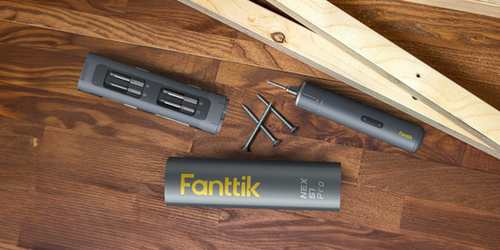
Trust in your gear is a calculation of reliability and transparency. As noted in the industry whitepaper The 2026 Modern Essential Gear Industry Report: Engineering Trust in a Cordless World, the maturity of the "modern self-reliance" market means that users now demand visible compliance and robust thermal design. When you mount a high-capacity lithium-ion battery tool to your wall, you are trusting the engineering of that tool's storage dock as much as the tool itself.
Safety Checklist for Wall-Mounted Systems
- Fastener Check: Are screws biting at least 1.5 inches into solid wood studs?
- Weight Distribution: Are the heaviest items concentrated near the mounting points?
- Clearance: Is there enough space to remove a tool without hitting another?
- Battery Safety: Are cordless tools stored away from direct heat sources or sunlight?
Cultivating a Hands-On Lifestyle
Maximizing vertical space is more than a storage hack; it is about creating a workspace that reflects a commitment to self-reliance and mobility. By implementing a methodical, engineered approach to wall storage, you transform a cramped apartment corner into a high-performance lab.
The goal is to reduce the friction between an idea and its execution. When your tools are visible, organized, and structurally secure, you are more likely to engage in the "hands-on living" that defines the modern maker.
Disclaimer: This article is for informational purposes only. Wall mounting involves structural modifications that may affect the integrity of your home. Always consult with a professional contractor or follow local building codes. Ensure that all electrical tools are stored according to the manufacturer's safety guidelines to prevent fire or injury.
Sources and Citations
Continue reading
 Extending Precision Tool Life Through Proper Indoor Storage
A technical blueprint for storing precision tools to prevent battery degradation and corrosion, ensuring long-term reliability for DIYers.
Extending Precision Tool Life Through Proper Indoor Storage
A technical blueprint for storing precision tools to prevent battery degradation and corrosion, ensuring long-term reliability for DIYers.
Leave a comment
This site is protected by hCaptcha and the hCaptcha Privacy Policy and Terms of Service apply.