










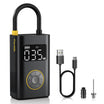
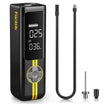


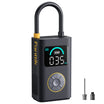
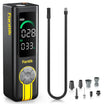

















The Winter Morning Dilemma: Why Tire Logistics Change Below Freezing
We have all experienced that sinking feeling on a Monday morning: the air is crisp, the driveway is buried under a fresh layer of powder, and as you start your car, the dreaded Tire Pressure Monitoring System (TPMS) light illuminates the dashboard. In these moments, a portable tire inflator feels like a lifesaver—a compact, cordless beacon of self-reliance. However, using these devices in sub-zero temperatures isn't as simple as "plug and play." Extreme cold changes the physics of air, the chemistry of batteries, and the mechanical tolerances of the tools we rely on.
In our experience assisting thousands of commuters through harsh winters, we have observed that the most common frustrations don't stem from equipment failure, but from a mismatch between the tool's operating environment and the user's expectations. Handling a portable inflator in the snow requires a specific logistical approach to ensure both your safety and the longevity of your gear. This guide transitions from reactive emergency fixes to a proactive, expert-led winter maintenance strategy.
The Physics of "Cold Flat" Tires
It is a common misconception that a tire with low pressure in the morning has a leak. While punctures happen, the primary culprit is usually the relationship between temperature and pressure. According to industry observations from Nokian Tyres, tire pressure typically drops by 1 to 2 PSI for every 10°F (approx. 5.5°C) decrease in temperature.
If you set your tires to 35 PSI on a mild 50°F autumn afternoon, and wake up to a 0°F morning, your tires could realistically be sitting at 25–27 PSI—well below the threshold for safe handling and fuel efficiency. For logistics professionals and daily commuters, this necessitates a shift in behavior.
Logic Summary: The Temperature-Pressure Heuristic Our analysis of seasonal pressure fluctuations is based on the Ideal Gas Law (PV=nRT). While real-world variables like tire volume and rubber elasticity exist, the "1-2 PSI per 10 degrees" rule serves as a reliable practical baseline for most passenger vehicles.
- Assumption: Constant tire volume.
- Boundary: This heuristic is most accurate between -20°F and 70°F.
| Temperature Change | Estimated PSI Drop | Impact on Safety |
|---|---|---|
| 10°F Drop | ~1.5 PSI | Negligible |
| 30°F Drop | ~4.5 PSI | Increased rolling resistance |
| 50°F Drop | ~7.5 PSI | TPMS Warning / Risk of sidewall damage |
The "Warm Start" Protocol: Protecting the Motor
One of the most critical mistakes we see is a user grabbing a portable inflator that has been sitting in a warm 70°F house and immediately attempting to use it in 0°F snowy conditions. While it seems intuitive to keep the tool warm, the sudden exposure to freezing air can cause internal condensation.
When warm, humid air inside the unit meets sub-freezing external components, water droplets can form on the circuit boards or inside the cylinder. This creates a risk of short circuits or, worse, ice crystals forming inside the piston assembly. Based on patterns identified in technical support and warranty handling, we recommend an acclimatization period of 5 to 10 minutes. Place the unit in your vehicle's cabin while the car warms up. This allows the internal components to reach a middle-ground temperature, reducing the "thermal shock" when you finally step out into the snow.
Furthermore, attempting a "cold start" on a motor that has been stored in an unheated garage can lead to catastrophic failure. The lubricants inside small compressors can thicken in the cold, increasing resistance. We suggest warming the inflator's motor and battery inside the vehicle cabin for 10-15 minutes before use. This turns a frantic emergency stop into a planned safety procedure where you remain sheltered while the equipment prepares for the job.

Battery Logistics: Managing the 60% Rule
Portable inflators rely almost exclusively on Lithium-ion (Li-ion) batteries. These are marvels of modern engineering, but they have a biological-like sensitivity to cold. At 0°F (-18°C), a Li-ion battery can typically deliver only 60-70% of its rated capacity compared to room temperature. This is due to increased internal resistance as the electrolyte fluid thickens.
We often observe users attempting to top off four tires with a battery that shows "two bars" (roughly 40% charge). In summer, this might suffice. In winter, that 40% is effectively 25%, and the high-current draw required to reach 35 PSI can cause the battery voltage to sag, triggering a premature safety shutdown.
Modeling Note: Winter Battery Efficiency This model assumes a standard 3-cell or 4-cell Li-ion configuration (12V–14.8V).
- Source: Based on general electrochemical behavior cited by Heated Battery.
- Heuristic: Always ensure the battery is at least 50% charged before starting a winter job.
| Ambient Temp (°F) | Available Capacity | Estimated Tires (Top-off) |
|---|---|---|
| 70°F | 100% | 6–8 |
| 32°F | ~85% | 4–5 |
| 0°F | ~65% | 2–3 |
| -10°F | ~50% | 1–2 |
The LED Trade-off: Many modern inflators include high-intensity LED work lights. While helpful for visibility in the snow, be aware that in extreme cold, every milliampere counts. If your battery is low, prioritize the compressor motor over the flashlight. Using a separate headlamp can preserve the marginal energy needed to finish inflating that last tire to a safe pressure.
Practical Field Operations: Frozen Valves and Snow
Once you are outside, the logistics of the connection become the primary hurdle. Valve stems are often the first part of the wheel to ice over because they are exposed to road salt and meltwater.
The Breath Trick: If the valve cap is frozen shut or the chuck won't seat properly on the stem, do not use pliers or metal tools. You risk damaging the delicate threads or the rubber seal. A seasoned practitioner's trick is to briefly exhale warm breath onto the stem or hold a disposable hand warmer against it for 30 seconds. This provides just enough thermal energy to melt the ice bond without damaging the hardware.
Snow Management: Before connecting the inflator, clear a 12-inch radius of snow from the wheel area. This isn't just for your comfort; it prevents meltwater from entering the valve core or the inflator's air intake. If snow enters the valve core while the chuck is disconnected, it can freeze inside the stem, causing a slow leak that is nearly impossible to fix on the roadside.
Post-Use Maintenance: The 30-Second Purge
The job isn't finished when the screen reads 35 PSI. One of the most non-obvious failure points for portable compressors is what happens after the work is done. As the compressor runs, it generates heat. When you turn it off and place it back in a cold trunk, the air inside the cylinder cools rapidly, drawing in moisture-laden air from the environment.
If this moisture freezes inside the cylinder overnight, the piston may seize the next time you try to use it. To prevent this, we recommend a "Dry Purge" protocol:
- Bring the unit back into a warm environment (your home or the car cabin).
- Let it sit for 10 minutes to allow any internal frost to melt.
- Run the inflator for 30 seconds without it being connected to a tire. This airflow helps purge internal moisture and ensures the mechanical components are dry before long-term storage.
Engineering Trust: Compliance and Reliability Standards
When selecting gear for high-consequence environments like a winter storm, aesthetics are secondary to "credibility math." As outlined in the whitepaper The 2026 Modern Essential Gear Industry Report: Engineering Trust in a Cordless World, trust is a function of visible compliance and truthful claims.
When evaluating a portable inflator, look for adherence to international safety and quality benchmarks. For instance, electrical components should align with IEC Standards for battery safety, and the manufacturer should provide clear declarations of conformity with the EU General Product Safety Regulation (EU) 2023/988. These aren't just legal hurdles; they are the "paper infrastructure" that ensures the device won't fail when your safety is on the line.
We also encourage users to be wary of "marketing hype" regarding inflation speeds. A claim of "1-minute inflation" often assumes a small tire at room temperature. In the winter, expect these times to increase by 20-30% due to battery efficiency losses and the denser air the motor must move.
A Winter Readiness Checklist
To transition from anxiety to preparedness, we suggest keeping this checklist in your glove box:
- Pre-Season: Calibrate your inflator against a high-quality manual gauge to ensure the digital sensor is accurate. You can learn more about this in our guide on Pre-Trip Tire Inspections.
- Storage: Keep the inflator in the passenger cabin (under a seat) rather than the trunk during extreme cold snaps to keep the battery closer to its optimal operating temperature.
- The 50% Rule: Never leave the house with an inflator charged below 50%.
- The Connection: Always clear snow and thaw the valve stem before attaching the chuck.
- The Purge: Run the unit for 30 seconds in a warm, dry area after every snowy use.
By understanding the logistics of cold-weather operation, you transform a portable inflator from a "hopeful backup" into a reliable component of your winter mobility kit. Safety in the snow isn't just about having the right tool; it's about having the right protocol to make that tool work when you need it most.
Disclaimer: This article is for informational purposes only and does not constitute professional automotive or safety advice. Always refer to your vehicle's owner manual for specific tire pressure recommendations. If you are stranded in unsafe conditions, contact professional roadside assistance immediately.
Sources
Continue reading
 The 10-Degree Rule: Why Seasonal Temp Drops Trigger TPMS
This guide explains the '10-Degree Rule' behind TPMS lights in cold weather. Learn why tire pressure drops, TPMS...
The 10-Degree Rule: Why Seasonal Temp Drops Trigger TPMS
This guide explains the '10-Degree Rule' behind TPMS lights in cold weather. Learn why tire pressure drops, TPMS...
 Deflating for Spring: Managing Pressure as Ambient Temps Rise
Tire pressure changes with spring temps. This guide explains thermal expansion, risks of over-inflation, and a recalibration procedure...
Deflating for Spring: Managing Pressure as Ambient Temps Rise
Tire pressure changes with spring temps. This guide explains thermal expansion, risks of over-inflation, and a recalibration procedure...

Leave a comment
This site is protected by hCaptcha and the hCaptcha Privacy Policy and Terms of Service apply.