





















The Quick Fix: Why Your Light is On
If your TPMS light appeared during the first cold snap of the season, it is likely a "seasonal light" rather than a puncture. The core reason: Air density changes with temperature; for every 10°F drop, you lose approximately 1 PSI.
- Immediate Action: Check your tire pressure in the morning while tires are "cold."
- The Reference: Use the PSI number on the driver’s side door jamb (the placard), not the tire sidewall.
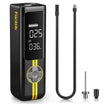
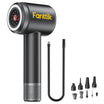
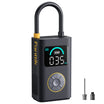
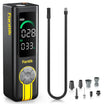
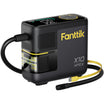
- The Solution: Use a portable inflator to top up to the placard's recommended level before your morning commute.
Understanding the Autumn Anxiety: Why Your Dashboard Light Just Woke Up
It happens every year. You walk out to your car on the first truly crisp morning of autumn, turn the key, and there it is: that nagging, orange horseshoe-shaped icon with an exclamation point. For most drivers, the Tire Pressure Monitoring System (TPMS) light is a source of immediate stress. Is there a nail in the tire? Is it safe to drive to work?
Based on common patterns we observe in customer support and vehicle maintenance, this "seasonal light" is rarely a sign of a puncture. Instead, it is a predictable manifestation of physics. As we move into colder months, the air inside your tires physically changes.
This article demystifies the "10-Degree Rule," explains why your car’s safety systems might be staying silent until it is almost too late, and provides a methodical framework for maintaining your vehicle’s safety during seasonal transitions. Our goal is to move you from a state of reactive anxiety to proactive self-reliance, aligned with the principles of engineering trust in a cordless world.
The Science of the "10-Degree Rule"
The relationship between temperature and tire pressure is governed by the Ideal Gas Law. In practical automotive maintenance, we use a heuristic known as the 10-Degree Rule.
How the Math Works
For every 10°F (approx. 5.6°C) drop in ambient temperature, your tire pressure typically decreases by approximately 1 PSI (pound per square inch). This occurs because cold air is denser than warm air; the molecules move slower and take up less space, exerting less force against the inner walls of the tire.
However, during the first major cold snap, the pressure drop can feel more pronounced—sometimes appearing as a 1.5 to 2 PSI loss per 10 degrees. This is often an observational bias caused by the "ground-chill effect," where the pavement stays colder than the daytime air, preventing the tires from recovering pressure even as the sun comes out.
Modeling Note (Seasonal Pressure Decay): The values below are heuristic estimates based on a standard passenger sedan (P-metric tire) with an internal volume of approximately 11–13 gallons and an initial "warm" fill of 35 PSI.
Parameter Value or Range Unit Rationale / Source Category Base Ambient Temp 70 °F Standard early-autumn garage temperature Cold Snap Temp 30 °F Typical first frost scenario Initial Pressure 35 PSI Standard passenger sedan specification Estimated Drop 4–6 PSI Heuristic range (includes ground-air differential) TPMS Floor 26.25 PSI 25% threshold per 49 CFR 571.138 (Federal Regulation)
Why the First Cold Snap is Unique
When summer ends, your tires are likely inflated with air that was set during 80°F or 90°F days. When the thermometer suddenly plunges to 40°F, you are looking at a 40-to-50-degree delta. This results in a 4 to 6 PSI loss overnight. If your tires were already slightly underinflated (perhaps 31 PSI instead of the recommended 35 PSI), this seasonal drop pushes them down to 25 or 26 PSI—the exact neighborhood where many TPMS sensors are programmed to trigger a warning.
TPMS Demystified: The "Critically Low" Warning
A common misconception among drivers is that the TPMS light is a "low pressure" indicator. In reality, it is more accurately described as a "critically low" warning.
According to federal safety standards in the United States, specifically FMVSS No. 138 (Federal Regulation), the TPMS light is only required to illuminate when a tire is underinflated by 25% or more of the vehicle manufacturer's recommended cold inflation pressure.
The Warning Gap
This 25% threshold creates a significant safety and performance gap. If your car requires 32 PSI, the light will not turn on until you hit 24 PSI. At 25 PSI, your tire is technically "safe" according to the sensor, yet you are already suffering from:
- Reduced fuel economy: Up to 0.2% for every 1 PSI drop in the average pressure of all tires, according to Fueleconomy.gov (Government Research).
- Increased tire wear: Accelerated wear on the outer "shoulders" of the tread.
- Compromised Handling: Sluggish steering response and increased braking distances.
The Vehicle Type Variance
The 25% rule affects different vehicle classes disproportionately. For a compact car at 32 PSI, the 25% drop is 8 PSI. However, for a heavy-duty truck with a recommended 80 PSI, the light won't trigger until a 20 PSI loss occurs. A 20 PSI deficit is far more dangerous for vehicle stability than an 8 PSI deficit, yet the system treats them with the same urgency. This makes manual, seasonal checks vital for owners of larger vehicles.
The "Cold Tire" Requirement: Why Most People Check Pressure Wrongly
We often see drivers pull into a gas station, drive for 15 minutes, and then check their pressure. This is the most common mistake in tire maintenance.
The Physics of Friction
Driving generates heat through friction and sidewall flexing. This heat causes the air inside to expand, artificially raising the pressure reading by 3 to 5 PSI. If you adjust your tires while they are "hot," you will actually end up underinflating them once they cool down.
To get an accurate reading, tires must be "cold." This means the vehicle has been:
- Parked for at least three hours.
- Or, driven less than one mile at moderate speeds.
The Early Morning Advantage
The most effective practice is to check and adjust your pressures in the early morning, before solar loading (sunlight heating the rubber) and before your commute. This provides the most stable baseline for the day's driving.

Common Pitfalls and "Gotchas" in Seasonal Maintenance
1. The Inaccuracy of Gas Station Gauges
Relying on the air pump at a gas station is a gamble. These gauges are subjected to extreme weather and abuse. Field observations suggest these communal gauges can be inaccurate by +/- 3 PSI or more. We recommend carrying your own high-quality digital gauge or a portable tire inflator with a built-in digital display to ensure a consistent, reliable reading.
2. Sensor Failure in Extreme Cold
In extreme temperatures (typically below -10°F), the lithium batteries inside TPMS sensors can struggle to output sufficient voltage. As noted in Mechanics Stack Exchange (Community Discussion), the electronic components can reach their limits, causing a "false positive" warning.
- Actionable Advice: If the light stays on in sub-zero temps but your manual gauge shows the pressure is correct, do not bleed air. Drive for 15–20 minutes; the friction may warm the sensor battery enough to reset the signal. If the light persists for days, the sensor battery may be depleted and require professional replacement.
3. The Altitude Factor
If your seasonal travels take you into the mountains, remember that atmospheric pressure decreases as you ascend. While the pressure inside the tire stays relatively constant, the difference between the internal pressure and the outside air increases. This can sometimes affect "indirect" TPMS systems (which use wheel speed sensors rather than pressure sensors) during high-altitude climbs.
Professional Maintenance Framework: A Step-by-Step Guide
Step 1: Locate Your "Placard"
Do not use the "Max Pressure" listed on the tire sidewall. Instead, open the driver’s side door and look for a sticker (the placard) on the door jamb. This lists the specific PSI recommended by the engineers for your specific vehicle weight and handling characteristics.
Step 2: Establish a "First Frost" Routine
As soon as the first night of the year hits 40°F or lower, plan to check your tires the following morning.
- Check all four tires.
- Don't forget the spare: Many modern spares also have TPMS sensors that can trigger the dashboard light. A flat spare is a common cause of "mystery" TPMS lights.
Step 3: Use a Portable Inflator
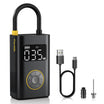
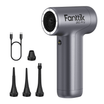
A portable, cordless tire inflator allows you to maintain "cold" pressure in your own driveway. When selecting a tool, prioritize models with "Auto-Shutoff" features. This allows you to set the desired PSI (e.g., 35 PSI) and walk away; the device will stop exactly at the target, preventing overinflation.
Step 4: Resetting the System
After inflating, the TPMS light may not turn off immediately. Most systems require a few miles of driving at speeds above 20 mph to recalibrate. If the light persists after 10 miles of driving, you may need to use the "TPMS Reset" button (often in the glovebox or vehicle settings menu) or consult a professional to check for a faulty sensor.
Logic Summary: This framework is derived from standard automotive service patterns and NHTSA guidelines (Government Research) to maximize safety and component longevity.
Building Automotive Self-Reliance
Understanding the 10-degree rule transforms a stressful dashboard light into a simple physics equation. By recognizing that your TPMS is a "last resort" safety net rather than a maintenance guide, you can take control of your vehicle’s performance.
Seasonal pressure drops are inevitable, but being stranded is not. Investing in a few minutes of maintenance during the seasonal transition ensures better handling, longer tire life, and peace of mind for you and your passengers.
For more information on maintaining your vehicle's essential systems, consider our guide on calibrating your tools for accuracy or choosing the right equipment for compact spaces.
Disclaimer: This article is for informational purposes only and does not constitute professional automotive repair or safety advice. Tire pressure requirements vary by vehicle and load. Always consult your vehicle's owner's manual and follow the manufacturer's specific recommendations. If you suspect a mechanical failure or a puncture, seek assistance from a certified automotive technician.
Sources
- U.S. Government: Tire Pressure Monitoring System Standards (49 CFR 571.138) (Official Regulation)
- NHTSA: Evaluation of the Effectiveness of TPMS (Government Research)
- Federal Register: FMVSS No. 138 Final Rule (Official Regulation)
- Mechanics Stack Exchange: TPMS during cold temperatures (Community Discussion)
- CBS News: The Science of Weather and Tire Pressure (Media Report)
Continue reading
 Spare Tire Neglect: Why Seasonal Checks Prevent Roadside Crises
This guide reveals why spare tires lose pressure fast. Learn seasonal checks, the Over-Inflation Rule, and a hybrid...
Spare Tire Neglect: Why Seasonal Checks Prevent Roadside Crises
This guide reveals why spare tires lose pressure fast. Learn seasonal checks, the Over-Inflation Rule, and a hybrid...
 Winter Morning Logistics: Safely Using Portable Inflators in Snow
Guide explains how to safely use portable tire inflators in snow, covering cold physics, battery performance, and expert...
Winter Morning Logistics: Safely Using Portable Inflators in Snow
Guide explains how to safely use portable tire inflators in snow, covering cold physics, battery performance, and expert...
Leave a comment
This site is protected by hCaptcha and the hCaptcha Privacy Policy and Terms of Service apply.