












































A bike pump makes a useful holiday gift for a cyclist if it matches where and how they put air in their tires. A pump that stays at home and a pump that rides along do different jobs. Start by figuring out which one the rider needs.
Before you pick a specific model, check that it works with the rider's valve and can reach the pressure their tires use. Small size is a nice bonus, but it comes after those two checks.
Home Pump or Ride-Carried Pump?
Start by matching where the cyclist usually adds air. REI's guide describes floor pumps for home and mini pumps for rides: leave-at-home floor pumps handle routine maintenance, while portable mini pumps address flats on the road or trail.
| Recipient's routine | Pump type to consider | Practical distinction |
|---|---|---|
| Tops off tires at home before rides | Floor pump | Stays home, isn't carried |
| Wants air available mid-ride | Mini pump | Small, light, made for flats on the go |
Some riders need both. If the rider already has one type, the other one is often the better gift. This choice only tells you the pump format, though. It doesn't tell you whether a certain pump fits their bike. The next section covers that.
Check Valve Fit and Pressure Need Before Compactness
A pump has to connect to the rider's valve and reach the pressure they use. If it can't do both, it won't help them, however small it is. Go through these checks in order:
- Find out the valve type. REI advises riders to identify their valve type, Presta or Schrader. Presta valves are slimmer, and you unscrew a small top nut before adding air. If you can't ask the rider, take a quick look at the bike. Our valve adapter guide explains how the valve types differ.
- Learn the rider's usual pressure. Don't use the number printed on the tire. Michelin explains the sidewall maximum versus operating pressure: the sidewall number is the most the tire can handle, not the right pressure for that rider's weight and riding.
- Compare both with the pump's listed specs. The pump should list the rider's valve type, and its maximum PSI should be above the pressure the rider actually uses. Maximum PSI is a ceiling. It isn't a tire setting, and it doesn't tell you how fast the pump fills a tire.
- Weigh portability last. Once the pump fits the bike, size and weight help you choose between models.

Here's an example of a ride-carried option. Our Fanttik X10 Ace Mini Bike Pump is made for road, mountain, and BMX tires and for quick fixes on the go. It works with Presta and Schrader valves and has a 120 PSI maximum. It weighs 0.26 lb and fits in a jersey pocket, a saddlebag, or a water bottle cage. It fits a rider whose usual pressure is below that 120 PSI ceiling.

When Compressor-Style Equipment Solves a Different Bike Task
For everyday bicycle tire inflation, stick with a pump designed specifically for bike tires. Seating a tubeless tire is a separate task where the tire bead must snap onto the rim, which often requires a rapid blast of air from a reservoir-equipped booster pump or shop compressor.
A standard floor pump can still seat some tubeless tire-and-rim combinations directly. However, booster pumps are specialized to release high air volume quickly for stubborn beads.
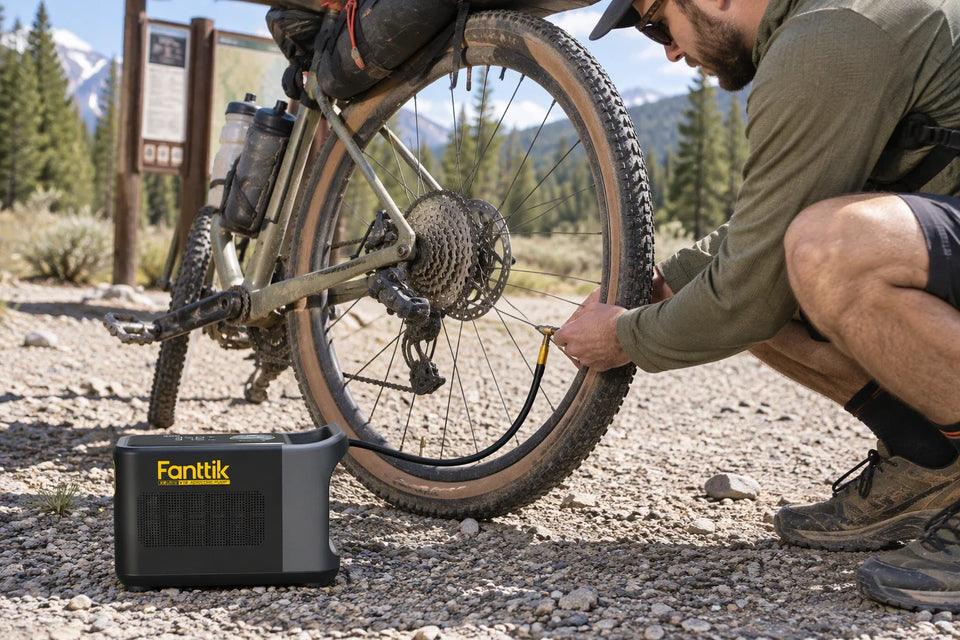
So if the rider says they struggle to set up tubeless tires, a regular pump may not fix that. And don't assume a car tire inflator or a shop compressor can stand in for a bike pump; judge those tools separately for their specific tasks.
FAQs
Can I buy a bike pump without asking what bike they ride?
Yes, but you'll be guessing. A quick look at the valve tells you more than the bike brand does. Choosing a pump that lists both Presta and Schrader valves lowers the risk of a mismatch.
Is a higher maximum PSI always better?
No. A higher maximum only matters if the rider's tires need pressure close to it. It doesn't mean the pump inflates faster, and it isn't the pressure to fill to.
Does a mini pump replace a floor pump?
Usually not. Mini pumps are built to be carried for flats on the road or trail. A floor pump is the one that stays home for regular top-offs. Many riders keep one of each.
What if the rider already owns a pump?
Ask which type they have. A rider with only a floor pump may want a mini pump for rides. A rider who only carries a mini pump may want a floor pump for home.
Continue reading
 Setting Gravel Bike Tire Pressure Before a Ride With a Portable Pump
How to pick a starting PSI for your gravel tires from a manufacturer chart, respect tire and rim...
 Holiday Gift Guide for Road Trip Drivers
Pick a holiday present for someone who drives a lot by spotting their real friction point: tire checks,...
Leave a comment
This site is protected by hCaptcha and the hCaptcha Privacy Policy and Terms of Service apply.