










































An instant tent is a good choice for a road trip with frequent campsite stops when you will pitch and pack it many times, and quick setup matters to you. It only works if the exact model passes two size checks: the packed tent has to fit in your vehicle with the rest of your gear, and the set-up tent has to fit your planned campsites and your group.
Fast setup alone doesn't settle it. One tested instant tent pitched in under a minute but packed nearly six feet long, so compare the real numbers for the model you're considering before you buy.
Does an Instant Tent Pay Off When Campsites Change Often?
Yes, when each campsite change means another full pitch-and-pack cycle. The more cycles your trip has, the more chances a quick setup has to save you effort.

Count setup cycles, not days. A 10-night trip with one long stay might mean only one or two pitches. A 5-night trip that moves camp every morning means five pitches and five pack-ups, often after long hours of driving. That second trip gives setup convenience far more chances to pay off. There is no magic number of stops where an instant tent starts winning. Map your route, count the nights you'll set up in a new spot, and decide how much a faster pitch is worth to you on those evenings.
A real example shows what quick setup can look like. In OutdoorGearLab's T4 pitch test, reviewers pitched the Gazelle T4 Hub in just under 60 seconds the first time, without reading the instructions. Their best solo time was 27.5 seconds. That result belongs to that one model. Other instant tents use different frames and steps, so read the setup instructions for any tent you're considering instead of assuming the same speed.
Will the Packed Tent Fit in Your Vehicle?
Check the exact model's packed dimensions against the cargo space you'll have left after loading everything else. Setup speed tells you nothing about whether the bag will fit.
Start with your vehicle loaded for the trip, or at least planned out. Coolers, chairs, sleeping pads, bags, and a camp stove all claim space first. Then measure the open area that remains, in length, width, and height. Compare those numbers with the tent's listed packed size. Pay attention to shape, too. A long, narrow bag may need to lie flat across a folded seat or run lengthwise in the cargo area, and that choice can block other gear or a passenger seat.
Packed length can be the deal-breaker. According to OutdoorGearLab's T4 review measurements, the Gazelle T4 Hub weighs 31.6 pounds and packs to a length of nearly six feet. The reviewers called transportation and storage weak points for that tent. If no available layout in your cargo area—lengthwise, across, or diagonally—can fit that packed length, or your storage is already full, a quick pitch won't help. Find the stated packed dimensions for each tent you're comparing. If a listing leaves them out, get them before you buy.
Will the Tent Fit Your Campsite and Group?
Compare the tent's set-up floor dimensions with the pitch area at your planned sites, then check whether the interior works for the people sleeping in it. A floor-area number or a capacity label alone won't answer either question.
Use length and width, not just square feet. As an example, OutdoorGearLab's T4 floor measurements are 7 feet 10 inches by 7 feet 10 inches, or 61 square feet, for the Gazelle T4 Hub. A square floor like that needs a pitch area at least that wide in both directions. A rectangular tent with a similar area might fit a narrow pad that the square one won't. Look up the tent pad or site details for your stops when they're available, and allow extra room for stakes and guy lines beyond the floor itself.
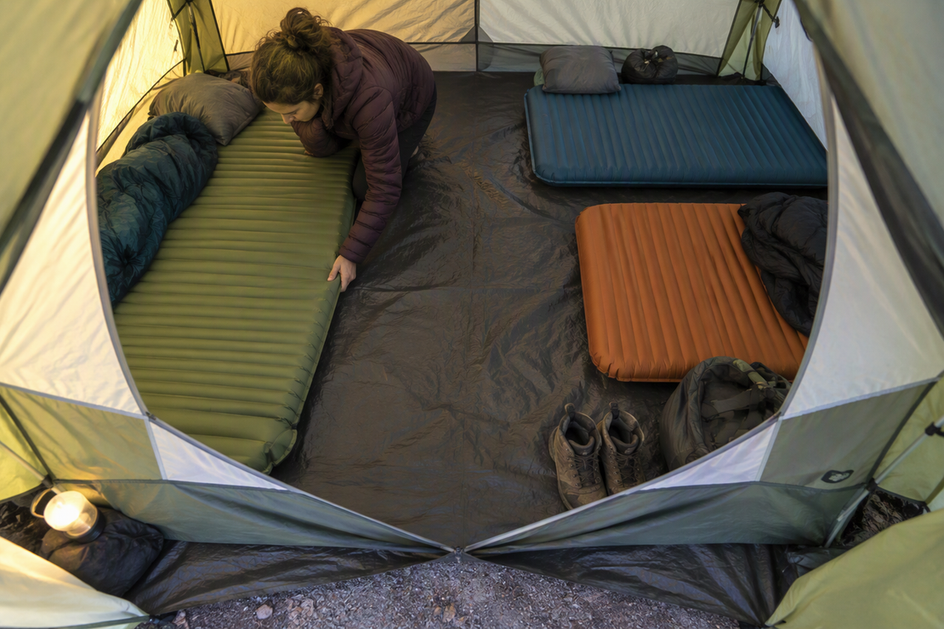
Then picture the actual sleeping layout. Count the pads or cots you'll bring and lay their sizes out against the floor length and width. Leave room for bags and a path to the door. A "4-person" label describes how many people a maker says fit, not how comfortable that will be with your gear on a long trip.
Instant or Traditional: Which Fits This Trip?
Choose an instant tent when repeated setup convenience is a priority and the specific model passes both size checks: the packed bag fits your remaining cargo space, and the floor fits your sites and sleeping plan. If either check fails, quick setup doesn't save the choice.
Consider a traditional tent when your trip has few campsite changes, so a faster pitch matters less. It also makes sense when a specific traditional model you've found solves a real limit, like a shorter packed length for a tight cargo area or a smaller floor for cramped tent pads. Don't assume every traditional tent packs smaller or that every instant tent is bulky, though. Compare the actual candidate models side by side using their listed packed size, floor dimensions, and setup instructions, and let your trip's limits pick the winner.

FAQs
Do all instant tents set up the same way?
No. Instant tents use different frame designs and setup steps, so one model's process and pitch time don't carry over to another. Read the setup instructions for the exact tent you're considering. If you can, practice a full pitch at home before the trip.
Does a quick pitch time include staking and guy lines?
Not necessarily. A reported pitch time may only cover getting the frame up, not staking the corners, tensioning guy lines, or adding a rainfly. Plan extra time for those steps at every stop, especially on breezy nights. Our guide to staking and guying down a pop-up tent covers stake angle, tension, and gust prep.
Does tent weight matter if the tent rides in a car?
It can on a trip with many stops. You'll lift the bag in and out of the vehicle every time you change campsites. A heavy, long bag, like the 31.6-pound tent in the example above, is harder to handle and can be awkward to load. Check the listed weight along with packed size, and think about who will carry it from the car to the site.
Continue reading
 How to Tin Stranded Wire Before Soldering
A NASA-based walkthrough for pre-tinning stranded wire with an iron, checking terminal instructions first, and inspecting coverage before...
 How to Keep Sanding Dust From Spreading During a Small Furniture Repair
A practical plan for indoor furniture sanding: prep before you start, capture dust at the tool, and use...
Leave a comment
This site is protected by hCaptcha and the hCaptcha Privacy Policy and Terms of Service apply.