









































To fold an instant tent without forcing the frame, start by finding your tent's exact make and model. Then follow that model's official takedown instructions in order. Different instant tents may use different folding sequences and frame-release mechanisms, so a method that works on one tent is not a safe shortcut for yours.
The rule that protects the frame is simple. Every step in the manual describes how the frame should move. If yours does not move that way, stop and recheck that step before you go on.
Fold It Using Your Tent's Exact Instructions
Folding goes smoothly when you have the right instructions in hand before you touch a single pole. Instant tent folding is not one universal routine. A 4-person design like our Alpha C4 Ultra Instant Cabin Tent uses a pop-up X-frame structure, whereas a larger shelter like our Alpha C6 Ultra Instant Cabin Tent or an integrated fiberglass build like the Alpha C6 Pro Instant Cabin Tent can each have specific joint locks and folding sequences. Your manual is the only source that describes how your frame is meant to move.
Work through this sequence from campsite to carry bag:

- Identify the exact make and model. Look for a model name or number on the carry bag, a sewn-in label inside the tent, your order confirmation, or the original product listing. "Six-person instant cabin tent" is not enough, because one brand can sell several similar tents that fold in different ways.
- Get the official takedown instructions for that model. Check the carry bag for a printed instruction sheet first. If it's missing, look for a manual or support page on the manufacturer's website, or ask the manufacturer's support team for the takedown steps for your specific model.
- Read the whole takedown section before you start. Knowing the full sequence up front keeps you from improvising halfway through. Note any steps the manual lists before the frame is touched at all, such as what to remove, open, or detach first.
- Complete any prerequisite steps the manual lists. Do only what your instructions say, in the order they say it. If the manual separates prep work from the frame release, finish the prep work before you move on.
- Follow each release and fold step in its numbered order. Match what you're doing to the text and any diagrams for that step. Use the same names the manual uses for buttons, hubs, locks, or joints so you're sure you're working on the right part.
- Confirm each step's result before you start the next one. Most instructions show or describe what the tent should look like when a step is done. When your tent matches that picture, move on. If it doesn't, use the pause rule in the next section.
- Check the finished fold against the manual's packed state. The instructions define "done," whether that's a particular folded shape, a strap position, or the tent sitting in its bag a certain way. Compare your result to that description before you zip the bag.
Avoid mixing methods. A video or a friend's routine for a different tent can look close enough, but a borrowed step may ask your frame to move in a way it was never designed to. If the only guide you can find is for a similar model, treat it as a different tent and keep looking for your own model's instructions.
It also helps to keep the instructions where you'll use them. A photo of the takedown page on your phone means you can check a step at the campsite without digging through gear. If you own one of our tents and can't locate its instructions, our Fanttik customer support team can help you with your specific model.
Pause When the Frame Does Not Move as Directed
If the frame resists or moves differently than your manual describes, stop pushing. Resistance does not prove the tent is damaged, but continuing to force it means you're no longer following the documented sequence. That's where improvised pressure can do harm.
Use the mismatch between what you see and what the manual says as your signal:
- Stop and ease off. Take the pressure off the frame and let it rest in whatever position it's in. Don't try to finish the fold by pushing harder.
- Reread the current step. Make sure you're working on the part the manual names, in the direction it shows.
- Check the step before it. Look back at the previous step and confirm your tent matches its described result. A step that was skipped or only partly done can leave the frame out of position for the next one.
- Compare against the diagram. Hold the manual's picture next to the tent and look for the difference, such as a part that hasn't released or a section that isn't in the position shown.
- Resume only when the tent matches the instructions. Once the frame is back in the position the manual describes, continue with the documented step.
- Contact the manufacturer if it still won't match. If you've repeated the step and the frame still doesn't move as described, stop there. Ask the tent's maker for guidance on that specific model before trying again.

This pause usually costs a minute or two. Forcing the frame to finish faster can end up costing you the tent.
FAQs
Can I follow a folding video made for a different instant tent?
Only if the video shows your exact model. Instant tents that look alike may still release and fold in a different order. A video for another tent can lead you to push on the frame in a direction your design doesn't support.
Is it worth practicing instant tent folding at home?
Yes. Going through your manual's takedown sequence in a yard or garage, with no weather or checkout time pushing you, lets you learn what each step should look and feel like. Then at the campsite, you'll notice right away when something doesn't match.
What if the folded tent won't fit back in its bag?
Compare the folded tent to the packed state shown in your instructions instead of squeezing it in. If the shape or size doesn't match, work back to the last step where your tent matched the manual and redo the fold from there.
What should I do after the trip besides folding the tent?
Take care of any other issues you noticed while camping. If the tent leaked, our guide on how to waterproof a tent walks through finding the leak, sealing stitched seams, and restoring the fly's water repellency.
Continue reading
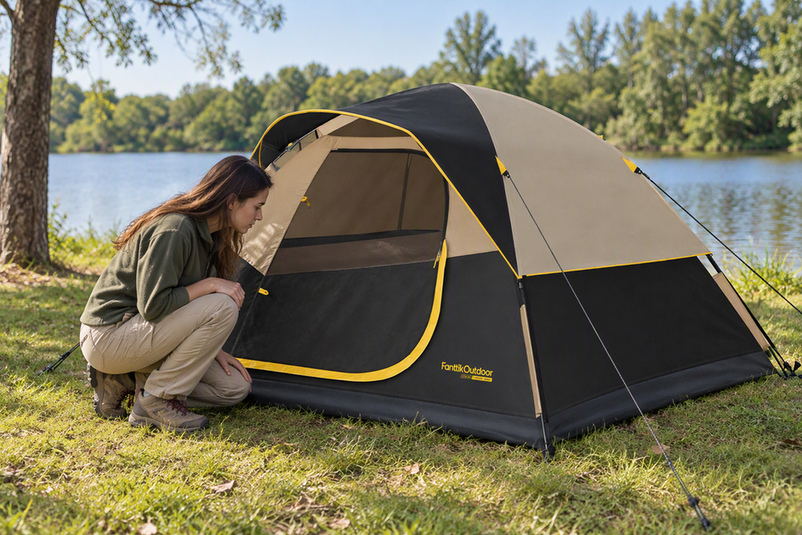 Camping Tent Zipper Stuck? What to Check Before Pulling Hard
Pause before forcing a jammed tent door. This guide covers snag and grit checks, REI's field wax tip,...
Camping Tent Zipper Stuck? What to Check Before Pulling Hard
Pause before forcing a jammed tent door. This guide covers snag and grit checks, REI's field wax tip,...
 Can You Pressure Wash a Wooden Fence Without Damaging It?
A step-by-step method for cleaning a wooden fence with a pressure washer: check both instruction sets, pick nozzle...
Can You Pressure Wash a Wooden Fence Without Damaging It?
A step-by-step method for cleaning a wooden fence with a pressure washer: check both instruction sets, pick nozzle...

Leave a comment
This site is protected by hCaptcha and the hCaptcha Privacy Policy and Terms of Service apply.