









































Yes, you can pressure wash a wooden fence. Do it only when the care instructions for the fence or its finish and your washer's manual both allow it. Use the gentlest setup both allow and test it on a hidden spot first.
If the test shows no visible damage, clean the rest of the fence with that same setup. If it does show damage, stop and use a gentler cleaning method. No setup can promise zero damage, which is why the test decides whether you go ahead.
Can You Pressure Wash a Wooden Fence Without Damaging It?
You can lower the risk a lot, but only for a fence that both sets of instructions allow you to pressure wash. A wood-fence cleaning guide notes that a pressure washer can help with heavier buildup. The same guide warns that too much pressure or a narrow, concentrated spray can damage wood. So wood fence pressure washing is a choice you make for one specific fence. It is never automatic.
Use this decision rule before you turn the washer on:
- Either set of instructions rules it out: Don't pressure wash. Clean the fence a gentler way.
- Both allow it: Choose a permitted wide-fan setup and move on to the hidden-area test. Lowe's gives the same wide-fan and hidden-area guidance for decks and fences.
- The test shows damage: Stop, or switch to gentler cleaning.
Paint, stain, other finishes and weathered boards can all change the answer. Go by the care instructions for that fence or finish rather than a general rule. If those instructions don't cover pressure washing, or the wood already looks worn out, treat that as a reason to stay gentle.

What Setup Is Gentle Enough for a Wooden Fence?
A gentle setup is really three separate choices: pressure, nozzle and distance. There is no single PSI or spray distance that works for every wooden fence. Set each one on its own, within what your washer manual and the fence care instructions allow.
- Pressure: This is the force of the water, measured in PSI. Stay inside your washer's documented limits and any limit in the fence or finish care instructions. Don't improvise beyond either one. If you're still learning how pressure and water flow differ, our guide to choosing an electric pressure washer explains PSI and GPM in plain terms.
- Nozzle: This sets the shape of the spray. Lowe's generally recommends a wide-fan tip, plus a separate detergent nozzle when you apply soap. The wood-fence guide also says to start conservatively with a wider spray pattern. A wider fan spreads the force out, while a narrow jet focuses it on a small patch of wood.
- Distance: This is how far the nozzle stays from the boards. Follow your washer manual, then confirm your chosen distance during the hidden-area test.
Keep these three choices separate. A wide fan doesn't make higher pressure acceptable, and a safe pressure doesn't make a narrow tip acceptable. If the instructions conflict or don't allow the setup you had planned, don't use it. Pick a gentler method instead.
How Do You Test a Hidden Area Before Washing the Whole Fence?
Run a short trial on a patch nobody will see, then let the result decide your next step. Lowe's advises that you test the spray pattern and distance on a hidden area to make sure the spray doesn't damage the wood. The wood-fence guide agrees: test a small area before continuing across the fence.
- Pick a hidden patch. Good options include the back of a post or a section behind shrubs. If the trial leaves a mark, it won't sit at eye level along the front of the fence.
- Use the exact setup you plan to use. Keep the same nozzle, pressure and distance you chose above, so the test tells you about the real job.
- Spray the patch, then look closely at the wood. Compare it with the untouched boards next to it.
- Pass: no visible damage. Clean the rest of the fence with this tested setup. Don't change anything.
- Fail: visible damage. Stop pressure washing. You can make one gentler change your manual allows, such as a wider fan, then test a fresh hidden spot. If the new spot still shows damage, switch to a gentler cleaning method.

A failed test tells you to back off. It is never a reason to move the nozzle closer, switch to a narrower tip or go past the documented limits.
What Is a Careful Cleaning Sequence for a Wood Fence?
Clean the fence only after it has passed the permission check and the hidden-area test. Then use two different setups: a soap setup for applying cleaner and your tested setup for rinsing.
- Get the washer ready. Connect and prime it as the manual directs. Our walkthrough on connecting and priming a pressure washer covers the basic hookup, but use your fence settings, not car settings.
- Pick a cleaner, if you want one. Use only a product whose label allows use on wood or fences. Follow the label for mixing and for how long it stays on the wood.
- Put the soap nozzle on. Lowe's describes applying detergent with a low-pressure nozzle suitable for soap. This is a different tip from the one you rinse with.
- Apply the cleaner. Work section by section and follow the label directions.
- Switch back to the tested rinse setup. Use the same wide-fan tip, pressure and distance that passed the test.
- Keep an eye on the wood as you go. If damage shows up anywhere during the full cleaning, stop and finish the job a gentler way.
This sequence keeps each tool doing its own job. The soap nozzle applies the cleaner, and the tested fan setup rinses the fence.
FAQs
Is there a safe PSI for every wooden fence?
No. Wood fence pressure washing has no single PSI setting that suits every fence. The limits come from your washer's manual and the care instructions for your fence or finish. Stay within both, then confirm the setting on a hidden patch before you clean in plain view.
Why does detergent need a different nozzle than rinsing?
Different nozzles make different spray patterns. Lowe's describes applying detergent with a low-pressure soap nozzle and recommends a wide-fan tip for pressure washing decks and fences. If you use the rinse tip to apply soap, you lose the gentler application the soap nozzle is meant to give.
What should you do if the fence fails the test patch?
Treat it as a stop signal. You can make one gentler change your manual allows and retest a new hidden spot. Don't move closer or raise the pressure. If the second test also shows damage, clean the fence without a pressure washer.
Does a painted or stained fence change the answer?
It can. A finish may come with its own care instructions, and those decide whether you can pressure wash a wooden fence without damaging its coating. If the finish instructions don't allow it, or don't mention it, a gentler method is the safer choice for that fence.
Continue reading
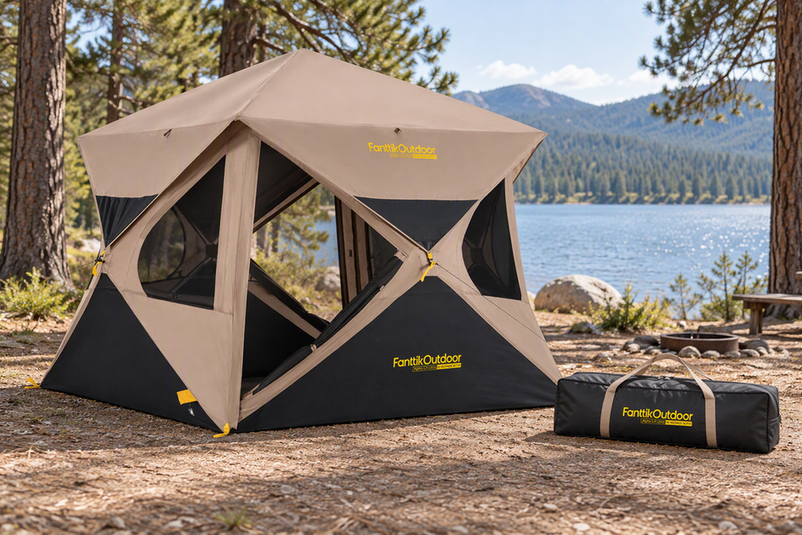 How to Fold an Instant Tent Without Forcing the Frame
Find your tent's exact model and official takedown steps, follow them in order, and pause the moment the...
How to Fold an Instant Tent Without Forcing the Frame
Find your tent's exact model and official takedown steps, follow them in order, and pause the moment the...
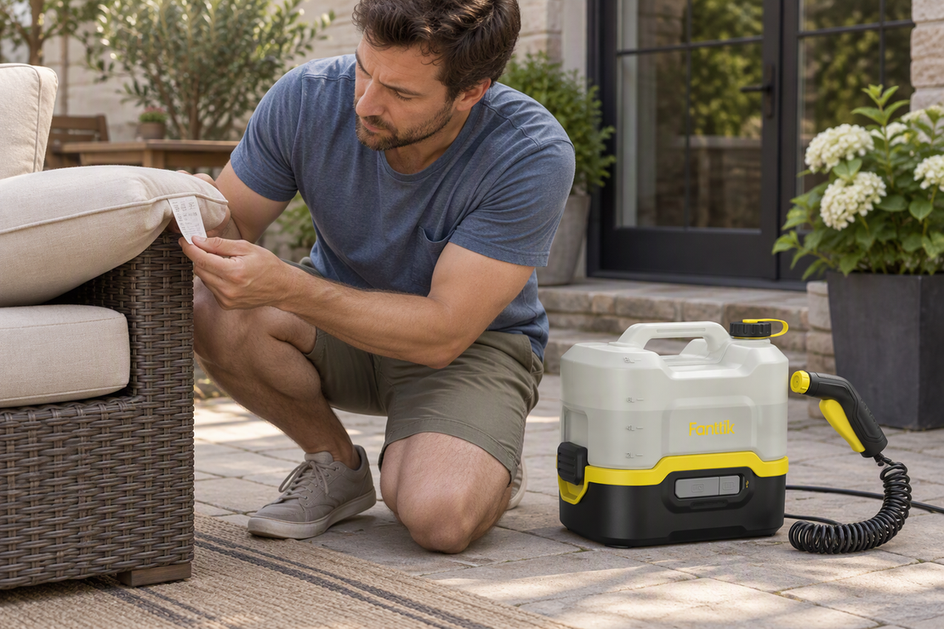 Can You Pressure Wash Patio Furniture Safely?
Decide whether a pressure washer suits your outdoor furniture, with POLYWOOD care examples for frames, wicker, and cushions...
Can You Pressure Wash Patio Furniture Safely?
Decide whether a pressure washer suits your outdoor furniture, with POLYWOOD care examples for frames, wicker, and cushions...

Leave a comment
This site is protected by hCaptcha and the hCaptcha Privacy Policy and Terms of Service apply.