









































Sometimes, but not as a blanket rule. You can pressure wash patio furniture safely only when the care instructions for that exact item, and that exact part of it, allow it. The fact that a chair lives outdoors doesn't mean it can take a high-pressure spray.

If the maker's instructions allow pressure washing, follow their method exactly. If they're missing, unclear, or say no, pick the gentler method listed for that item. That one rule settles most patio furniture cleaning decisions before you pull the washer out of the garage.
Can You Pressure Wash Patio Furniture Safely?
Yes, when the manufacturer says so, and only within the limits it sets. POLYWOOD is a clear example of what that permission looks like. Its pressure-washing instructions for in-pool furniture call for a washer rated no higher than 1,500 psi with a 25- or 40-degree fan tip. They also say to hold the nozzle at least 12 inches from the surface and move the wand slowly and evenly in continuous strokes.
Notice how narrow that guidance is. It covers POLYWOOD in-pool furniture used for deep cleaning or removing algae, calcium, or mold. It isn't a general setting for a teak bench, a powder-coated bistro set, or another brand's resin chairs. POLYWOOD also says to follow the manufacturer's care instructions because other methods may cause damage or require extra cleaning.
It also helps to keep the numbers apart. A washer's pressure rating is the highest pressure the machine is built to deliver. That isn't the same as a proven safe setting for your furniture. The fan tip controls how wide the spray spreads, and distance changes how hard the water hits the surface. The POLYWOOD directions set all three together for one product line. Changing one of them means you're no longer following that method.
So the working rule is simple. Permission for the exact item lets you use the method that source documents, and nothing stronger. No permission means no pressure washer. Go with the brush, sponge, or spot-cleaning method the maker describes instead.

Which Parts of Patio Furniture Change the Answer?
The frame's material doesn't settle the question for the whole piece. Cushions, woven sections, and mixed materials can each have their own care rule, so check each part on its own.
Cushions and pillows
Fabric parts often follow a different rule than the frame they sit on. POLYWOOD's cushion-care instructions say not to pressure wash its cushions or pillows and recommend spot-cleaning instead. That's the same brand that gives pressure-washing directions for some of its furniture. In other words, a "yes" for the frame and a "no" for the cushions can come from the same company. Take cushions off before you clean anything nearby. Then follow the fabric maker's own directions, since this rule is specific to POLYWOOD cushions and pillows.
Synthetic wicker and removable components
Woven surfaces can call for hand cleaning even when other parts of a set don't. POLYWOOD's synthetic-wicker cleaning directions describe a separate hand-cleaning method with a soft-bristle brush, and they start with removing the cushions. That's a gentler path for POLYWOOD synthetic wicker. It doesn't prove that every wicker or rattan piece has the same limits, because woven furniture varies in fiber, weave, and finish. If your wicker came with its own care card, that card wins. If it didn't, a soft brush and hand washing keep you away from the pressure-washer question entirely.
Wood, coated metal, resin, and mixed construction
No single rule makes all wood, coated metal, or resin furniture safe or unsafe to pressure wash. The finish, coating, age, and any past repairs can change how a surface handles a strong spray. For general context, Homes & Gardens offers secondary guidance on pressure washing wood, rattan, metal, and hard-wearing plastic. That editorial article, which includes retailer shopping links, advises against pressure washing wood and rattan. It describes a low-power setting and starting at least 6 feet away for metal, says hard-wearing plastic can be pressure washed, and advises against antique or particularly worn metal. Treat that as background, not permission. For mixed, worn, repaired, or unidentified pieces, look for written permission in the item's own care guide. If you can't find it, clean by hand with the gentlest method that guide describes.
What Safety Guidance Applies to Electric Pressure Washers?
Two government sources set the key boundaries: stay alert to shock risk around cords and connections, and never aim the spray at a person. The CPSC's electric pressure-washer warning, issued in 1983, says consumers could get a fatal electrical shock if the power cord connections become wet or an internal short exists. Keep cord connections dry and off wet patio surfaces while you work. The same warning says children should never operate a pressure washer and should stay at a safe distance while an adult uses one.
The CDC adds that the strong spray from a pressure washer can cause serious wounds. Its pressure washer safety guidance says to follow the safety instructions in your washer's owner's manual and to never point a pressure washer at yourself or others. Keep people out of the spray path before you squeeze the trigger. Your machine's manual stays in charge of model-specific operation.
If the washer starts surging or pressure jumps without warning, stop and figure out why before you go back to your furniture. Our guide to diagnosing pressure spikes and failures walks through unloader valve problems that can cause that behavior.
FAQs
Does POLYWOOD's 1,500 psi guidance apply to other patio furniture brands?
No. The 1,500 psi rating, the 25- or 40-degree fan tip, and the 12-inch distance come from POLYWOOD's care guide for its own in-pool furniture. Another brand's chairs may use a different plastic, coating, or construction. Use that brand's written care instructions. If they don't mention pressure washing, clean by hand.
What should I do if I can't find care instructions for my furniture?
Skip the pressure washer. Without written permission, you can't confirm how the finish or construction will handle the spray. Clean the frame by hand with a soft brush or sponge, and spot-clean any fabric. If you know the brand, its website or customer service may still have care directions worth finding before you try anything stronger.
Can I pressure wash outdoor cushions if the fabric is made for outdoor use?
Outdoor fabric doesn't automatically mean pressure-washer safe. POLYWOOD's fabric care guidance, for example, says not to pressure wash its cushions or pillows and recommends spot-cleaning. For other brands, follow the cushion maker's label or care page, which may be different from the frame's instructions.
Is my washer's maximum psi a safe setting for patio furniture cleaning?
No. Maximum or rated psi describes what the machine can produce, not what a surface can tolerate. Safe patio furniture cleaning depends on the pressure, the nozzle's spray pattern, and the distance together, and only the furniture's care instructions can set those limits. When a maker gives a ceiling, as POLYWOOD does for its in-pool line, choose a washer and tip that stay within it.
Continue reading
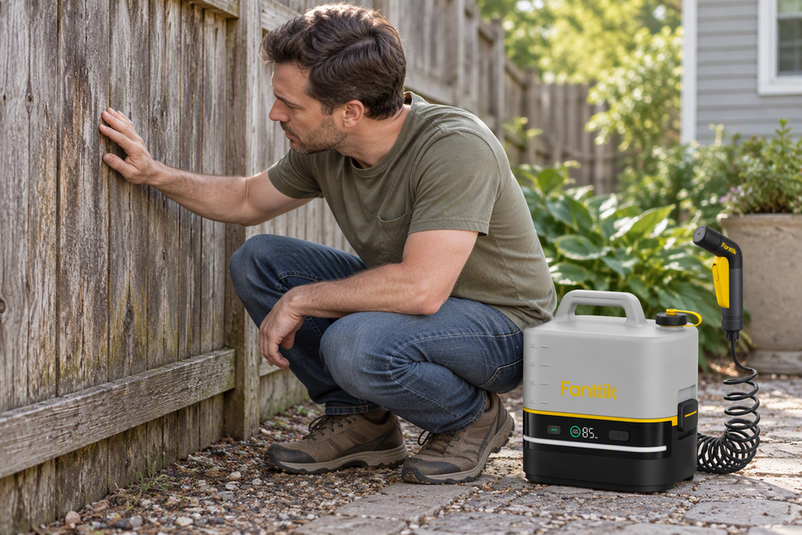 Can You Pressure Wash a Wooden Fence Without Damaging It?
A step-by-step method for cleaning a wooden fence with a pressure washer: check both instruction sets, pick nozzle...
Can You Pressure Wash a Wooden Fence Without Damaging It?
A step-by-step method for cleaning a wooden fence with a pressure washer: check both instruction sets, pick nozzle...
 What Detergent Can You Use in an Electric Pressure Washer?
A check path for electric pressure washer soap: read your model's detergent instructions, compare the cleaner label, and...
What Detergent Can You Use in an Electric Pressure Washer?
A check path for electric pressure washer soap: read your model's detergent instructions, compare the cleaner label, and...
Leave a comment
This site is protected by hCaptcha and the hCaptcha Privacy Policy and Terms of Service apply.