






















You can use a cleaner in an electric pressure washer when two sets of directions agree. Your washer's instructions must allow that type of cleaner and say how to apply it, and the cleaner's label must support pressure-washer use. No one brand or dilution ratio fits every machine, and thick foam does not show that a cleaner is approved.

Surface fit is a third, separate check. A cleaner that suits your washer still needs a label that covers your car, deck, patio, or outdoor furniture.
What Detergent Can You Use in an Electric Pressure Washer?
The right pressure washer detergent is one that your specific machine allows and that its own label says works in a pressure washer. Any product that fails either test stays unconfirmed, no matter how well it foams or how many jobs it claims to handle.
Start with the exact model number of your washer, not just the brand or product line. Two washers from the same maker can handle detergent differently, so a general "this brand takes soap" answer is not enough. Open the manual for that model or browse related cleaning tools, outdoor garden tools, and documentation to find the part about detergent or cleaning solutions. It may tell you whether detergent is allowed at all, what type of cleaner to use, and what to avoid.
Next, read the cleaner's label. You want wording that says the product is meant for pressure washers, plus directions for how to prepare and apply it. A bottle labeled "all-purpose" or "multi-surface" tells you where the cleaner can go. It does not tell you whether your washer can pull it through its system.
The decision is simple:
- Both documents support the use: go ahead, following both sets of directions.
- The washer manual doesn't mention detergent, or the label doesn't mention pressure washers: treat the pairing as unconfirmed and pick a different cleaner, or get the answer from the washer's maker first.
- Either document rules it out: don't use that cleaner in that machine.
Foaming power is the easy thing to judge by, and it is the wrong one. A cleaner can make heavy suds and still clash with how your washer is built to take in detergent. Using a cleaner your washer's instructions don't allow puts you outside those instructions.
How Do You Match the Washer's Application Method to the Label?
Your washer's manual sets the route detergent takes through the machine. The cleaner's label sets how that product gets prepared. Line the two up step by step, and don't borrow settings or ratios from a different machine or product.
- Write down your washer's detergent system by name. Manuals may describe a built-in detergent tank, a siphon tube, a soap nozzle, a foam attachment, or a low-pressure detergent setting. Note the exact one your model uses. If your manual names one system, follow it and ignore directions written for a different setup.
- Note the application controls the manual lists. Look for the nozzle, pressure setting, or mode it tells you to use with detergent. Also look for anything it asks you to do afterward, such as running clean water through the system. Treat those steps as part of using detergent, not as extras.
- Read how the cleaner label says to prepare the product. Check whether it is a concentrate you mix with water or a ready-to-use formula. If it needs mixing, use the ratio printed on that label. Also check that the label's application method fits the route you wrote down in step 1.
- Go ahead only when the two methods match. If the label assumes a setup your washer doesn't have, or your manual forbids something the label calls for, stop there. Making up a ratio or a workaround route leaves you with an untested combination.
Dilution really does vary from product to product. When Consumer Reports tested detergents, each one was diluted according to its maker's directions, and at least one formula could be used without dilution. Its test sprayed the detergent at low or no pressure, let it soak, and then rinsed at high pressure. That describes how those four products were tested. Your own washer's manual still decides how detergent goes through your machine.
After you confirm a match for a vehicle wash, our guide on pressure washer car detailing setup covers the connect, prime, and rinse steps that come next.
Can You Use Dish Soap or Another Household Cleaner?
There's no blanket yes or no for dish soap in an unspecified electric pressure washer. Whether it's acceptable depends on what your washer's manual and the product's own directions say, and without that support it counts as unconfirmed.
That's not the same as saying dish soap will always cause a problem. It means the facts that would settle the question live in two specific documents, and a general rule can't stand in for them. If your washer's manual lists household cleaners it allows or bans, that list is your answer. If the dish soap's label gives directions for pressure-washer use, that is support from the cleaner's side too.
Several shortcuts don't count as proof. Watering soap down doesn't make it approved. "Low suds" on the bottle doesn't make it approved either. Working well in a bucket for hand washing also doesn't mean it works in a washer's detergent system, because that system may be built around a certain type of cleaner.
The same applies to glass cleaner, degreaser, laundry detergent, and other household products. If neither document supports the use, pick a cleaner whose label covers pressure washers and whose type your manual allows.
Does the Detergent Label Cover Your Surface?
No. Approval for your washer only tells you the machine can handle the cleaner. The label must also list the surface you plan to clean before the combination makes sense.
Compare the surfaces named on the label with the exact thing in front of you. "Vehicle" or "car wash" wording addresses paint and trim. A patio cleaner may list concrete or pavers. A deck product may name wood or composite, and those are different materials. Outdoor furniture can be plastic, metal, wood, or fabric, so look for the actual material rather than the word "furniture."

If the label covers your washer but not your surface, pick a different cleaner. If it covers your surface but your washer's directions don't allow it, the same rule applies. Some jobs involve parts that shouldn't get pressure-washed at all. Our guide on washing campers with pressure washers explains which RV seals and slide-outs need hand washing instead.
FAQs
What if my pressure washer manual doesn't mention detergent at all?
Treat detergent use as unconfirmed for that model. A manual that says nothing gives you no approved cleaner type or delivery route to follow. Get detergent guidance for your exact model number from the washer's maker before adding any cleaner to the machine.
Do I always need to dilute pressure washer detergent?
No. Follow the cleaner's own label. Some products are concentrates with a mixing ratio, and others are ready to use. In Consumer Reports' test of four pressure washer soaps, each was prepared according to its maker's directions, and at least one could be used without dilution. Never copy a ratio from a different product.
Do all electric pressure washers use a detergent tank?
No single detergent route applies to every electric washer. Depending on the model, the manual may describe an onboard tank, a siphon tube, a soap nozzle, or a foam attachment. Use only the method your model's manual names, and match the cleaner's directions to that method.
Does "pressure washer safe" on a label mean it works with my machine?
It covers the cleaner's side of the check, not the washer's. A label written for pressure washers in general can't account for every model's detergent system or restrictions. Confirm that your washer's manual allows that type of cleaner and application method too.
Continue reading
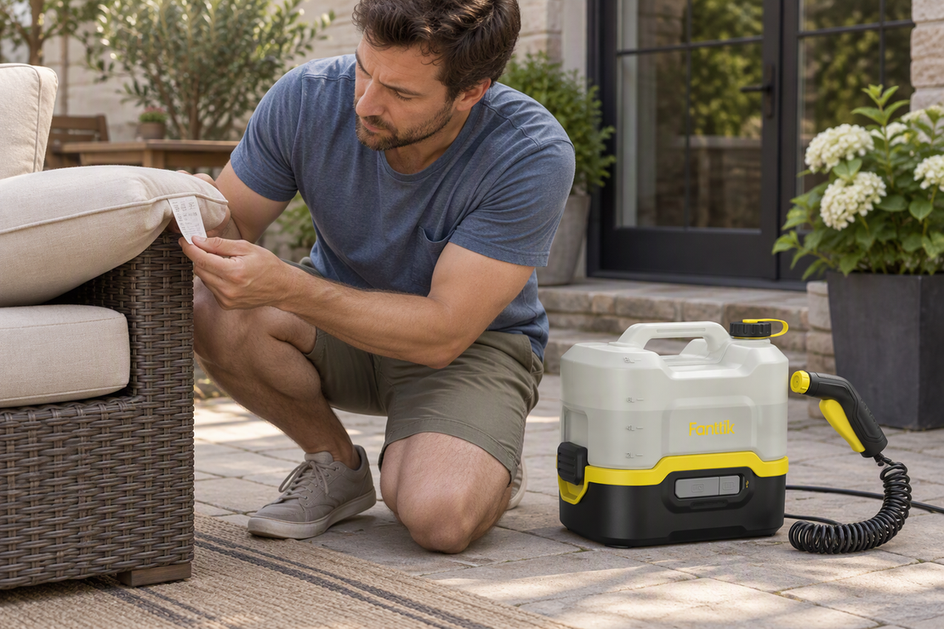 Can You Pressure Wash Patio Furniture Safely?
Decide whether a pressure washer suits your outdoor furniture, with POLYWOOD care examples for frames, wicker, and cushions...
Can You Pressure Wash Patio Furniture Safely?
Decide whether a pressure washer suits your outdoor furniture, with POLYWOOD care examples for frames, wicker, and cushions...
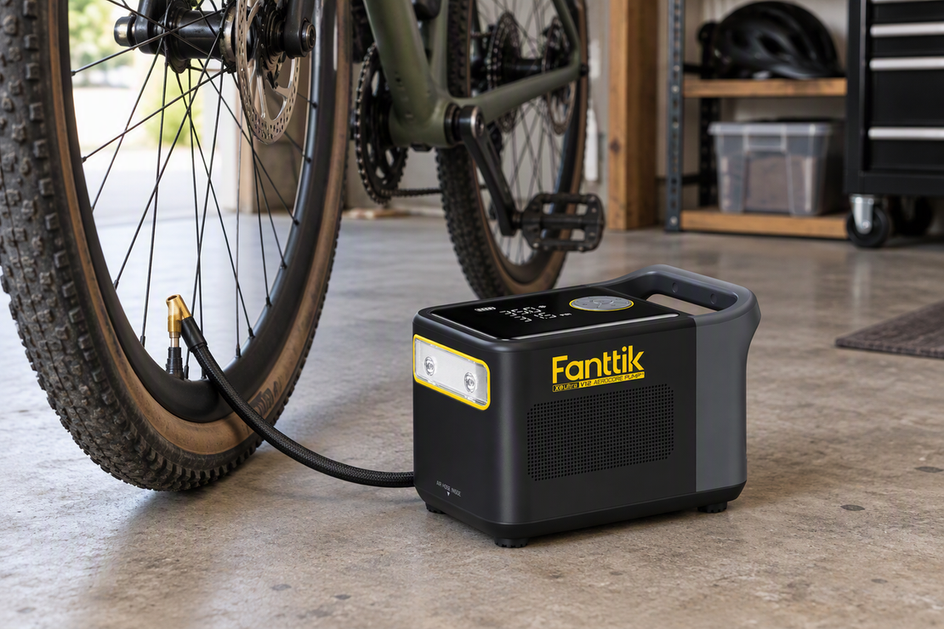 Tubeless Bike Tire Pressure Guide: How Low Can You Safely Go?
A practical how-to for tubeless riders: get front and rear starting pressures, list the inputs that move them,...
Tubeless Bike Tire Pressure Guide: How Low Can You Safely Go?
A practical how-to for tubeless riders: get front and rear starting pressures, list the inputs that move them,...
Leave a comment
This site is protected by hCaptcha and the hCaptcha Privacy Policy and Terms of Service apply.