










































For stubborn mildew, pressure washer detergent was the faster choice in Consumer Reports' testing. More pressure still did some good: on mildewed concrete walks and metal roofing, plain high-pressure water was nearly as effective, just slower. That result is a good reason to try a compatible cleaner before you turn up the force, but it doesn't settle every type of grime or every surface.
If grime is still there after a careful wash, don't just raise the pressure. Recheck the soil, the surface, and the directions for your cleaner and washer first.
Does Detergent or More Pressure Help With Stubborn Grime?
Detergent gives the clearest advantage when the grime is mildew on a hard surface like the ones that were tested. In Consumer Reports' mildew-cleaning tests on concrete walks and metal roofing, high-pressure water without soap was "nearly as effective, but slower," and "the suds definitely killed mildew faster."
So the real difference in those tests was speed, not whether the surface got clean at all. Water alone got close. Detergent got there sooner.
It helps to see detergent and pressure as two separate tools. In the soak-then-rinse method, the cleaner sits on the soil and works on it. The spray then carries the loosened soil away. Turning up the pressure only adds force to the rinse. It does nothing to the soil before the rinse starts.
That's why "more pressure" and "add detergent" aren't the same fix. If your problem looks like the tested mildew cases, a compatible cleaner provides a speed advantage over plain water alone.
Which Grime and Surfaces Does This Evidence Cover?
The direct comparison covers one soil, mildew, on two surfaces: concrete walks and metal roofing. Other grime, such as grease, oil stains, tree sap, or road film, falls outside that result. So do other materials and finishes, such as wood, painted siding, or vehicle paint.
Keep those cases separate when you decide what to do. A cleaner that sped up mildew removal on concrete isn't automatically right for a different stain. It also isn't automatically safe on a softer or coated surface. Before you use any cleaner on a surface, the cleaner's label needs to allow it.
Wood calls for extra care. Consumer Reports also gives a wooden-deck caution: pressure washing a deck the wrong way can damage it. That warning doesn't come with a safe setting, so treat it as a reason to avoid raising pressure on wood by guesswork.
Car paint is its own case. The soap has to be labeled for automotive finishes and for the way you plan to apply it. Our guide to car wash soap compatibility walks through reading those labels and setting foam cannon dilution.
How Should You Apply Detergent and Rinse It?
Put the detergent on gently, let it soak, then rinse with force. That's Consumer Reports' tested application sequence for the soaps it evaluated:
- Confirm the pairing first. Check that the cleaner's label allows your surface and that your washer's manual allows the way you plan to apply it. If either one says no, stop and choose a different cleaner or method.
- Dilute as directed. Use the ratio the detergent maker gives. The report notes that at least one formula can be used without dilution, so read the label rather than assuming.
- Apply at low or no pressure. Spray the solution on so it coats the surface. This step isn't meant to blast anything off.
- Let it soak. The tested sequence doesn't give a universal soak time. Use the dwell time on your cleaner's label if it lists one.
- Rinse at high pressure. Rinsing is where the spray force does its work, carrying away the soil the cleaner has loosened.

If your label and manual agree with this order, you have a supported routine. If they give different directions for your product or surface, follow the label and manual. The tested sequence doesn't show that every detergent works with every washer or surface.
What Should You Reassess if Grime Remains?
Leftover grime means it's time to recheck the job. It doesn't prove you need more pressure. None of the evidence here gives a safe pressure or nozzle step-up for an unspecified surface, soil, and washer, so an increase shouldn't be your automatic next move.
Plain water may also be part of the answer. UNC EHS's plain-water adequacy test advises trying plain high-pressure water first to see whether the result is good enough. The UNC team also says that, in its own pressure-washing work, chemicals often did not improve the result. That's guidance from one university's setting, not a rule for home surfaces. Still, it shows that detergent's benefit depends on the job, just as pressure's does.
Before changing anything, work through these checks:
- Soil: Is the leftover grime the same soil you treated, or something different, like an oil stain under the mildew? A different soil may need a cleaner made for it.
- Surface and finish: Is the material close to the tested hard surfaces, or is it wood, paint, or another finish that needs gentler handling?
- Cleaner directions: Did you dilute, apply, and soak the way the label says? A skipped soak or the wrong mix can look like "not enough pressure."
- Washer limits: Does your washer's manual give a setting or nozzle for this surface? If it doesn't, don't guess at a higher one.

If those checks don't point to a documented change for your surface and machine, repeating the label-directed soak and rinse is the step the evidence supports.
FAQs
Can I use any household cleaner in a pressure washer?
Not unless both the cleaner's label and your washer's manual allow it. The application steps above come from tests of specific pressure washer detergents. They don't cover kitchen or general-purpose cleaners, so don't assume those cleaners will behave the same way in your machine or on your surface.
Will a higher-PSI pressure washer beat detergent on grime?
That isn't supported here. In the tested mildew cases, high-pressure water alone was slower than using soap, and maximum PSI is a machine rating, not a cleaning result. If you're shopping, our guide to matching PSI and GPM to tasks covers how to size a washer for the work you actually do.
Do I need a pressure washer to wash my car?
Not always. A pressure washer fits when your equipment manual allows car finishes and you need controlled rinsing for heavier road film or wheels. A standard garden hose is better for light dust, frequent maintenance rinses, or older vehicles where high-pressure spray risks peeling sensitive trim or paint. Our comparison of pressure washer versus garden hose details how to check vehicle guidance before you choose.
Continue reading
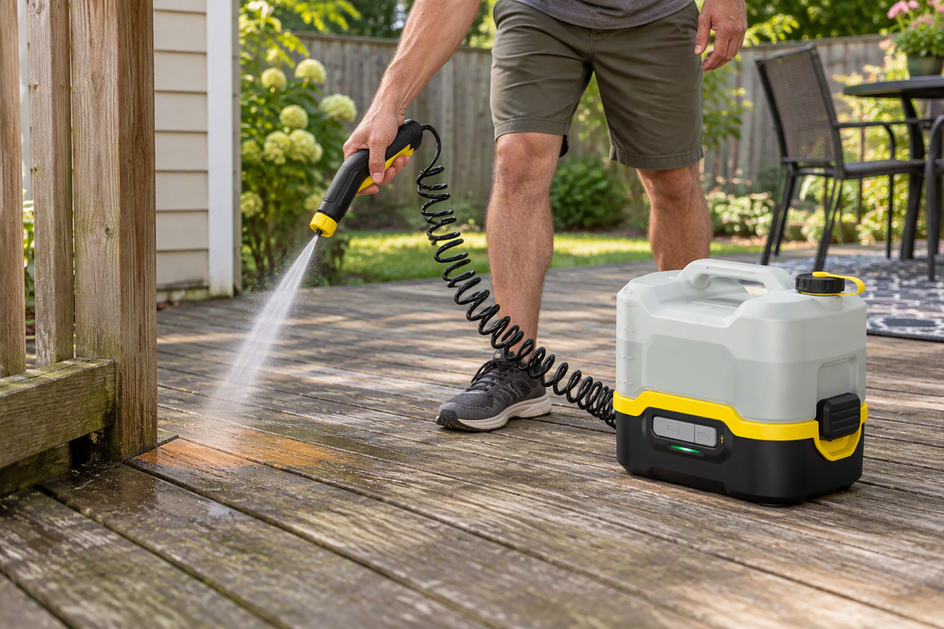 How to Match Pressure-Washer Technique to a Surface
A surface-by-surface guide to wood decks, concrete, and siding, with a test-patch check and clear signs that mean...
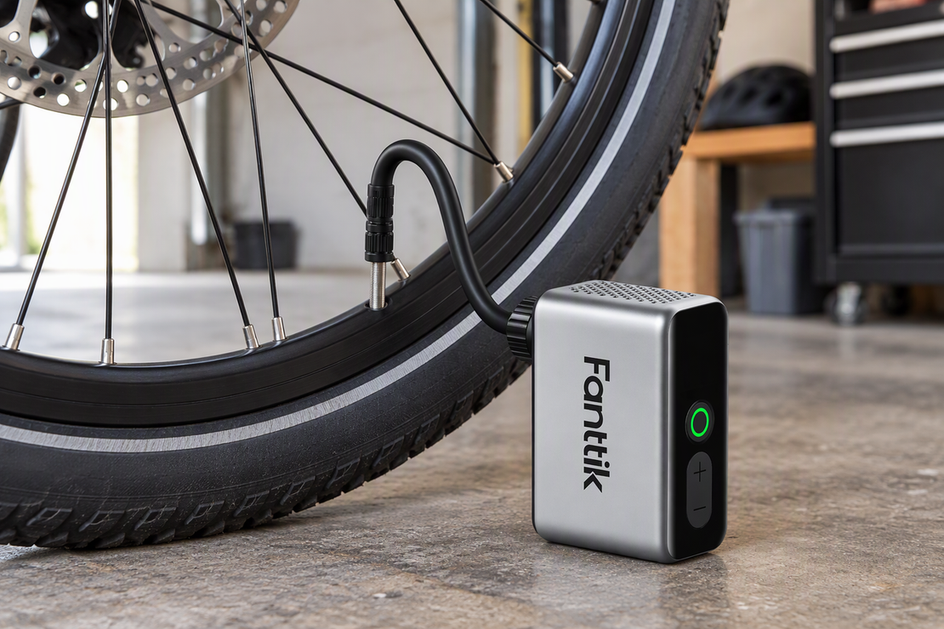 Why Can Two Bike Pumps Show Different Pressure Readings?
Why a finer digital display isn't proof of accuracy, what happens to air when a pump chuck goes...
Leave a comment
This site is protected by hCaptcha and the hCaptcha Privacy Policy and Terms of Service apply.