









































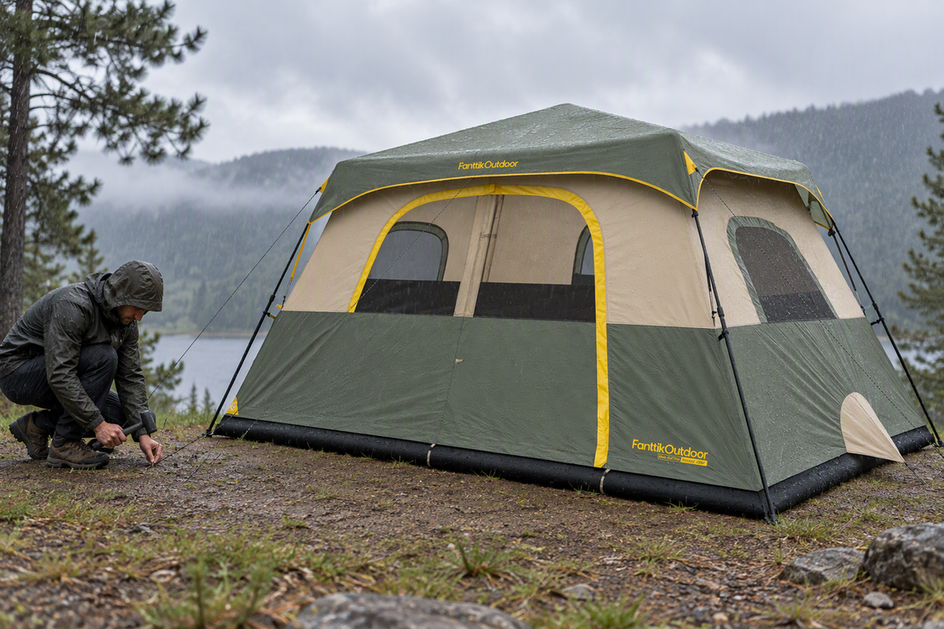
No single compass direction is right for a tent door at every campsite. Base your tent door orientation on the site you actually have: the likely wind and rain, the ground that will stay driest, and the path you'll use to get in and out.

In practice, pick a well-drained spot first. Then turn the door toward the approach that works best. Wind matters, but no fixed east, south, upwind, or downwind rule is proven to keep blowing rain out of the door.
How Wind and Wind-Driven Rain Affect the Choice
Wind and rain should shape your decision, but they call for local checks, not a fixed bearing. A door direction that works well at one site can be awkward or exposed at the next.
Start before you leave home. The National Weather Service forecast maps for wind and rain show expected weather, sustained wind speed and direction, and the chance of precipitation. That tells you whether to plan for a breezy, wet night or a calm, dry one. Keep in mind these are regional forecasts. They can't tell you how air moves across your exact tent pad. So once you arrive, notice where the wind is actually coming from at the site and what it hits first.
Your goal also changes which way the tent should face. According to Pitchup's conditional orientation advice, the right choice depends on the climate. In warm weather, a door facing the wind lets a cooling breeze in. In windy conditions, Pitchup says to angle the side with the strongest pole structure toward the wind so the tent stays solid. These are two different jobs. One is about comfort. The other is about keeping the tent stable. On a windy night, your tent's frame decides which side faces the wind, and the door simply ends up wherever that puts it.
Wind-driven rain is where generic tips fall apart. Neither of those tips says whether a door facing into the rain or away from it keeps more water out. No solid guidance settles that question either. If someone gives you a confident "always face away from the wind" rule, treat it as a habit, not a proven fix. The choices that clearly help in wet weather are where you put the tent and how you approach it. The next section covers both.
Balance Access, Drainage, and Site Layout
Choose a workable, well-drained footprint first, and then point the door toward the best approach within that space. When the two goals clash, keep the better ground and accept a less convenient entrance.
Work through the site in this order:
- Find the usable footprint. Mark the area where the tent actually fits, clear of rocks, roots, and obstacles, with room for your gear.
- Rule out wet ground. Skip low spots, ditches, and dips where water could pool or turn the ground to mud.
- Turn the door toward the approach. Inside the space that's left, face the entrance toward the open side, the path you'll walk most often, or the spot where you want to step out and leave your shoes.
Allegheny National Forest's campsite safety guidance supports the first two steps. It recommends getting the weather report before you go and watching the skies once you arrive. It also says to check the contour of the land for areas that could flood or become extremely muddy, and to look for a level site with room to spread out your gear. The same page says trees or shrubs on the side of the prevailing wind help block strong, unexpected gusts. That advice was written for one national forest, so use it as a model checklist, not a rule for every campground in the country.
Pitchup's advice for pitching in rain adds more detail on ground choice. If it's raining, pick ground that isn't waterlogged. Avoid ditches and other concave patches, because they collect puddles. Higher ground tends to be drier. None of this tells you which way the door should face. What it does tell you is which spots to rule out before the door comes into it at all.
Here's an illustrative example. Say the only raised, level patch at your site leaves the door facing a thick bush. The open side, toward the picnic table, is a shallow dip. Pitch on the raised patch. Then rotate the tent as far as the patch allows, or use a side door if your tent has one. A few extra steps to the table cost far less than a soggy floor. If you still wake up to a damp floor, figure out whether it's tent floor condensation or a leak before you blame where the tent is sitting.

FAQs
Should a tent door face east or another specific direction?
No compass direction works at every campsite. Wind, rain, terrain, and the layout of the site all change from place to place. Pick dry, workable ground first. Then face the door toward the most practical approach, whatever bearing that turns out to be.
When should I check the wind and rain forecast?
Check it before you leave so you know whether to expect wind or rain. National Weather Service forecast maps show expected wind direction, wind speed, and the chance of precipitation. After you arrive, keep an eye on the sky and the wind at the site itself, because a regional forecast can't show conditions at your exact spot.
Should my tent door face the wind on a hot night?
It can, if the night is warm and the breeze is gentle. Pitchup notes that a door facing the wind lets a cooling breeze inside. When the wind is strong, the priority shifts. Pitchup recommends turning the side with the strongest pole structure toward the wind so the tent stays stable.
Can trees or shrubs help shelter a tent from wind?
They can. Allegheny National Forest guidance says trees or shrubs on the side of the prevailing wind help block strong, unexpected gusts. Treat that as one more reason to prefer a site, not as a rule for door direction. You still need ground that won't flood or turn muddy, and a door you can actually reach.
Leave a comment
This site is protected by hCaptcha and the hCaptcha Privacy Policy and Terms of Service apply.