









































A damp tent floor after one night doesn't tell you whether the water came from condensation or leaked in through the floor or seams. Both can leave the floor wet by morning, so treat the cause as unknown for now.
Where the moisture sits and what the weather and ground were like are useful clues, but they don't prove anything. One case has a clear fix: if it rained and your ground cover sticks out past the tent, water can run underneath and come through the floor.
Does a Damp Tent Floor Mean a Leak?
No. Tent floor moisture on its own isn't enough to call it a leak, and it isn't enough to rule one out either. You have two explanations to weigh. The first is condensation, which is moisture that forms inside the tent. The second is water getting in from outside through the floor fabric or the seams.
A wet floor fits both explanations. That's why one damp morning is a starting point and not an answer. If you call it a leak too soon, you might spend time sealing seams that were never the problem. If you call it condensation too soon, you might miss a real entry point and wake up wetter on the next rainy trip.

Two things would move the diagnosis past a guess. One is a clear pattern that points to a specific source. The other is an inspection result that shows a real way for water to get in. Until you have one of those, use each clue to decide what to look at next, not to decide the cause.
What Does the Wet Pattern Tell You?
The shape and location of the wet area tell you where to look. They don't tell you where the water came from. Treat these as two steps: first describe what you see, then look into it.
Broad Dampness Across the Floor
When the whole floor feels damp, write down how far it spreads. Note whether it covers the full floor or just the area under your sleeping pads. Also note whether the moisture is on top of the floor, underneath it, or both. Don't assume broad dampness means condensation. A wide wet area tells you how much of the floor is affected. It doesn't tell you how the water got there.
A Localized Spot Near an Edge or Seam
When the wet area is small and clearly defined, measure where it sits. Note how many inches it is from the nearest floor edge or seam, and whether it lines up with a corner or a pole point. Being close to a seam makes that seam worth a look, but it isn't proof of a leak. Take a phone photo with something for scale in the frame. That makes it easier to compare if the spot shows up again on a later trip.
Seams and floors are built differently from one tent to the next. The difference between a backpacking tent and a camping tent is one example. That's another reason not to apply one tent's pattern to all tents.
How Do Rain and Damp Ground Change the Read?
Weather and ground conditions tell you what the tent went through overnight. On their own, they don't confirm or rule out either cause. The one exception is rain combined with a ground cover that sticks out past the tent.
Recent Rain or a Dry Night
Note whether it rained, about when it started, and whether it was still raining when you woke up. Rain doesn't prove a leak, and a dry night doesn't rule one out. There is one specific case where rain matters. According to Scout Life, rain can run underneath an overhanging ground cover and soak gear through a tent floor that isn't completely waterproof. The source recommends keeping the cover fully under the tent. This applies only when a cover sticks out past the tent walls. It's not a general rule about rain.
Damp Ground Under the Tent
Look at the ground separately from the sky. Note whether the site was soggy, sitting in a low spot, or dry to the touch when you pitched the tent. Then compare that with where you found the water: on top of the floor, underneath it, or on your gear. Damp ground alone doesn't establish either condensation or water getting in. Write it down so you can look at it together with the other clues.
What Should You Inspect Next?
Start by writing down what you found. Then check the ground cover if it rained. This record isn't a diagnostic test. It keeps your clues organized so you don't jump to a conclusion you can't back up.
- Record the wet area. Note where it is, how big it is, and whether it's on top of the floor, underneath, or both. Take a photo before you wipe it or move gear.
- Record the conditions. Note rain timing, how wet the ground was, and where your pads and gear were sitting.
- Check the ground cover after rain. Walk around the tent and look for any part of the footprint or ground cloth sticking out past the floor edge. If you find some, fold or tuck it so the cover sits fully under the tent. Our guide on sizing and placing a footprint covers how to set one up so it stays under the floor.

An overhanging cover after rain is one possible way water got in, and you can fix it right away. It doesn't rule out condensation or another entry point. If the cover was already tucked under, if there was no rain, or if your notes still don't explain the moisture, the cause is still unknown. For water tests, seam treatment, or repairs, use the care and testing instructions for your exact tent model. Methods differ between designs. Keep your notes and photos, because they give you something specific to compare against those instructions.
FAQs
Can a footprint or ground cloth make a tent floor wetter?
Yes, if the ground cloth sticks out past the tent and it rains. Water can collect on the exposed part, run underneath, and soak through the floor. Keeping the cover fully under the tent closes off that path.
Does a wet spot right next to a seam prove the seam is leaking?
No. Being close to a seam makes that area worth inspecting, but location alone doesn't show how the water got there. Write down the spot's distance from the seam and the conditions that night before you decide on a repair.
What if my clues point in different directions?
Keep the cause marked as unknown. Say you had a dry night but found a wet spot by the edge. Or say it rained, but the moisture was only on top of the floor. Mixed signals like these mean you need more information. Keep your notes, fix any ground cover that was sticking out, and follow your tent maker's guidance for testing that specific model.
Should I seal the seams right away?
Hold off until you have a reason beyond one damp morning. Seam treatment and floor repairs depend on how your tent is built. Use the instructions for your exact model instead of a general fix, and base the decision on what you actually found.
Continue reading
 How to Choose Rotary Tool Speed for Different Materials
A practical guide to rotary tool speed bands for plastics, soft woods, metals, engraving, and polishing, plus how...
How to Choose Rotary Tool Speed for Different Materials
A practical guide to rotary tool speed bands for plastics, soft woods, metals, engraving, and polishing, plus how...
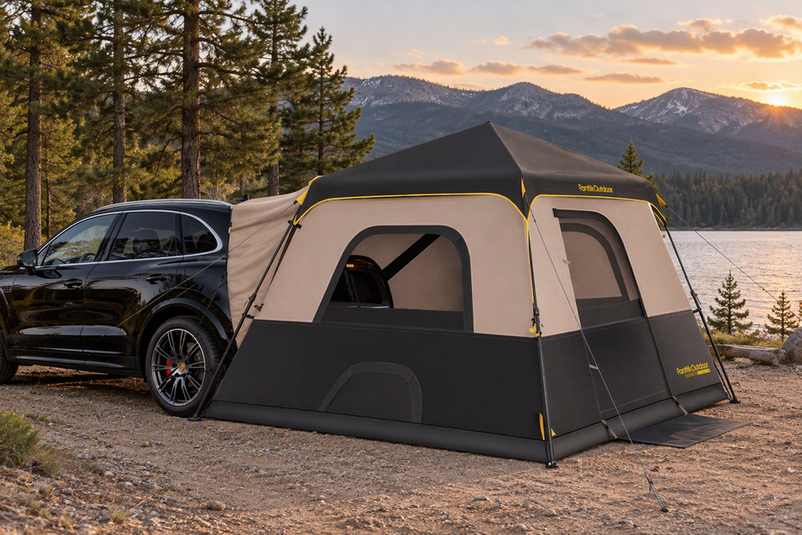 SUV Tent or Cabin Tent: Which Fits Your Camping Trip?
Choose between a vehicle-connected SUV tent and a standalone cabin tent by checking whether your car stays put,...
SUV Tent or Cabin Tent: Which Fits Your Camping Trip?
Choose between a vehicle-connected SUV tent and a standalone cabin tent by checking whether your car stays put,...
Leave a comment
This site is protected by hCaptcha and the hCaptcha Privacy Policy and Terms of Service apply.