































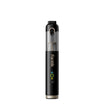






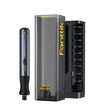



This is the central support page for the Fanttik F2 Master Cordless Rotary Tool. It's a Dremel-style rotary tool built for engraving, polishing, sanding, carving, and light grinding — not a drill or a screwdriver. Most support requests fall into three groups: the tool won't power on, an accessory slips or wobbles in the collet, or charging doesn't behave as expected.
Work through the quick diagnostic order below before jumping to a specific fix page — it resolves a lot of these issues without extra steps.
Start Here: Quick Diagnostic Order
Run through these checks in order before assuming the tool is broken. Most no-power and no-spin issues resolve in the first two or three steps.
- Confirm the battery has charge. Plug in the USB-C cable and check for any charge indicator response; if you see none, go to the charging item below.
- Confirm the safety lock or power control is fully in the "on" position — an engaged lock can look identical to a dead battery.
- Remove any installed accessory and try running the tool empty at a low speed.
- If it runs empty but stalls or slows under load, check the collet and accessory fit, then check whether it feels hot.
- If the tool still won't power on, or it stops mid-task even after cooling, stop troubleshooting further on your own and check the won't-power-on entry below, or contact Fanttik support directly.
Quick Spec Sheet
The table below lists the F2 Master's core specifications. Price and availability can change, so confirm current pricing on the product page before you order accessories or replacement parts.
| Parameter | Fanttik F2 Master |
|---|---|
| Motor type | Brushless |
| Maximum speed | 25,000 RPM |
| Noise level | 32 dB (whisper-quiet) |
| Collet size | 3/32 in (2.3 mm) |
| Accessories included | 35 |
| Charging interface | USB-C fast charge |
| Cordless operation | Yes — built-in rechargeable battery |
| Typical applications | Engraving, polishing, sanding, carving, light grinding on wood, glass, plastic, metal, 3D models |
| Available colors | Gray, Red, Orange, Blue |
| Price | $79.99 |
The single most useful thing to know: the F2 Master is a precision rotary tool, not a high-torque drill. It excels at detail work at high RPM with small-diameter bits. Forcing it through thick hardwood or metal at slow speed is outside its design envelope and will cause overheating or bit damage.
Most Common Issues
Each item below names a symptom and the fix to try first. Follow the linked guide if the quick fix doesn't resolve it.
- Won't power on or spin up — usually a depleted battery or the safety lock switch left engaged. See the not turning on guide for the full sequence of checks.
- Accessory wobbles or vibrates — the 3/32 in collet needs to be fully seated and hand-tightened. A shank diameter that's too small or too large for the collet will also cause runout.
- Slower than expected speed — check the speed control setting first, then the battery charge. A partly discharged battery can prevent the motor from holding its top RPM under load.
- Overheats on heavy material — the F2 Master is built for light grinding and detail work, not sustained heavy cuts. If it slows down or shuts off during a long pass, stop, let it cool for a minute or two, and check the manual for your unit's specific thermal cutoff behavior.
- Battery charges but won't reach full — try a different USB-C wall charger; low-power USB-A ports and laptop hubs can charge very slowly or stall before the battery is full. Check the manual or product page for the minimum charger output Fanttik recommends.
- Accessory difficult to install or remove — fully loosen the collet before inserting or removing a bit. Forcing a bit into a partly tightened collet can deform the collet bore over time.
When to Stop Using the Tool
Stop using the F2 Master right away if you notice any of the signs below, and contact Fanttik support instead of continuing to troubleshoot on your own.
- The housing gets uncomfortably hot to hold, especially together with a burning smell.
- You see smoke, sparks, or visible damage around the charging port.
- The battery looks swollen, bulging, or otherwise misshapen.
- The collet or an accessory has cracked, chipped, or bent during use.
As general practice, wear eye protection when running the tool, and always make sure it's powered off before installing or removing an accessory.
How the Brushless Motor and Speed Control Work
Brushless motors deliver speed electronically rather than through mechanical brushes, which is why the F2 Master runs at a consistent speed across its RPM range and produces less heat and noise than a brushed equivalent at 32 dB. The speed control — a pressure-sensitive button that steps through 5 speed settings — adjusts the power delivered to the motor rather than shifting gears. At low settings the motor draws less current and produces less torque, which suits polishing and engraving but not aggressive material removal.
At maximum speed (25,000 RPM), the motor is designed to hold that speed under light load. Under very heavy loads, it may slow down or stop on its own; this is likely the tool protecting itself from overheating, but check the battery charge and material fit too before assuming a fault.
Practical rule: match speed to the accessory and material. Polishing and engraving work best at medium-to-high RPM with light pressure. Cutting discs and grinding stones can start at mid-speed and increase only if the accessory is cutting cleanly.
Setup and First Use
Follow these steps in order the first time you use the F2 Master. Getting the initial charge and accessory installation right helps you avoid early wobble and charging complaints.
- Charge fully before first use. Plug the USB-C cable into a USB-C charger; check the manual or product page for the minimum wattage Fanttik recommends and how the charge indicator behaves on your unit.
- Select the accessory for your task. The included accessories are designed for the F2 Master's 3/32 in (2.3 mm) collet; if a bit doesn't seat fully, check its shank size before forcing it in.
- Insert the accessory shank fully into the collet before tightening. The shank should be seated to the depth mark, or flush with the collet nose, to minimize runout.
- Hand-tighten the collet nut firmly. You should not be able to rotate the accessory with two fingers after tightening.
- Set the speed control to a low or mid setting for the first pass on new material, then adjust upward as needed.
- Hold the tool like a pen for detail work. A pencil grip reduces fatigue and gives better control at high RPM.
Maintenance and Care
Regular cleaning and a couple of storage habits keep the collet and charging port working reliably. Do these after each session or before storing the tool for a while.
- Clear dust from the collet area and ventilation slots after each session. Dust buildup in the motor vents can reduce motor life over time.
- Inspect the collet and collet nut for cracks or deformation periodically. A damaged collet causes accessory wobble that no amount of tightening will fix.
- Store the tool with the collet loose (not clamped on an accessory) to avoid stress on the collet bore.
- Keep the USB-C charging port free of dust and debris; a dirty or damaged port can prevent proper charging even when the battery itself is fine.
- If you're storing the tool for an extended period, check the manual for the recommended storage charge level — letting a lithium battery sit fully drained for a long time can reduce how much charge it holds over time.
FAQs
Can I use third-party Dremel accessories with the F2 Master?
Check the accessory's specs before running it: the shank should be 3/32 in (2.3 mm) to fit the F2 Master's collet, and its rated RPM should meet or exceed 25,000 RPM for full-speed use. An accessory that doesn't meet both specs may not seat securely or may not be safe to run at full speed.
The tool spins but seems slow — is something wrong?
Check the speed control first. If it's already at maximum and speed still feels low, charge the battery fully — a partly discharged battery can prevent the motor from holding its top RPM under load.
How long does the battery last per charge?
Runtime depends on the speed setting and material load. Light engraving at mid-speed lasts longer than aggressive grinding at full speed. Charge from USB-C when speed noticeably drops under the same load.
The tool stopped mid-use and won't restart — what happened?
This may be the tool's built-in protection against overheating. Let it rest for a minute or two without use, then try again. If it still won't restart after cooling, check the battery charge level before assuming a hardware fault, and contact Fanttik support if the problem continues.
Where do I find the manual?
See the manual and quick-start guide for the full PDF link and key settings overview.
My accessory wobbles at high speed — what do I do?
First confirm the shank diameter is exactly 3/32 in (2.3 mm); an undersized shank will wobble even in a tightened collet. If the shank size is correct, inspect the collet nut for wear and re-seat the accessory with the shank fully inserted before tightening.
Related Support
Use the links below to go deeper on a specific problem, get the full manual, or reach Fanttik support directly.
- Not turning on: step-by-step fix guide
- Manual and quick-start: full setup manual
- Fanttik F2 Master product page
- Fanttik Support Center
Leave a comment
This site is protected by hCaptcha and the hCaptcha Privacy Policy and Terms of Service apply.