































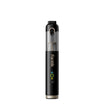









When a Fanttik car charger stops working, the first question to answer is: one port or both? That single observation tells you whether the problem is the charger, the cable, or the car's accessory socket. This guide covers both the Fanttik 65W USB-C Car Charger and the Fanttik 38W USB-C Car Charger.
Symptom Quick Check
- LED ring is off, nothing charges on either port — the charger has no power. Start with the accessory socket and vehicle ignition.
- LED ring is lit, but one port charges while the other does not — the charger itself is live. The dead port or its cable is the variable to isolate.
- LED ring is lit, both ports are dead — a simultaneous overload protection trip or a cable issue. The charger likely has power but has shut a circuit down.
- Charges one device, second device does nothing — device compatibility or cable type. Some older devices do not respond to PD/QC negotiation on an unfamiliar port.
Most Common Cause
Most "car charger not working" calls turn out to be one of three things: the accessory socket was unpowered (ignition was off), the cable being used doesn't support power delivery, or a single port has triggered over-current protection. Rarely is the charger itself failed at the silicon level. Running through the swap sequence below — cable, then port, then device — eliminates the cheap variables before concluding anything is broken.
Step-by-Step Fix
Branch A: Nothing charges on either port (LED off or no LED)
- Check vehicle ignition. On many cars and trucks, the accessory socket is only live in Accessory or Run mode. Turn the key to Accessory and retest.
- Test the socket itself. Plug a known-good device (phone with a standard cable) directly into the same accessory socket. If that also fails, the socket is the problem — check the socket fuse in your vehicle's fuse box, not the charger.
- Reseat the charger. Pull the Fanttik charger out fully and push it back in with firm pressure until it seats. Loose contact is the most common cause of no-power symptoms on a working charger.
- Check the socket for debris. Coins, dirt, or a worn spring at the bottom of the socket interrupt contact. Clear any debris with a dry brush before reseating.
- If the socket is confirmed live and the charger still shows no LED, try the charger in a second vehicle's socket to rule out a socket voltage issue. The 65W and 38W models both accept 12V and 24V input (cars and trucks).
Branch B: LED is on but one port is dead
- Swap the cable to the working port. Use the exact cable you were using on the dead port. If it now charges, the port itself may have tripped protection. Move to step 2.
- Swap the device to the dead port. Plug a device you know charges normally (a phone you just verified) into the suspect port. If it charges, the original device does not negotiate with that port's protocol.
- Reset over-current protection. Unplug the charger from the accessory socket completely, wait 30 seconds, and reconnect. The built-in protection circuitry on both models resets on a power cycle. Then test the previously-dead port with the cable and device from the working port.
- Verify cable type. On the 65W model, the USB-C port supports PD 3.0. A USB-A to USB-C cable or a data-only cable will often register as plugged in but deliver little or no current on a PD port. Replace with a USB-C to USB-C cable rated for power delivery.
- If the port is still unresponsive after a power cycle with a confirmed PD cable and a confirmed device, the port may be physically damaged. Proceed to the warranty section below.
Branch C: LED is on, both ports are dead
- Unplug the charger from the accessory socket for 30 seconds to reset any triggered protection state.
- After reinserting, test one port at a time with a known-good cable and device — do not plug into both ports simultaneously on the first test.
- If one port now works but not both simultaneously, the total power budget is being allocated to the active port. On the 38W model, simultaneously drawing from both ports is expected to reduce per-port output; a device that requires more power than the shared allocation may appear to not charge.
- If neither port works after a power cycle, repeat the Branch A accessory socket checks to confirm the charger is still receiving vehicle power.
When to Contact Support / Warranty
Collect the following before opening a ticket:
- Confirmed the accessory socket is live (tested with a second device).
- Tried at least two different cables, including a USB-C to USB-C PD-rated cable.
- Attempted a power cycle (unplug from socket 30 seconds, then reinsert).
- Tested in a second vehicle if available.
Both models include a 1-year warranty. Contact Fanttik support with your observations, the vehicle type, and which port(s) are affected.
Related Issues
- Fanttik 65W Car Charger Troubleshooting Hub — full spec sheet, how PD negotiation works, and the complete issue index for the 65W model.
- Fanttik 65W Car Charger Not Charging — Fix — focused walk-through when the accessory socket is the suspected culprit.
FAQ
Q: The LED ring is on but neither port charges my phone. What's happening?
A: Power is reaching the charger, but the cable or device is likely not completing the handshake. Try a USB-C to USB-C PD cable on the USB-C port with the phone directly — not through a case that obstructs port seating.
Q: One port stopped working after I plugged in two devices at the same time. Did I break it?
A: No. Both models have over-current protection that can trip under a simultaneous high-draw load. Unplug the charger from the accessory socket for 30 seconds, then reconnect and test one port at a time.
Q: Does it matter which port I use for fast charging?
A: On the 65W model, the USB-C port is the PD 3.0 port. For fastest speed on a phone or MacBook Air, use the USB-C port with a USB-C to USB-C PD cable. On the 38W model, the USB-C port delivers up to 20W PD; the USB-A port delivers QC up to 18W.
Q: My car charger works in one vehicle but not another. Why?
A: Both models support 12V and 24V input, so most cars and trucks are compatible. If it works in one vehicle and not another, the failing socket likely has a different fuse rating, a worn spring, or is on a circuit that cuts power with ignition off.
Q: How do I tell the 38W and 65W models apart?
A: Check the label on the body of the charger. It shows the rated wattage, 38W or 65W. For current pricing, see each model's product page. Both have the white wave LED ring and aluminum shell.


Leave a comment
This site is protected by hCaptcha and the hCaptcha Privacy Policy and Terms of Service apply.