








































Start with a few pea-sized drops, not a puddle. For a standard dual-action (DA) test spot, an established detailing guide specifies pouring at least four pea-sized drops onto the pad. This car polish amount belongs strictly to that testing procedure, serving as a practical starting point for a test spot rather than a universal rule for every pad.

Putting polish on a fresh pad and adding more partway through are two separate decisions. The sources below give a number for the first one. The second one needs its own direction, ideally from the polish you are using.
How Much Polish Should Go on the Pad?
For a standard dual-action test spot, start with at least four pea-sized drops.
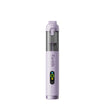
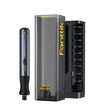
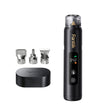
In Detailed Image's standard DA test-spot procedure, the instructions direct you to select your machine, pad, and polish, and perform a test spot on a less visible panel. You pour at least four pea-sized drops on the pad, press it against the panel, and begin polishing. Whether you are running a standard dual-action machine or a compact tool like the Fanttik P10 Pro Mini Car Buffer Polisher, testing on an inconspicuous area first ensures you evaluate how the combination cuts and finishes.
Keep the measurement strictly in pea-sized drops. The source does not specify a fluid ounce or teaspoon measurement, and calculating a liquid volume estimate adds false precision that documented guidance does not support.
When Should You Add More Polish?
Neither guide gives a signal for adding polish in the middle of a section. That means no particular look, feel, or sound on the panel should count as a verified top-up cue from these sources. Treat refilling as its own decision, separate from the starting amount.
One related direction does exist, and it points to a different action. Detailed Image advises keeping pads clean and swapping out a pad that is hot or caked with polish. That is pad-care advice, not a cue to add product. If the pad face is packed with polish, the guide's answer is a different pad, not more polish on top of the buildup.
Two practical steps follow from that. First, look at the polish label or the maker's application directions for any guidance on reapplying, and follow it for that product. Second, when you switch to a fresh pad, you are back at the initial-loading question, so use the starting amount from the workflow that matches your setup. Don't apply the starting dose again to a pad that is already caked. Swap it out first.
Does the Amount Change for Other Pads or Polishes?
Available guidance does not say how much to adjust, so do not scale this figure on your own. The at-least-four direction belongs strictly to a DA test-spot procedure. The source does not compare pad sizes, pad types, polish formulas, or clean pads against pads that already hold product.
That gap matters when you change your setup. A bigger pad, a different foam, or a different polish might call for a different car polish amount. But no documented figure says by how much. Multiplying the drop count by pad diameter, or cutting it in half for a smaller pad, would be guesswork presented as a rule.
Here is a better order for deciding:
- Use the application directions for your specific polish whenever the manufacturer provides them.
- If you are doing a DA test spot on your combination of machine, pad, and polish, use the test-spot procedure's at-least-four-drop direction written specifically for that step.
- Judge the result on a less visible panel before moving across the rest of the vehicle.
Don't borrow one brand's dose for another brand's polish when that product has its own directions.
FAQs
How much polish should be used for a test spot?
The standard DA test-spot procedure calls for at least four pea-sized drops on the pad. That quantity is designated specifically for evaluating pad, polish, and machine performance on an inconspicuous section before polishing visible bodywork.
How many teaspoons equal a pea-sized drop of polish?
Neither guide gives a volume equivalent. Both describe the amount in pea-sized drops, so that is the clearest unit to follow. Converting drops into teaspoons or ounces would mean making up a measurement neither source supports. If your polish label lists a measured amount, use that label for that product.
Where should I do the first test spot?
The detailing guide's standard DA procedure says to work the test spot on a less visible panel. You pick your machine, pad, and polish first, apply the drops to the pad, then press the pad against that panel before polishing. Working somewhere less visible lets you judge the combination before moving to panels people actually see.
Does this drop count come from an industry standard?
No. The quantity comes from an established detailing guide's test-spot procedure. It provides a practical starting point tied directly to dual-action test spots, not an industry-wide specification or a universal rule for every buffer pad.
Leave a comment
This site is protected by hCaptcha and the hCaptcha Privacy Policy and Terms of Service apply.