










































Yes, sometimes. A portable tire inflator that runs on its own charged battery doesn't need the car engine for power. You can use it with the engine off as long as the inflator's own instructions allow it.
A 12V inflator that plugs into the car is a different case. Whether it works with the engine off depends on two things: whether the vehicle's outlet has power in the mode you pick, and what the inflator manual says about the engine or ignition. Your inflator manual and your vehicle owner's manual give the answer for your exact setup.
The Engine-Off Answer Depends on Which Device Supplies Power
The question is really about where the electricity comes from. If the inflator has its own power, the engine doesn't matter. If it draws from the car, the car's power state does.
A cordless unit carries its own rechargeable battery. Once it's charged, it powers the motor without any help from the vehicle's electrical system, so the engine can stay off. Its manual still controls how you use it, including any limits on run time, cooling breaks, or charging. A cordless unit only helps if the battery is ready when you need it, and trunk temperatures can harm tire inflator battery storage between uses.

A vehicle-powered unit is different. It plugs into the car's 12V accessory outlet or another vehicle power connection. That outlet may or may not have power with the engine off, depending on the vehicle and the power mode. The inflator may also call for a specific engine or ignition state. Either one can decide whether the engine needs to run.
To tell which kind you have, look at the cord and the body. A plug at the end of the cord means the unit draws from the vehicle. A charging port and battery level indicator mean it has its own battery. If a unit offers both, treat each power path on its own terms: the battery path follows the cordless logic, and the plug path follows the vehicle-outlet checks below. Settle this early when choosing a portable tire inflator, because it decides whether the car has to be part of every top-up.
One more boundary: a portable tire inflator is not a shop air compressor. Don't carry a shop compressor's power or operating habits over to a car-powered inflator. Use the instructions for the tool in your hand.
For a 12V Inflator, Check the Outlet and Both Manuals
You can run a 12V unit with the engine off only when the inflator allows it and the outlet has power in that mode. Work through both manuals in this order:
- Confirm the connection. Note exactly what the inflator plugs into, such as the 12V accessory outlet, and which outlet in your vehicle you plan to use.
- Read the inflator's power requirements. In its manual, find the section on vehicle power. Look for any required engine or ignition state, such as "engine running" or a specific accessory mode, plus any connection or time limits.
- Check the vehicle's outlet behavior. In the owner's manual, find the power mode table or the accessory outlet section. Note which modes power that outlet, and any limits the vehicle maker lists for using it.
- Match the two, then follow the stricter rule. If the inflator requires the engine running, run the engine. If the inflator allows engine-off use and the outlet has power in an engine-off mode, you can use that mode. If either manual gives a battery or time limit, follow that exact limit.

The vehicle manual matters because outlet behavior is model-specific. For example, the 2021 Civic owner's manual shows that on that Civic Sedan, some electrical parts, including the accessory power socket, can be used in a specific power mode with the engine off. That covers one model year of one car. It tells you nothing about another vehicle's outlet, or whether a given inflator suits that socket, or how long you can safely run it.
If the inflator won't turn on in the mode you picked, verify in the vehicle manual whether the outlet supplies power in that state. Go back to the vehicle's power mode table and choose the mode that powers the outlet, as long as the inflator manual permits it. If the inflator manual says the engine must run, the location rule in the next section applies.
If the Manual Requires the Engine to Run, Avoid an Attached Garage
If your inflator's instructions say the engine must run, do not run the car or truck inside a garage attached to a house, even with the garage door open. That rule reflects official CDC carbon monoxide guidance. Always pull the vehicle out into open air before starting the engine and connecting the tool.
If that means working on the roadside after a low-pressure alert, set up using safe highway shoulder procedures before you start.
FAQs
Can I use a cordless tire inflator with the car off?
Yes, if it's running on its own charged battery. In that case the car isn't the power source, so the engine state doesn't affect the motor. Follow the inflator's manual for its operating limits, cooling breaks, and charging steps.
Does a 12V tire inflator work with the engine off?
Only when your vehicle's outlet has power in an engine-off mode and the inflator manual allows engine-off use. Some vehicles document a powered outlet with the engine off. Others may not. Your own owner's manual tells you which modes power the outlet.
Will a 12V tire inflator drain the car battery?
No single run time or drain amount applies to every inflator and vehicle. How much a session uses depends on the inflator, the vehicle, and how long you run it. If either manual gives a battery limit, time limit, or engine requirement, follow it exactly. If neither gives one, don't assume a safe duration.
How long will a cordless tire inflator run on one charge?
It depends on the model, so start with the runtime its manual or spec sheet lists. Battery capacity on its own doesn't guarantee runtime. Tire size, how far you're inflating, and cold weather can all change the real result. For several tires in a row, estimating real-world battery runtime helps you plan before you leave.
Continue reading
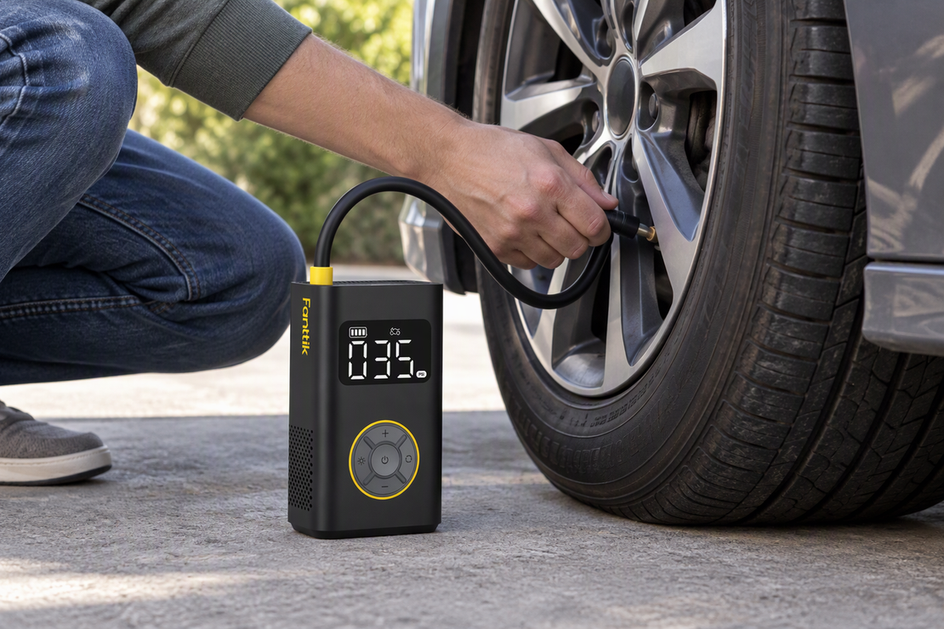 How to Set Different Front and Rear Tire Pressures With a Portable Inflator
A step-by-step guide to reading your car's tire placard, keeping front and rear PSI targets separate, and adjusting...
How to Set Different Front and Rear Tire Pressures With a Portable Inflator
A step-by-step guide to reading your car's tire placard, keeping front and rear PSI targets separate, and adjusting...
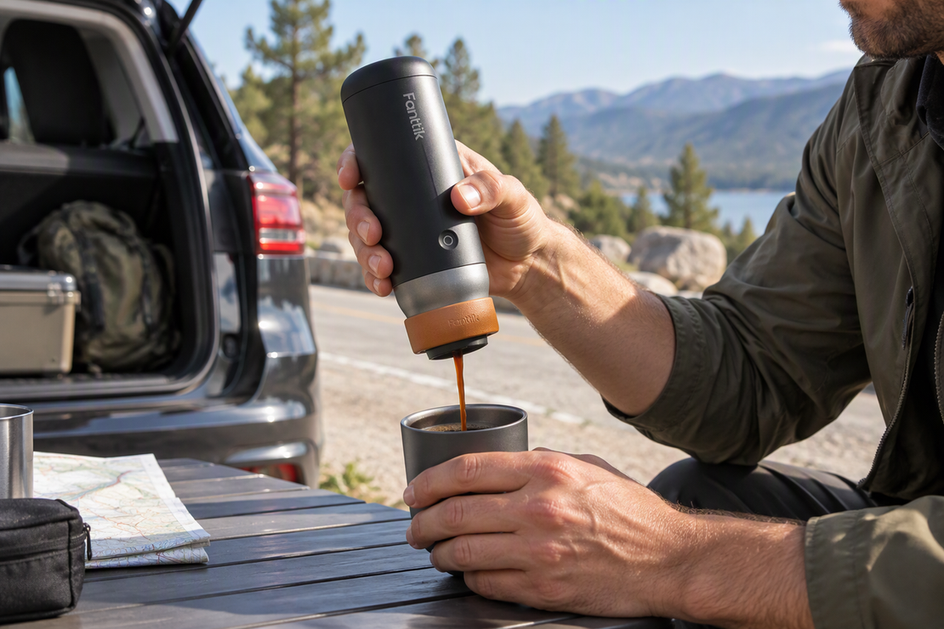 Can You Use a Portable Coffee Machine While the Car Is Moving?
Brewing or sipping hot coffee on the move can pull a driver's attention and risk a scald. See...
Can You Use a Portable Coffee Machine While the Car Is Moving?
Brewing or sipping hot coffee on the move can pull a driver's attention and risk a scald. See...


Leave a comment
This site is protected by hCaptcha and the hCaptcha Privacy Policy and Terms of Service apply.