










































A strong suction rating does not guarantee how well a vacuum cleans your car. In standardized methods like ASTM F0558, air performance is measured with a nozzle mounted on an ideal test plenum, which is not intended to represent actual carpet or floor cleaning. Real-world car vacuum pickup depends on how the attachment, surface, debris, and filter interact during a pass.
So if your car vacuum leaves dirt behind even though it has strong suction, the rating isn't necessarily wrong. It just measures something narrower than cleaning. The useful next step is to note exactly what stays behind and where, then use your exact model's instructions to pick a check.
Why Strong Suction Can Still Leave Debris Behind
Suction, airflow, and pickup are related, but they are not the same thing. A headline suction figure describes one part of how a vacuum moves air, not how much dirt leaves your floor mat.
A suction reading does not show pickup on a cleaning pass
Lab ratings describe air performance, not cleaning results. ASTM's air-performance test (F558) covers suction, airflow, air power, maximum air power, and input power. In that test, the nozzle is mounted on a test box called a plenum. ASTM calls this an ideal air performance measurement and states it is not intended to represent actual air performance during carpet or floor cleaning.
In plain terms, suction is the pulling force the vacuum can create. Airflow is how much air actually moves. Pickup is whether a specific piece of debris leaves a specific surface. A high number for the first one tells you little about the third on its own.
The working tool and surface change the conditions
Once you start cleaning, the setup is no longer ideal. ASTM notes that its results do not indicate the air power present during cleaning because of the effects of the tools in use and the surfaces being cleaned.
Inside a car, that covers a lot of variation. A wide floor tool on a flat rubber mat, a crevice tool pushed into a seat seam, and a brush tool on textured upholstery each meet the surface differently. That doesn't prove your attachment or your seat fabric caused the leftover dirt. It does mean the same vacuum can behave differently from one spot in the car to the next, so the attachment and surface belong in your notes.


A carpet test answers a narrower cleaning question
Cleaning results are measured with different tests. ASTM's embedded-dirt carpet method (F608) is designed to show how well a vacuum removes dirt worked into carpeting. ASTM says it is based on home cleaning tests, so lab and home results line up reasonably well.
That makes it a cleaning measurement, not an air measurement. Its scope is still carpet and embedded dirt. It doesn't tell you how a vacuum handles hair on a cloth seat, crumbs in a console gap, or sand in a molded rubber mat.
Debris and Filter Observations
A suction rating does not determine how effectively a vacuum collects specific items on a given interior surface. Noting the debris, surface, and attachment in use helps you locate relevant troubleshooting steps in your model's instructions without assuming the machine lacks suction.
The filter also sits directly in the airflow path. Because maintenance requirements differ across designs, treat filter service strictly as a model-specific step rather than assuming a universal procedure.
How to Narrow the Cause Without Guessing
Start with what you can see, then let your model's own instructions decide what you check. Your notes won't name the fault by themselves, but they point you to the right part of the manual.
- Record the leftovers. Write down the debris type (fine grit, hair, crumbs), where it stays (floor mat, carpet, seat seam, upholstery), which attachment you used, and whether it remains after several slow passes.
- Find the instructions for your exact model. Use the full model name, not just the brand. A manual for a similar-looking vacuum may list different filters, attachments, or maintenance steps.
- Match your notes to the manual's sections. Look for guidance on attachments for that surface, pickup troubleshooting, and filter or dust bin care. Do only the checks the manual lists, in the way it describes them.
- Re-test the same spot. Use the same attachment on the same area and compare. If the leftovers change, you know which check made the difference. If nothing changes, move to the next check your manual allows.
- Stop when the manual runs out. Don't take apart a nozzle, wash a filter, or remove parts the instructions don't cover. Contact the manufacturer's support team and share your notes from step 1.
If you own our Slim V8 APEX or Fold V10 APEX, our HEPA filter care guide covers which filter fits each model, when to replace it, and how to wash and reinstall it. Those steps apply to those two models only.
When your notes show the problem sits in one area, like seat seams or the trunk, it can help to vacuum a car interior in order with the right attachment for each zone. That way you're testing one surface at a time rather than mixing results across the whole cabin.
FAQs
Does a good carpet cleaning test result mean a vacuum will clean car seats too?
Not necessarily. ASTM's F608 method measures embedded dirt removal from carpeting. A strong result there tells you about carpet, not about cloth or leather upholstery, seat seams, or rubber mats. Judge seat cleaning by how the vacuum and its attachment perform on your actual seats.
Can I wash my car vacuum filter to improve pickup?
Only if your model's documentation explicitly specifies that the filter is washable, and only by following its exact instructions. Some designs require replacement rather than washing. For our Slim V8 APEX and Fold V10 APEX, consult our model-specific filter guide linked above.
What should I do if my vacuum's manual doesn't cover the problem?
Keep your notes on debris type, location, and attachment, and contact the manufacturer's support team with them. Don't try steps from a different model's manual or a general repair video, since filters, nozzles, and parts vary between vacuums. Clear notes help support give you a model-specific answer faster.
Is a higher suction rating a sign of better car vacuum pickup?
It's one piece of information, not a cleaning score. Ratings like those from ASTM's air-performance test come from an ideal setup without the tools and surfaces you use in a car. Car vacuum pickup also depends on the attachment, the surface, and what you're trying to remove.
Continue reading
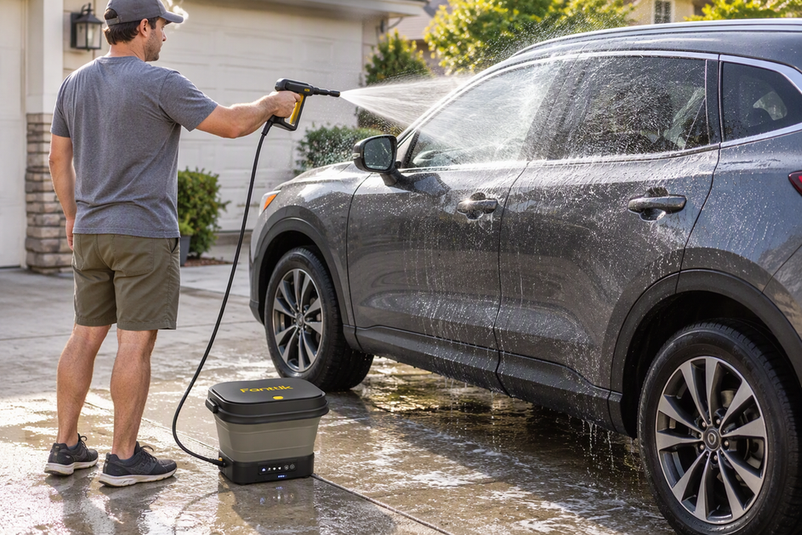 How to Pressure Wash a Car Without Overdoing It on Trim
A cautious wash plan for trim and seals: set limits from your manuals, rinse gently, sweep a wide...
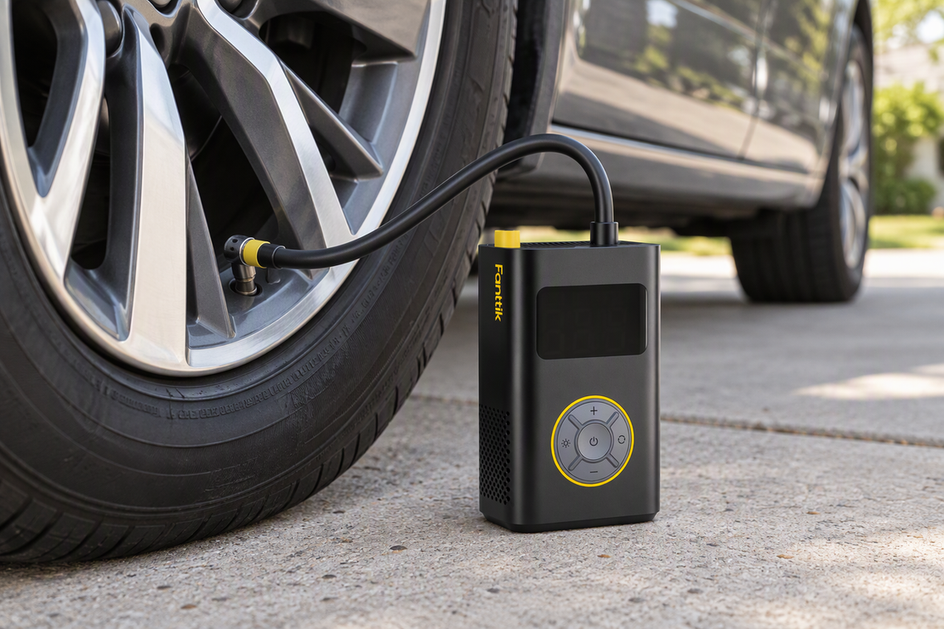 Why Does a Tire Inflator Stop Before Reaching the Set Pressure?
An inflator that quits short of its target may be reacting to the tire, the setting, the valve...
Leave a comment
This site is protected by hCaptcha and the hCaptcha Privacy Policy and Terms of Service apply.