










































No single pressure, nozzle, or distance protects the trim and seals on every car. Set your limits from your vehicle's owner's manual and your pressure washer's manual first. Then use a wide, moving spray for general washing.
Keep direct pressure off any part that looks loose or damaged, and off any part your manual says not to spray. No method makes car pressure washing completely damage-free. These steps help you avoid overdoing it.
Set Your Limits Before You Spray
Before you choose a nozzle or a distance, find two documents: your car's owner's manual and the manual for your exact pressure washer. The car manual tells you what the vehicle can handle. The washer manual tells you how that machine should be set up and run.
Look in the car manual's vehicle care or cleaning section. Some manufacturers set conditions for certain areas, and those conditions are more specific than any general guide. The 2021 Mustang Mach-E owner's manual is a clear example. For stripes or graphics on that vehicle, Ford recommends hand washing. If you pressure wash those areas anyway, Ford lists a 40° wide spray pattern, a 12-inch distance, a 90° angle to the surface, no more than 2,000 psi, and water no hotter than 179°F.
Those numbers apply to that one vehicle and those stripe and graphic areas. They are not a general rule for other cars, trim, or seals. If you drive a Ford, you can find your own manual by year and model, or by VIN, with Ford's owner manual lookup. Owners of other makes should get the manual from their own manufacturer.
When your manual sets a limit, follow it, even if a general guide suggests something else. When it says to hand wash an area, put the wand down for that area.
Wash With a Broad Pattern and Keep the Stream Moving
Once your manuals set the outer limits, use a gentle, wide, moving spray for general body washing inside them. The steps below follow Clean Fleet Report's general car-wash guidance, which covers ordinary painted panels rather than safe settings for trim or seals.

- Pre-rinse gently. Start with a gentle stream of water to loosen dirt and debris before you use full pressure. Loose grit comes off now, so there is less to scrub later.
- Fit a wide tip. The guide suggests a 25° or 40° spray pattern for general cleaning. It also warns against using the pinpoint 0° nozzle on the car's body.
- Stand back. For general washing, the guide suggests about 12 to 18 inches between the nozzle and the car. If your vehicle manual lists its own distance for an area, use that figure there.
- Work from the top down. Start at the roof, then move to the glass, hood, and upper panels, then the lower doors and rocker panels. Dirty runoff then flows over areas you haven't washed yet instead of the ones you just cleaned.
- Sweep, don't park. Use broad, sweeping passes and avoid holding the stream on one spot for too long. A spray that stays in one place keeps hitting the same small area.
Spend most of your direct passes on large painted panels like the roof, hood, and doors. When a sweep reaches a trim strip, a badge, or a door seal, keep the wand moving past it. Don't stop and blast the seam. The wide pattern and the 12 to 18 inch distance describe a general wash. They don't mean every edge on the car can take the same spray.

When to Stop Directing Water at Trim or Seals
Stop aiming the wand at a part when your manual says not to pressure wash it, when the part is already damaged, or when it starts to move under the spray. In each case, switch that spot to gentle hand cleaning.
Manual instructions come first. The 2021 Mustang Mach-E manual says not to pressure wash its camera lenses and sensors. For those parts, it recommends lukewarm or cold water and a soft cloth instead. That instruction covers that vehicle's cameras and sensors only. Still, it shows how a manual can mark certain parts as no-spray zones. Check whether your own car's manual lists parts like this before you wash.
Damaged parts need their own call. The general washing advice above was written for a car in normal condition. It doesn't cover trim that is already loose, cracked, or lifted, or a seal that is torn or pulling away. Neither does the Ford example. Until you find guidance for that part on your car, keep the stream off it. Clean it by hand with a gentle rinse instead.
Watch what happens while you wash. If you see a trim edge flutter, a seal lift, or water forcing its way behind a part, take the wand off that area right away and finish it by hand. Mark the part for a closer look before your next wash.
FAQs
Is 2,000 psi a safe pressure for any car?
No. The 2,000 psi figure comes from Ford's 2021 Mustang Mach-E manual, and it is the maximum for pressure washing stripes or graphics on that vehicle. It isn't a universal number for other cars or for trim and seals. Use the pressure limit your own vehicle manual gives. If it lists none, follow the general wide-pattern, moving-spray approach and keep the stream off parts that look vulnerable.
Should I spray straight at the surface or at an angle?
It depends on your manual. For Mach-E stripes and graphics, Ford specifies holding the nozzle at a 90° angle to the surface at 12 inches. Other vehicles may give different directions or none at all. Treat the angle as a manual-specific instruction, not a rule that works for every car.
Does a lower-pressure or cordless washer mean I don't need to be careful?
No. Lower pressure doesn't replace your manual's limits or the habit of moving the spray. If your manual lists a pressure ceiling, use your washer's documented pressure rating to make sure you stay under it. Nozzle pattern, distance, and how long you hold the spray in one spot still matter. If you're still choosing a machine, you can compare cordless and gas washers and match the specs to what your car's manual allows.
Where in the owner's manual are washing instructions usually found?
Look for a vehicle care or cleaning chapter. In the 2021 Mustang Mach-E manual, the pressure-washing conditions appear under "Vehicle Care," in the sections on cleaning stripes or graphics and on cleaning camera lenses and sensors. Search the manual for words like "pressure wash," "cleaning," or "exterior care" to find the matching section in yours.
Continue reading
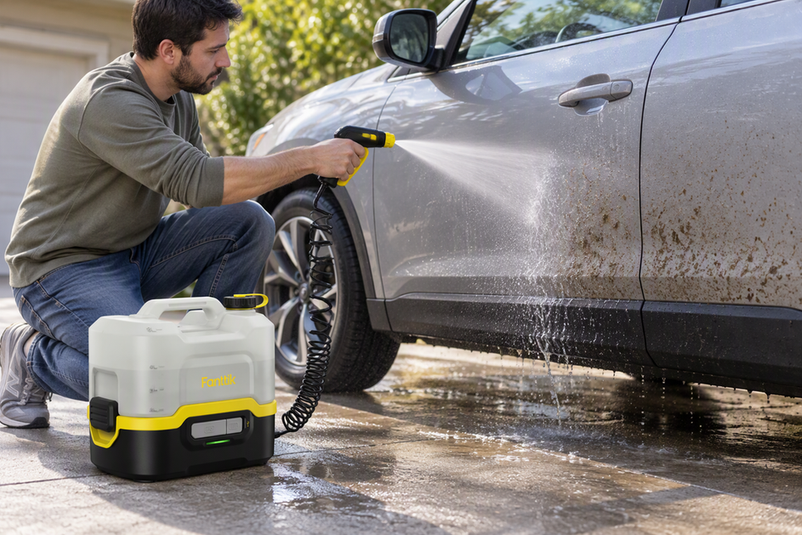 How to Plan a Car Wash Without Access to a Garden Hose
A step-by-step plan for washing a car without a hose: check location rules, carry sink water for a...
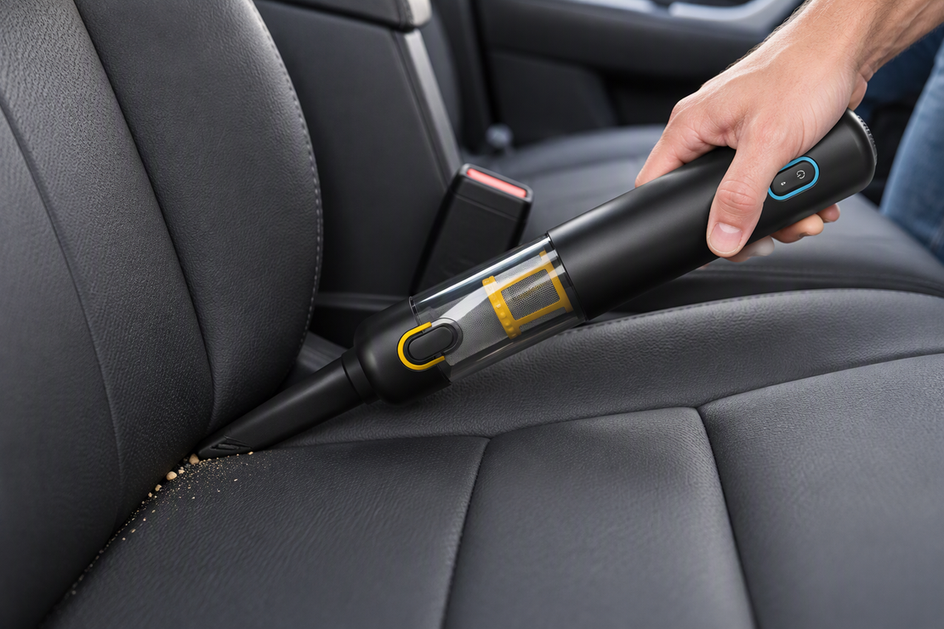 Why a Car Vacuum Can Leave Debris Behind Even When It Has Strong Suction
A suction rating comes from an ideal lab setup. This guide explains what changes during a real pass...
Leave a comment
This site is protected by hCaptcha and the hCaptcha Privacy Policy and Terms of Service apply.