








































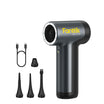



You can still wash your car at home without a garden hose. Fill a bucket at a sink, add a rinseless wash product, clean the car with a microfiber mitt, and wipe it dry with microfiber towels.
A no-hose car wash still uses water. The difference is that you carry the water to the car instead of piping it there.
Before you fill anything, make sure washing is allowed at your exact parking spot and decide where the wash water will go. Skip this method if the car is caked in mud or the spot won't work. A portable washer is optional, and it only belongs in the plan if its own manual approves the water source you have.
How to Wash a Car Without a Garden Hose at Home
Sort out the location first, then do the wash. Family Handyman's sink-water bucket rinseless steps give you a no-hose method that works in tight spaces. The location checks come first because a method that works without a hose is not automatically allowed where you park.
- Confirm the spot is allowed. A private driveway, an apartment lot, and a condo garage can each have different rules. Check your lease, HOA rules, or property policy for the exact space. Then look up your city or county rules, because EPA notes that state or local requirements may apply. If either one says no, stop here and skip to the off-site option below.
- Plan where the wash water goes. EPA warns that outdoor car washing can send detergent-rich water into storm drains. Its vehicle-washing best management practices say to wash in a driveway or yard, not in the street, and to direct wash water to pervious areas like grass or gravel. Treat this as good practice, not as proof your location allows washing. If the only open spot drains straight to the street, your location may not be a good fit.
- Fill a bucket at the sink. Use water from a kitchen, laundry, or utility sink, and put a Grit Guard in the bucket. If you live upstairs and have to haul the bucket to a parking deck, our gear-weight guide for high-rise owners can help you keep what you carry manageable.
- Add the rinseless wash product. Mix it into the bucket water using the amount printed on the product's label.
- Clean with a microfiber mitt. Work one panel at a time with the mitt loaded from the bucket.
- Wipe with microfiber towels. Dry and buff each panel with clean microfiber towels. There is no rinse step, so the towels finish the job.
One condition decides whether you start at all. Family Handyman gives a stated mud-caked limit: the rinseless method won't work if your car is caked in mud. If you walk out and see thick, dried mud on the panels or lower body, don't start this wash at your spot.
What to Verify Before Using a Portable Washer
Only plan around a portable washer if the official manual for your exact model says it can draw from the water source you actually have. Without that confirmation, a bucket, jug, or tank is just a guess, so stick with the manual rinseless bucket-and-mitt method above.
- Identify the exact model. Find the model name or number on the unit or its box, then open the manufacturer's official manual or support page for that model. A similar model from the same brand doesn't count.
- Find the water-supply instructions. Look for the section that explains how water gets into the washer. You want wording that names your setup, such as drawing from a bucket, refilling a built-in tank, or connecting to a faucet.
- Don't treat features as approval. A detachable tank or a "portable" label describes the product. It doesn't confirm the unit can pull water from the source you plan to use.
- Decide based on what the manual says. If the manual clearly covers your setup, follow its steps. If it's silent or unclear, leave the washer out and use the manual rinseless method or a permitted wash location.
Once you know the washer fits your water source, our guide to choosing an electric pressure washer explains why operating PSI and GPM matter more than maximum pressure.


When to Move the Wash Off-Site
Move the wash to a commercial car wash when your property doesn't allow washing, your local rules restrict it, or you have no workable place for wash water to go. That includes spots where runoff drains straight into the street. A commercial car wash serves as a practical off-site fallback.
EPA notes commercial facilities minimize stormwater impacts, often by recycling wash water or treating it before discharge into sanitary sewers. Each facility sets its own rules and services, but choosing one can help minimize stormwater impacts when your home spot falls short.
FAQs
Does a no-hose car wash still use water?
Yes. The bucket method still uses water, but it comes from a sink instead of a hose. Family Handyman's rinseless method mixes rinseless wash product into sink water and finishes with microfiber towels instead of a rinse. Not having a hose changes where your water comes from and how much you have to carry. It doesn't mean you'll wash without water.
What should I do if my car is too muddy for a rinseless wash?
Set the rinseless bucket method aside for that wash. Family Handyman says plainly that it won't work if the car is caked in mud, so starting anyway won't solve the problem. Choose a different wash setup at a location that permits it. Save the bucket method for the next time the car only has normal road dirt.
Who should I ask about washing in a shared apartment or condo lot?
Start with property management or your HOA, and ask two things: whether washing is allowed in your space, and where wash water should go. Then check with your city or county, since EPA's guidance notes local requirements may apply on top of property rules. Getting the property's answer in writing gives you a clear record if questions arise later.
Can I dry the car with a blower instead of microfiber towels?
The rinseless method above uses microfiber towels for the final wipe, and that's the step to follow. Our guide on drying a car with a blower is built around drying after a final rinse, which a rinseless bucket wash doesn't include. Save blower drying for washes that end with a rinse.
Continue reading
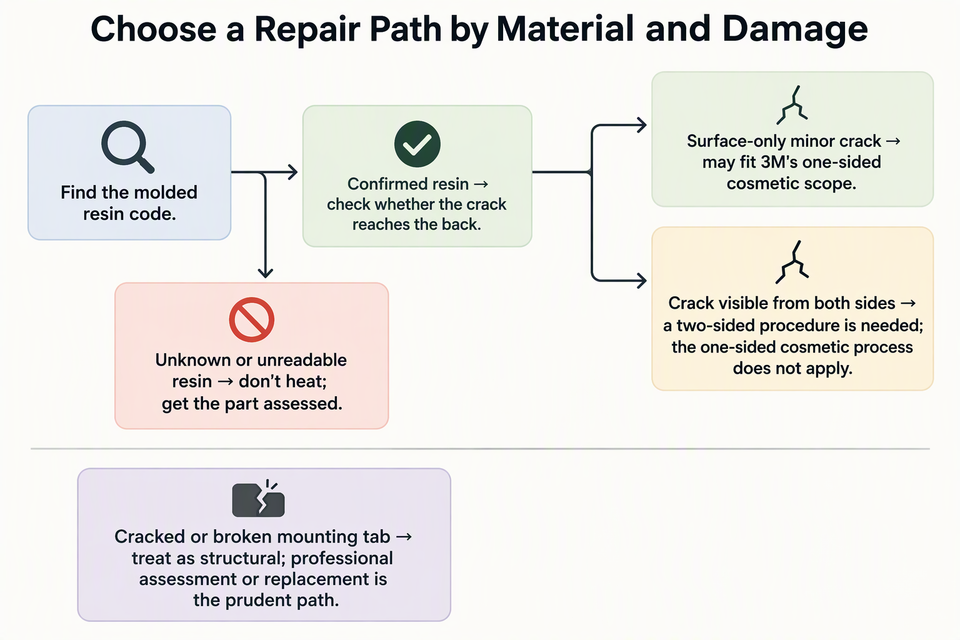 Using a Soldering Iron to Weld Cracked Automotive Plastic Bumpers and Tabs
A practical check for cracked ABS or polypropylene bumpers and tabs: confirm the resin, judge crack depth, and...
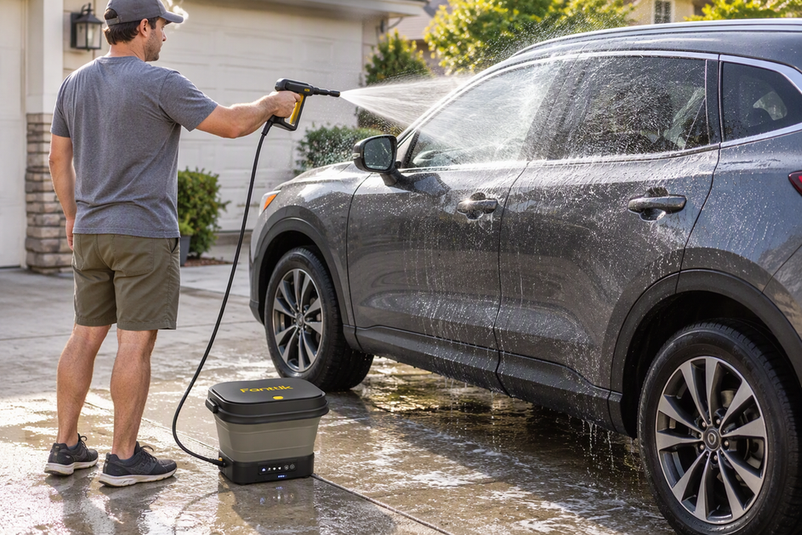 How to Pressure Wash a Car Without Overdoing It on Trim
A cautious wash plan for trim and seals: set limits from your manuals, rinse gently, sweep a wide...
Leave a comment
This site is protected by hCaptcha and the hCaptcha Privacy Policy and Terms of Service apply.