










































If you're polishing out swirls and dull spots in your garage or driveway, a dual-action (DA) polisher is usually the easier fit. Road & Track's buffer guide calls the DA the more forgiving choice for people new to detailing. It describes rotary buffers as the tool professionals favor for deep scratches and heavy oxidation.

A rotary makes sense when the job is heavier correction and you already have the experience to control it. Whichever type you lean toward, check the exact machine, the pads it accepts, and your paint finish before the pad touches the car.
How to Choose a Car Polisher for Home Detailing
Choose based on the job, not the spec sheet. In its comparison of car polisher types, Road & Track positions DA buffers for general polishing and swirl removal and rotary buffers for deep scratches and heavy oxidation. That split gives home detailers a clear way to sort their work.
Routine paint enhancement. Say you want to bring back gloss on a daily driver and soften light swirl marks from car washes. That is general polishing, which falls on the DA side of the split. A DA is also the better match when this is your first machine or you only polish a car or two a year.
Heavier correction. Deep scratches and heavy oxidation are where the rotary comes in, and Road & Track ties that use to professionals. If that's your job and you've never run a rotary, learning on your own car is a real gamble. A professional detailer or body shop may be the more realistic path for that one repair, while a DA covers your routine upkeep.
Small or tight areas. Mirrors, pillars, and bumper edges have less to do with the motor type and more to do with the pad and backing plate sizes a given machine accepts. Treat that as a machine check, covered below, rather than a reason to pick one category.
A big speed number or a long accessory list doesn't tell you which category a machine belongs to or how it behaves on paint. The motion type and the task decide the match first.
What Do Dual-Action and Rotary Mechanisms Change?
The main difference is how the pad moves, and that changes how much heat and cutting force reach the paint. According to Road & Track's explanation of the two designs, a rotary buffer spins in one direction with a fixed motion. That generates high levels of heat and cutting power. A DA buffer oscillates while it spins, which reduces heat buildup and the chance of damaging paint.
In practice, the rotary's fixed spin works faster on serious defects but leaves less room for error. If you hold it in one spot too long or tilt it on an edge, the heat and cut stay concentrated there. The DA's added oscillation spreads the action out. That's why it suits people still learning pad pressure and arm speed.
"Dual-action" is also a broad label. Some DA machines are sold as free-spinning designs and others as forced-rotation designs, and manufacturers describe their motion in different ways. Two machines with the same DA label may not feel the same on the panel. Read how the maker describes the motion of the specific model instead of assuming every DA works alike.
Which Machine and Pad Details Should You Verify?
Once you know which category fits your job, check the specific machine before you buy or borrow it. Look in the manual or official product documentation for these details:
- Documented motion. Confirm whether the maker calls it a rotary or a DA, and for a DA, whether it's described as free-spinning or forced-rotation.
- Compatible pads and backing plate. Note the backing plate size and the pad types the manufacturer lists for that model. Don't assume pads or plates from another machine will fit or run safely.
- Controls. Find out how speed is set, whether there's a variable trigger or dial, and how the machine starts and stops. You need to be able to control it with the pad on the paint.
- Operating restrictions. Read the listed limits on surfaces, run time, pad use, and handling, and follow them for the setup you plan to use.
Pads have their own job split, from cutting to polishing to finishing foam. Our guide to polishing pad types explains how each foam differs, how pads pair with compounds, and how to test a pairing on your paint before you work a full panel.
When Should Paint Condition Change Your Plan?
Some finishes should not be polished at all, whatever machine you own. Matte paint is the clearest case. I-CAR's detailing curriculum notes that damage to a matte coating, such as scratches or wear from aggressive cleaning, cannot be polished or buffed out. If your car has a matte or flat finish, put both polisher types away and get finish-specific advice.
Defect depth is the second reason to change plans. Light swirls and haze match the general polishing work a DA is suited to. Deep scratches and heavy oxidation are rotary territory in the comparison above, which also makes them a sign that the repair may need a professional instead of a home session.
If you aren't sure what finish your car has, or how deep a scratch goes, stop and find out first. Starting a machine on paint you haven't identified is how a routine polish turns into a repair bill.

FAQs
Is a handheld rotary tool the same as a rotary car polisher?
No. A compact rotary tool used for small crafts and repairs is a different tool category from a rotary car buffer. Its speed and accessory guidance doesn't carry over to car paint. For small plastic jobs, the guide to polishing acrylic with a rotary tool covers speed, pressure, and heat signs for that material.
Does a dual-action polisher mean I can't damage my paint?
No. A DA's oscillating motion reduces heat buildup and the chance of paint damage compared with a rotary's fixed spin, but it doesn't remove the risk. Poor pad choice, too much pressure, or polishing a finish that shouldn't be polished can still cause problems.
Should I wash the car before polishing?
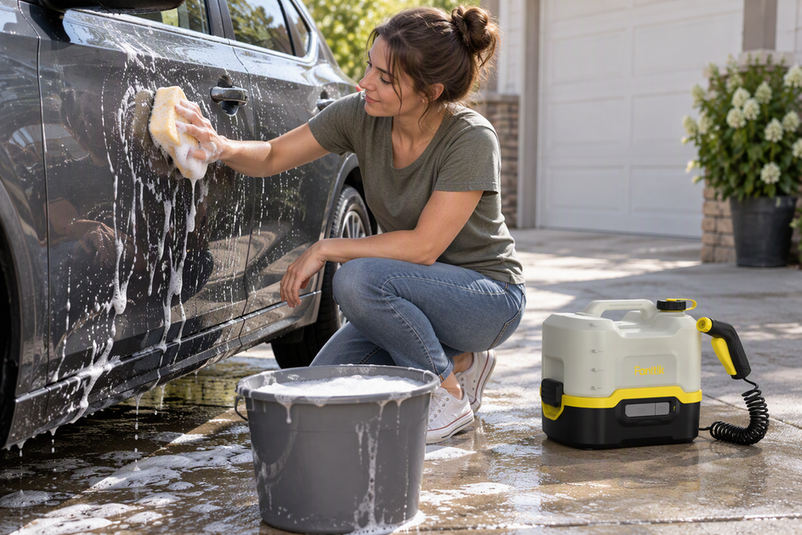
Yes. Start from a washed, dry car so the pad works on the paint instead of pushing loose dirt around. A home car wash setup with the right mitts, buckets, and wash order gets the surface ready for the polishing step.
Does a higher speed rating make one buffer better than another?
Not on its own. A listed top speed describes the motor, not how the pad performs under pressure on paint, and it doesn't tell you whether the machine is a rotary or a DA. Compare machines by motion type, pad and backing plate support, and controls first, then look at speed range.
Continue reading
 How to Choose a Car Fragrance for Long Drives and Shared Rides
A practical guide to scent choices for road trips and carpools: put rider agreement before strength, keep intensity...
 Car Dryer Blower or Microfiber Towel: Which Should You Use?
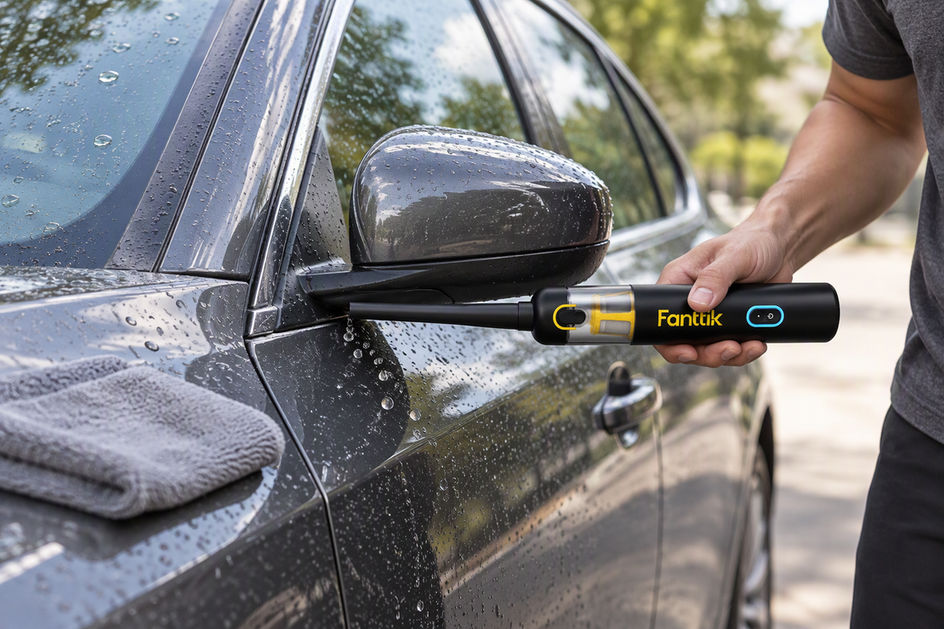
A practical guide to drying a washed car: where a towel works, where a blower reaches gaps, how...
Leave a comment
This site is protected by hCaptcha and the hCaptcha Privacy Policy and Terms of Service apply.