







































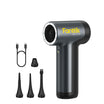



For routine top-ups, choose a portable tire inflator that is easy to power where you usually check your tires and easy to set to your target pressure. For roadside backup, the bar is higher. The inflator needs power that works at the car, enough reach to get to every tire, and documented fit for your tires and the job.
Neither a battery-powered model nor a 12-volt model is automatically the better choice. If one inflator has to cover both jobs, it has to pass both sets of checks.
Routine Top-Ups or Roadside Backup: What Should You Prioritize?
Start with where and when the inflator has to work. The same tool can feel convenient in your driveway and still fall short on a dark shoulder, so define the main job first.

- Routine top-ups at home or another regular spot: Ask where you check your tires most often and what power is available there. Your priority is low friction: power you can reach without hassle, a display you can read, and controls that make setting a target pressure quick. You know the location ahead of time, so you can plan around it.
- Roadside backup stored in the vehicle: Here you can't choose the setting. Size and storage fit become immediate constraints: confirm the unit packs into your glove box, under-seat bin, or spare-tire compartment so it remains accessible rather than buried under cargo. The power source must work away from home, the cord or hose has to reach every tire, and the unit must deploy easily. Before you count on it, check that manufacturer documentation covers your tire application and defines clear operating limits.
A dual-use inflator has to meet both lists. Convenient controls don't make up for a cord that can't reach the rear tire. A documented truck-tire rating doesn't help if the display is too hard to read for weekly checks.
Pressure Checks and Controls: What Makes Top-Ups Easier?
Your pressure target comes from the vehicle, not from the inflator or the tire. NHTSA tells drivers to find the recommended pressure on the Tire and Loading Information label on the driver's door edge or post, or in the vehicle label or owner's manual, and to use the vehicle manufacturer's number instead of the one printed on the tire. NHTSA also defines a cold tire as one that hasn't been driven for at least three hours.
An inflator's maximum PSI is a different number. It's the highest pressure the unit is rated to reach. It is not your target, and it doesn't tell you how fast the inflator fills a tire. A high max rating doesn't make a unit faster or a better match for your vehicle.
Once you know your target, compare controls based on how well they support regular checks:
- Display readability: Can you read the numbers clearly in bright sun, in a dim garage, and at night?
- Pressure units: Make sure the display shows PSI, the unit used on U.S. door labels.
- Target setting and auto-stop: A preset lets you enter your target once and have the unit stop when it gets there. This feature depends on the model, so confirm the final reading after the unit stops. Our guide shows how to set an auto-shutoff target that matches your cold PSI.
- Stated gauge accuracy: Look for a published tolerance in the model's documentation. Don't assume a figure that isn't listed.
Power, Reach, and Readiness: What Will Work Where You Need It?
Match the power setup to the place you'll actually use it. Then confirm the cord or battery can finish the job there.
- Corded 12-volt units: Find the vehicle's 12-volt outlet and estimate the distance to the farthest tire valve. Compare that distance to the documented cord and hose length. For roadside use, also make sure the outlet you plan to use is powered when you'd need it.
- Battery units: Read what the manufacturer says about charging, how to check charge level, and the rated workload per charge. Battery capacity alone doesn't predict runtime. For roadside use, a battery inflator only counts as backup if it's charged, so recharge it on a schedule instead of waiting until you need it.

One reported test shows why reach and fill performance are separate questions. In an affiliate review by Popular Mechanics, one tested 12-volt unit had a 9.8-foot cord that reached all four tires from the 12-volt outlet inside the reviewer's truck. The same unit took several minutes to raise that truck's large tires from 20 to 40 PSI, while the more powerful inflators in that test did it in under a minute. The reviewer also reported that its hose and chuck got hotter than most of the other devices tested.
These results apply to that unit and that truck's tires. Use them as a reminder to check reach and tire-specific performance for your own vehicle, not as a ruling on every 12-volt or cordless inflator.
How to Check Tire Fit, Performance, and Run Limits
A candidate fits only when its own documentation covers your tires, your planned workload, and its operating limits. Work through these checks in order and stop at the first clear miss.
- Match the documented tire application. Find the vehicle or tire types the manufacturer lists and compare them to the tires you actually run. Max PSI doesn't establish compatibility. Also confirm that the hose connector fits your valve stems. Our valve types and TPMS basics can help you identify yours.
- Compare fill examples only on the same terms. A fill-time claim means something only when it lists the tire size plus the starting and ending pressures. As an illustration, a 29-to-33 PSI top-up on a passenger-car tire and a 20-to-40 PSI fill on a large truck tire are different jobs, so their times can't tell you which unit is faster. To line up stated examples, our guide shows how to compare by vehicle and fill time.
- Check the operating limit against the job. Look for the documented continuous-run time, required rest period, or rated tires per charge. Then count the job: how many tires, how large, and how far below target they start. If four large tires need a big pressure gain, the stated limit has to cover that or allow for the documented pauses.
- Treat a missing essential detail as a no. If the tire application, power arrangement, or operating limit you depend on isn't documented, that use isn't established. This matters most for roadside backup, where you have no time to experiment.
Move ahead with a candidate when the application, power setup, and limits all match your planned use. If any of them is unclear, pick a better-documented model instead of hoping the gap won't matter.
FAQs
Do I still need a separate tire gauge?
A separate gauge is useful when you want a second reading to compare with the inflator's display. Built-in gauge accuracy depends on the model, so check the stated tolerance and cross-check now and then. Our article on inflator pressure sensor accuracy covers what causes drift and how to verify readings in the field.
Can a portable tire inflator fix a flat tire?
No. An inflator adds air but doesn't seal a puncture or repair damage. If a tire keeps losing pressure after a top-up, treat it as a tire problem and have the tire inspected. If a tire is damaged on the road, use your spare or call roadside assistance.
Is a portable tire inflator the same as a shop air compressor?
No. They're different tool categories. Don't apply a shop compressor's specs, accessories, or operating habits to a portable inflator, or the other way around. Judge each portable model by its own documented tire application, power requirements, and operating limits.
Continue reading
 How to Make a Car Air Freshener Less Overpowering
A format-by-format guide to cutting fragrance output, ventilating with outside air, and keeping future use subtle without adding...
 How to Match a Polishing Pad and Compound for a Small Paint Correction
Pair pads and compounds for localized paint correction: set the goal, confirm product guidance, then read a test...
Leave a comment
This site is protected by hCaptcha and the hCaptcha Privacy Policy and Terms of Service apply.