












































Use a jump starter on a cold morning only when the clues point to a weak battery and the battery, vehicle, and jump starter all pass basic safety checks. Cold weather alone doesn't prove the battery is the problem. Slow cranking or dim lights make a weak battery more likely, but they don't confirm it.
If the battery is swollen or frozen, if your vehicle's manual says not to jump-start it, or if your jump starter's instructions don't cover your vehicle, don't try a boost. Stop after one failed attempt or if the symptoms point to another fault, then call roadside assistance or a repair shop.
When Might a Jump Starter Be the Right Next Step?
A boost makes the most sense when the symptoms point to a battery that is low on power. Cold weather slows the chemical reaction in a lead-acid battery while engines demand extra power in winter, which can push an aging unit past its limit. That extra winter strain explains why weak batteries often fail on cold mornings, but it does not diagnose what failed in your car.

Watch and listen when you turn the key. Slow cranking means you can hear the starter trying, but the engine turns over more slowly than usual. Headlights or interior lights that look dimmer than normal are another sign of a weak battery. A different pattern is a single click, or no sound at all, while the dashboard lights still come on. That can point to a starter problem instead of a dead battery.
None of these signs is a diagnosis. Here's how to use them: if the engine cranks slowly and the lights look weak, a weak battery is a reasonable guess. Even then, only boost the car if every check in the next section passes.

Check Battery Condition and 12-Volt Compatibility First
Go through each item below before you connect anything. If any item fails or you can't answer it, don't boost the car.
- Swollen battery: Don't jump-start it. A swollen battery can burst and release battery acid. Call roadside assistance.
- Frozen battery: Never jump-start a battery you think might be frozen.
- Charge indicator: Some batteries have a small "state of charge" window. If yours shows black or clear, the battery is completely discharged, and you shouldn't recharge or jump-start it. This check only applies to batteries that have this indicator.
- Vehicle manual: Some automakers advise against jump-starting because a power surge could harm the car's electronics. Look for jump-start instructions in your owner's manual. Ford, for example, points owners to the Owner's Manual for these steps, and the manual section differs for electric and gas or diesel models.
- System voltage: Most gasoline cars have 12-volt systems, but some older cars use 6 volts. Check your car's voltage before assuming it's 12 volts.
- Your jump starter's instructions: Only use a portable unit if its own manual says it supports your vehicle's voltage and setup. If you own one of our units, you can find its manual in the Fanttik user manual hub. Jumper-cable steps for two cars don't carry over to a portable jump starter. If the instructions are unclear or you don't have them, don't improvise. Call for help instead.
When to Stop and Call for Help
Stop after one unsuccessful boost. If the car still won't start, arrange a tow to a repair shop for professional testing. The same stop applies if you hear a single click or nothing at all while dashboard lights remain on, which can point to a starter issue that requires qualified diagnosis.
When either situation happens, call roadside assistance or a qualified repair shop for testing or a tow. A jump starter can get a weak battery going, but it can't fix the starter, the charging system, or another electrical fault.
FAQs
Does an older battery mean I should jump-start the car?
Not on its own. AAA says a battery older than 3 to 5 years is worth testing. Treat age as a reason to get the battery tested, not as proof of why the car won't start. The safety checks above still apply.
If the car starts after a jump, is the problem fixed?
Not necessarily. A successful start doesn't prove the battery is healthy. AAA recommends checking the battery after a jump-start to see whether the battery itself remains weak or damaged.
What if the battery warning light is on after the car starts?
AAA notes that a battery light doesn't usually mean the battery is the only problem. A bad alternator may have damaged the battery. AAA advises getting the car towed to a mechanic for a full charging-system check instead of just replacing the battery.
Continue reading
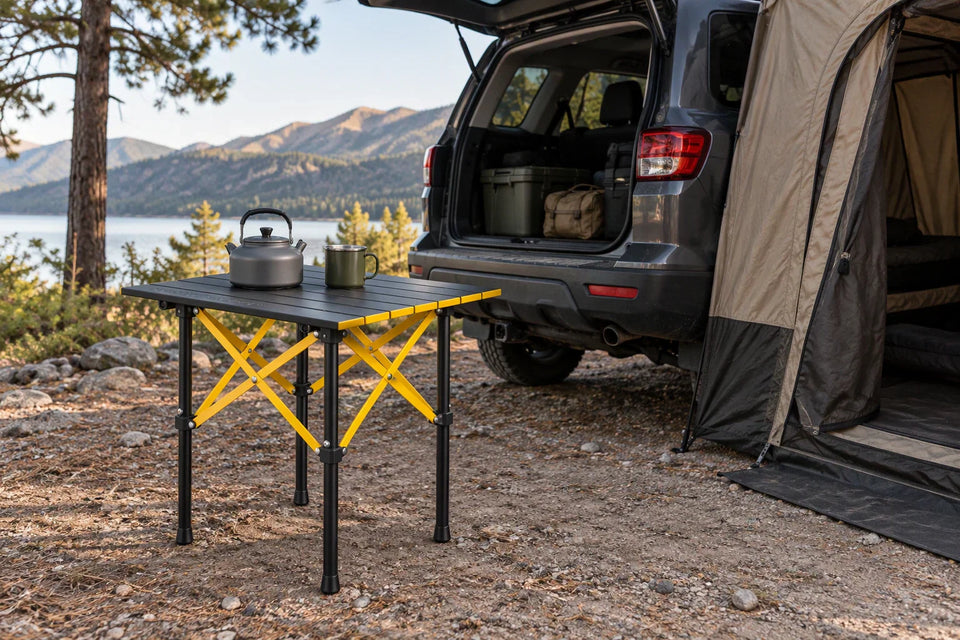 Where to Set Up a Coffee Station at an SUV Tent Campsite
Put camp coffee on a level table off to the open side of your SUV and tent. Keep...
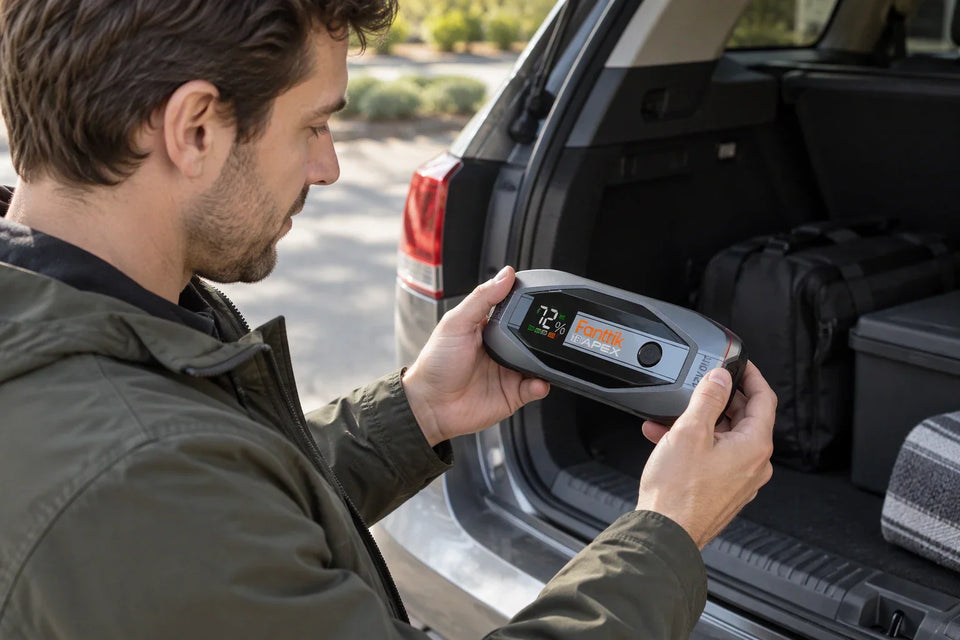 Keeping a Jump Starter Ready for a Rarely Driven Second Car
A practical routine for a seldom-used car's jump starter: match the model manual, schedule top-ups, check clamps, verify...
Leave a comment
This site is protected by hCaptcha and the hCaptcha Privacy Policy and Terms of Service apply.