








































Do not jump-start a car battery that may be frozen. Connecting jumper cables, a charger, or a portable jump starter to a frozen or visibly damaged lead-acid battery can trigger a violent case rupture, not just a failed start attempt.
This stop condition applies whether the case looks fine or shows cracking, swelling, or leaking. When dealing with extreme cold, understanding the frozen car battery explosion danger is critical: if a car fails to start after a hard freeze, treat it as frozen until proven otherwise and skip the boost.
Can You Jump-Start a Frozen Lead-Acid Battery?
No electrical connection is safe until you know the battery's condition, not just its charge level. Attempting jump-starting a frozen car battery puts immediate electrical stress on internal components that may be physically locked in ice. Treat any battery that sat through prolonged subfreezing temperatures as a candidate for this risk until proven otherwise, because you cannot confirm internal freezing by looking at the outside.
A portable jump starter with high peak amperage does not change this decision. The battery's internal condition, not the booster's output, determines whether current should ever reach it. If there is any uncertainty about whether the battery froze, do not connect a charger, jumper cables, or a jump starter, and do not try to force a start.
How to Recognize Possible Freezing or Battery Damage
A few visible clues can suggest a battery is unsafe to boost, even without proof that the electrolyte inside actually froze. Check the case and recent weather exposure before doing anything else.

- Swollen or bulging sides on the battery case
- Visible cracks anywhere on the case or around the terminals
- Electrolyte leaking or crusted residue on or near the case
- Any case shape or surface that looks abnormal compared to a healthy battery
- The vehicle sat through prolonged, hard subfreezing temperatures before it failed to start
None of these signs proves the electrolyte froze, and their absence does not prove it did not. A case can look completely normal on the outside while still holding partially frozen electrolyte inside. Treat any of these signs, or genuine uncertainty about the battery's exposure to freezing weather, as a reason to stop rather than a problem to troubleshoot with a jump starter.
Why Jump-Starting Can Turn Into a Battery Explosion
Jump-starting pushes a surge of current into the battery, and that current interacts with battery chemistry in a way that can build dangerous pressure. The mechanism is documented, even though no source sets a universal current or temperature threshold for when it happens.
How Charging Creates the Explosion Hazard
Charging a lead-acid battery, including the current surge from a jump-start attempt, produces hydrogen and oxygen gas inside the sealed case. That is normal chemistry, but the gas buildup raises pressure inside a confined space. A NASA safety lesson on battery explosions notes that current flow can intensify an arc or spark inside a cell, and that spark can ignite the charging-generated hydrogen and oxygen. When ignition happens, it can blow the case cover off and spray corrosive electrolyte around the area, a documented industry hazard rather than a rare theoretical one.
Why a Suspected Frozen Battery Is Not a Normal Dead Battery
A battery you suspect of freezing, or one with a cracked, swollen, or leaking case, already has an unresolved physical or chemical problem before any current is added. Applying jump-start amperage adds more gas generation and more chances for an internal arc, on top of a case that may already be compromised. A higher-current or spark-protected jump starter does not remove that risk, because the hazard starts inside the battery, not in the equipment supplying the boost. Separately, portable jump starters have their own safe operating temperature ranges for the device itself in cold weather, which is a different limit from the condition of the battery you are trying to boost.
What to Do Instead of Boosting the Battery
The safest response is to stop the connection attempt and get the battery evaluated, not to experiment with a home fix. Follow this sequence instead of reaching for cables or a charger.
- Stop trying to jump-start or charge the battery right away.
- Keep ignition sources away: no cigarettes, open flames, sparking tools, or unnecessary bystanders near the battery.
- If you are near the vehicle for any reason, work in a ventilated space; ventilation is standard practice around lead-acid batteries because it prevents explosive gas buildup around the case.
- Do not apply direct heat, hot water, or any homemade thawing method, and do not open, probe, or electrically test the battery yourself.
- Contact a qualified automotive technician or roadside assistance service to evaluate the battery and decide how it should be warmed and checked before any further use.
There is no substitute for that evaluation. A battery that may have frozen needs a professional check, not a DIY timer or thermometer reading improvised at the curb.
FAQs
Is a portable jump starter safer than jumper cables for a frozen battery?
No. Switching from jumper cables to a portable jump starter does not resolve the actual hazard, because the risk comes from the battery's condition, not from which device supplies the current. If the battery may be frozen or shows case damage, the correct next step is the same regardless of equipment: stop, and get it evaluated by a qualified technician before any electrical connection.
Can you thaw a frozen car battery with a heater or hot water?
Do not try it. There is no established safe temperature, timing, or heating method for thawing a car battery at home, and uneven or rapid heating can add its own risks to an already compromised case. Ask a qualified automotive or roadside service how your specific battery should be warmed and evaluated instead of improvising with a heater or hot water.

Can you jump-start a frozen car battery if the case is not cracked?
No. An intact outer plastic case does not guarantee that the electrolyte inside remains liquid. Ice crystals expand internally and can displace or damage lead plates without cracking the exterior wall. If the vehicle endured severe subfreezing cold while discharged, applying jump current remains hazardous regardless of surface appearance, requiring professional assessment instead.
When to Leave the Battery Alone and Call for Help
Certain conditions mean you should stop handling the battery entirely, not just skip the jump-start attempt.
- The case is cracked, swollen, or bulging
- Electrolyte is leaking or residue is visible
- The case shows any other visible damage or abnormal shape
- You notice a strong sulfur-like odor or pooling fluid near the battery
- You simply are not sure whether the battery froze
If any of these apply, keep sparks, flames, and unnecessary people away from the vehicle, and call qualified roadside or automotive help rather than continuing to inspect or handle the battery yourself. Battery work involves acid and spill hazards serious enough to warrant protective gear and professional handling, and that is the safest path whenever the battery's condition is anything but clearly normal.
Continue reading
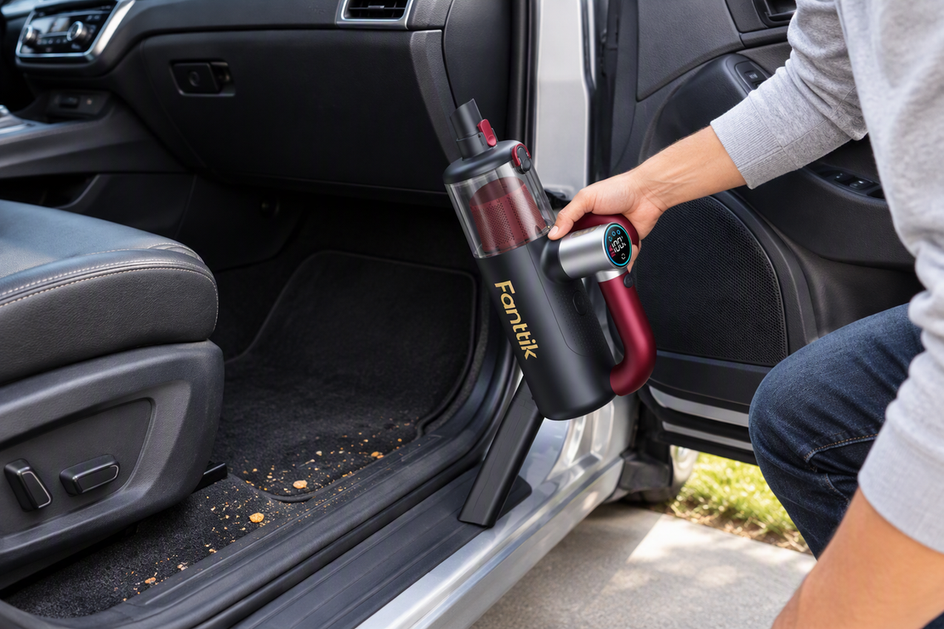 Car Wash That Vacuums for You vs DIY Handheld Detailing: Cost, Thoroughness, and Interior Wear
Compare costs, seat-track thoroughness, and interior wear between a full-service car wash and a DIY handheld vacuum with...
How to Set Up a Pressure Washer for Car Detailing
A step-by-step look at connecting, priming, and running a pressure washer for car detailing, covering nozzle choice, starting...
Car Wash That Vacuums for You vs DIY Handheld Detailing: Cost, Thoroughness, and Interior Wear
Compare costs, seat-track thoroughness, and interior wear between a full-service car wash and a DIY handheld vacuum with...
How to Set Up a Pressure Washer for Car Detailing
A step-by-step look at connecting, priming, and running a pressure washer for car detailing, covering nozzle choice, starting...

Leave a comment
This site is protected by hCaptcha and the hCaptcha Privacy Policy and Terms of Service apply.