











































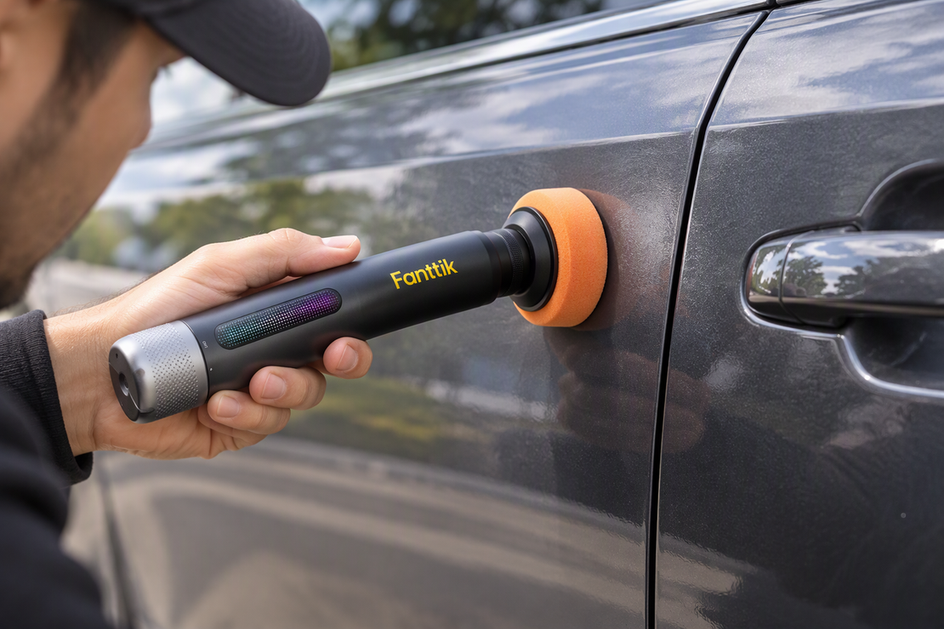
Paint preparation comes before mini buffer polishing because dirt or debris left on the surface can get caught in the polishing pad. Once it's trapped there, the pad can carry that grit across the finish and do more harm than good. This risk comes with vehicle polishing in general, not with one specific tool, so it matters any time a pad touches your paint.

Good paint prep before polishing has two parts. First, wash off the loose dirt. Then check whether the paint still feels gritty even though it looks clean. If it does, keep preparing the surface and hold off on the polishing pass.
Why Grit Can Damage Paint During Polishing
A specialist guide on prepping a car for polishing puts it plainly: if dirt or debris is left on the surface, it can get caught in the pad, and you risk doing more damage than good. That is a risk, not a promised outcome. Still, it's the reason cleaning is its own step rather than something the polishing pass can fix.
For a mini buffer user working in a driveway or garage, the practical rule is simple. Wash away loose surface dirt before the pad ever touches the panel. If you take a break and dust or debris lands on the car, clean that area again before you go back to polishing it.
Why Inspect After Washing?
Washing and inspecting answer two different questions: washing removes loose surface dirt, while inspecting checks whether bonded contaminants remain. Because a panel can look clean yet still harbor grit, both steps are essential before polishing.
Some contamination bonds to the surface. The same guide describes embedded contaminants that won't come off with a normal wash: material that sticks to your paint even after soap and water have done their job. You can't always see it, which is why a clean, shiny panel isn't enough proof by itself that the paint is ready.
The practical check is by touch. After washing, run your hand across the paint and feel for a gritty texture. The guide treats a gritty feel as an indication of how much claying, a common decontamination step, may be needed. So if the paint feels rough or sandy under your hand, continue preparing that area. Don't start the polishing pass yet.
Keep this check in proportion. A gritty feel tells you a panel needs more work. It doesn't mean every panel on every car needs clay. A smooth feel is a good sign that you didn't find grit by touch. It isn't a lab test that proves every contaminant is gone, so keep the rest of your prep careful even when the paint feels smooth.
What Must Be Clean Before You Start Polishing?
Both the panel and the pad need to be clean before polishing starts. Run through these checks just before you turn on the buffer:
- Panel, by sight: No visible loose dirt or residue. If you see any, wash that area again before the pad goes down.
- Panel, by touch: The washed paint feels smooth. If it still feels gritty, follow the post-wash grit check and continue decontaminating before you polish.
- Pad, before first contact: Start with a clean pad. As a simple precaution, look at the pad face. If you can see debris or residue on it, clean it or swap it out before it touches the paint.
- Pad, during the job: A pad-care guide recommends that you clean the pad after each section or two to remove the residue and dust that build up on its surface. When a pad gets too saturated or stops working well, replace it with a fresh, clean one.

If all four points hold, you're ready to start polishing. If any one of them fails, fix that item first, then check again.
FAQs
Is a mini buffer more likely to scratch dirty paint than a full-size polisher?
The guidance on trapped grit applies to vehicle polishing in general. It doesn't single out mini buffers or compare them with larger machines. The safe approach is the same for both: clean paint and a clean pad before the machine starts.
Does the same prep apply if I polish by hand?
Washing and the touch check both happen before any pad meets the paint, so they don't depend on the tool you use. If you're still deciding on a method, our hand vs. machine polishing comparison explains when hand application suits light marks and when machine polishing makes more sense for serious correction or larger panels.
Should I check the whole car by touch, or just one spot?
Check several areas. The prep guide describes running your hands across the paint in a variety of areas while washing. Different panels can feel different, so judge each area on its own. Spend extra prep time where you feel grit instead of treating the whole car the same way.
Does drying the car matter before I inspect and polish?
A dry panel makes it easier to see any dirt or film left behind before you do the touch check. If you'd rather not run towels over freshly washed paint, touchless car drying with a blower is one option. That guide also covers when blower drying falls short.
Continue reading
 How to Choose a Car Vacuum by the Mess You Need to Clean
A mess-first guide to car vacuums: what matters for upholstery hair, sandy mats, and cupholder crumbs, plus why...
 How to Polish Near Panel Edges Without Lingering in One Spot
Step-by-step method for polishing near panel edges and narrow panels with small sections, overlapping moving passes, wipe-down checks,...
Leave a comment
This site is protected by hCaptcha and the hCaptcha Privacy Policy and Terms of Service apply.