










































To polish near a panel edge without lingering, work a small section, keep the pad flat, and move it in slow, steady, overlapping passes that never stop on one spot. After each series of passes, wipe the area and inspect it. Don't hold the machine on a stubborn mark.
Edges and narrow panels leave less room for correction. That makes controlled movement and frequent checks safer than a long, stationary pass. The guidance below covers general panel technique. It does not give a fixed pad path across an edge or crease, so stop and reassess any time your next step is unclear.

Prepare for a Moving Pass Near an Edge
Before you start edge polishing, check the instructions for your paint care, your polish, your pad, and your machine. Those instructions set your starting speed, how much product to use, and how to handle the pad. This article can't replace them, because no single setting fits every polisher and finish.
Next, decide whether your pad actually fits the area. Detailed Image's pad-fit guidance for tight areas says smaller pads work better in tight spots such as mirrors, door edges, spoilers, and front bumpers. It adds that larger pads cover big panels faster but can be harder to fit into tight spaces or control on tight curves. Fast Car gives similar smaller foam pad guidance for smaller panels and curved sections, because a smaller pad is easier to use there.
Treat both recommendations as fit advice, not a universal rule. A smaller pad helps when your larger pad won't sit or stay controlled in the space. Neither guide tells you exactly where to place the pad against an edge. If your paint-care or tool instructions don't make the planned edge work clear, pause before you try anything more aggressive.
Keep the Polisher Moving Through a Small Working Area
The goal is simple: no part of the pad should sit still on the paint while the machine runs. These steps come from general panel guidance, and they apply to a narrow section as well as a wide one.
- Mark out a small section. Detailed Image's small-area polishing guidance recommends working in small areas and gives roughly 2 × 2 ft as a general example. On a narrow panel, your section will often be smaller, and that's fine. The example isn't a required size.
- Position yourself so the section stays within reach. OCD Car Care explains that when the machine moves too far outside your comfortable working section, you lose control of the machine, pad angle, pad pressure, and arm speed. Near an edge, that loss of control is the risk you're trying to avoid.
- Keep the pad flat on the paint. Detailed Image recommends a flat pad along with slow, consistent movement.
- Overlap your passes in two directions. Fast Car describes working overlapping passes across a manageable section: side to side first, then over the same area top to bottom, at a steady pace.
- Keep moving past a visible defect. Don't slow down or park the pad on a mark. Finish the planned series of passes, then check the result.

These guides don't give a speed, pressure, or dwell time for the edge itself. Take those from your polisher and pad instructions rather than guessing.
Inspect the Result Before Deciding on Another Pass
Stop and look after every series of passes, not only when you think you're done. Fast Car recommends that you wipe and inspect after each set of passes in each direction. Then decide whether to keep going, stop because you're happy, or consider a different correction step.
Lighting determines how much you can trust what you see. Detailed Image recommends inspection in good lighting, so move the car or your light until the edge and the area next to it are clearly visible before you judge them.
Let what you see set your next action:
- The area looks satisfactory: Stop working that section and move on.
- A defect is still visible: Pause and reassess. Don't treat it as an automatic order to run another pass.
- You're unsure what the next step should be: Go to the stop rule in the next section.
Neither source gives a fixed inspection schedule or a measurable defect level that makes another pass safe. Fast Car mentions "something more aggressive" as one option, but that isn't approval to escalate near an edge.
Stop Rather Than Chase a Defect
If a mark is still there after inspection, that alone doesn't mean you should polish it again. Detailed Image notes that polishing is usually done only as needed, because over-polishing can thin clear coat over time.
This matters most in edge polishing. The area is tight, the pad is harder to control, and there's little room to fix a mistake. If you can't confirm that another correction step suits your paint and your tool, stop. Don't repeat the pass, add pressure, or switch to a harsher combination. Accept the improvement you have, or have the area looked at by someone qualified to judge it.
FAQs
Why is edge polishing harder to control than polishing a flat panel?
There's less room. A pad that moves easily across a hood can be hard to fit or steer around door edges, mirrors, and tight curves. When the pad or your arm is working outside its comfortable range, angle, pressure, and speed get harder to keep steady. That's why small sections and frequent checks matter more near edges.
Do I always need a smaller pad near panel edges?
No. A smaller pad is useful when your larger pad won't fit the space or is hard to control on a curve. If your usual pad sits flat and stays controlled through the whole section, the size alone isn't a reason to switch. Neither guide sets one pad size for all edges.
How many passes are too many on one edge?
The cited guides do not give a universal number of passes. Work in series of overlapping passes, then wipe and inspect after each series. Because over-polishing can thin clear coat, stop when the result is acceptable or when you can't tell whether another step is right for the paint.
Where do I find speed and pressure settings for polishing near edges?
Use your polisher's manual and the instructions for your polish and pad. The detailing guides here cover movement, section size, and inspection. They don't list machine settings for edge work, so don't borrow numbers from a different tool or product.
Continue reading
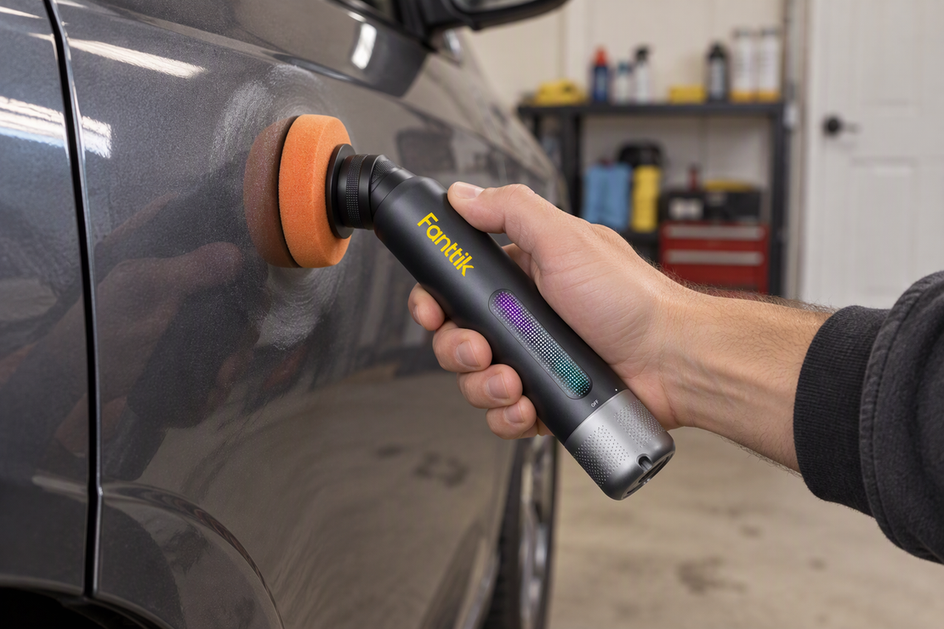 Why Paint Preparation Comes Before Mini Buffer Polishing
Dirt left on paint can get caught in a polishing pad. This guide explains why washing comes first,...
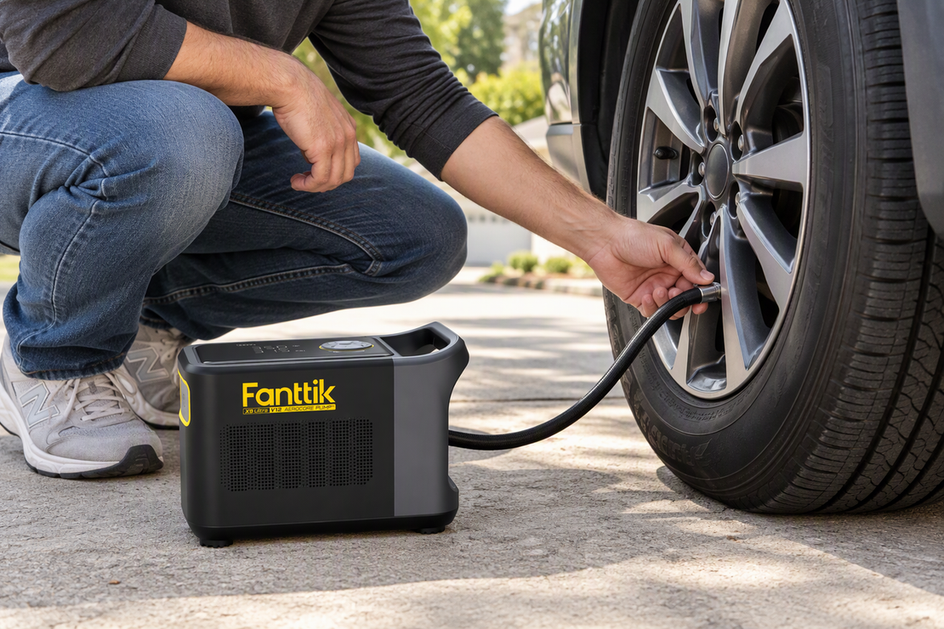 Tire Inflator or Tire Repair Kit: Which Roadside Problem Does Each Solve?
Learn which roadside job an inflator handles, how plug kits and sealant mobility kits differ, and the tire...
Leave a comment
This site is protected by hCaptcha and the hCaptcha Privacy Policy and Terms of Service apply.