








































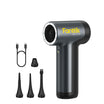



A tire inflator solves low air pressure. It adds air until the tire reaches your vehicle's recommended pressure, but it does not fix a puncture or prove that a damaged tire is safe. A tire repair kit is aimed at a puncture, and what it can do depends on how that kit is designed.
So the flat tire tools you need depend on the problem in front of you. If the tire is simply low, an inflator fits the job. If it has a cut or bulge, or it keeps losing air, neither tool settles the problem.
Pressure Loss or Puncture: What Each Tool Addresses
Choosing between these tools starts with identifying whether you are adjusting inflation or dealing with an ongoing air leak.

Start with the right target. For routine low pressure, NHTSA's recommended tire pressure guidance points drivers to the vehicle maker's number. You'll find it on the Tire and Loading Information label on the driver's side door edge or post, or in the owner's manual. That number is specific to your vehicle, not a generic PSI value. The figure molded into the tire sidewall is a different thing, so find the correct tire PSI before you switch on the inflator.
| Tool | Direct job | What the result does not show |
|---|---|---|
| Tire inflator | Adds air to the vehicle's recommended pressure | Why the tire lost air, or that a puncture is fixed |
| Tire repair kit | Attempts a puncture fix, based on the kit's design | That the tire qualifies for repair or is safe to drive |
Read the table as two separate jobs. A top-up after normal pressure loss is an inflator job. If the tire fails to maintain proper pressure, topping up is not the answer, and a tire service professional should evaluate the tire.
What Does a Tire Repair Kit Actually Do?
It depends on which kit you have. Products sold as tire repair kits come in different designs, and they are not interchangeable.

- Plug-style puncture kit: uses tools and rubber plugs to attempt to fill a puncture, but an on-the-wheel plug does not count as a complete or safe repair under industry safety standards. It also does not add air on its own.
- Sealant-and-inflator mobility kit: pairs a liquid sealant with an air source as a temporary way to keep a punctured tire moving. Some vehicles come with one from the factory. It is not the same as a plug kit, and it is not the same as an inflator by itself.
The kit's name doesn't tell you which tires it suits or what damage it can handle. It also doesn't tell you whether you can drive afterward, or how far. Those limits come from the instructions for your exact kit and vehicle, so read them before you count on any of these flat tire tools in a real emergency.
A roadside attempt is also different from a finished repair. USTMA's passenger and light-truck repair guidance says the tire must come off the rim or wheel for a complete inspection. A plug, also called a rubber stem, fills the injury, and a patch seals the inner liner. A plug alone does not count as a completed repair, and USTMA says never to do an outside-in or on-the-wheel repair.
The same guidance limits repairs to the tread area and to punctures no larger than 1/4 inch (6 mm). A tire shop applies those limits after it inspects the tire, and tire-specific or shop rules can be stricter. A hole that looks small from the outside still needs that inspection before anyone calls it repairable.
Tires with factory-applied sealant have a narrow exception. In its bulletin on sealant tires, USTMA says an original-equipment temporary mobility kit may still be used on these tires if needed. It also says the kit is not a substitute for a proper tire repair. Sealant solutions, limits, and instructions vary by tire manufacturer.
When Neither Tool Is a Safe Answer
Stop relying on either tool when the tire is damaged, won't hold air, or you can't safely work on it where you've stopped. In those cases the next step is professional service or roadside assistance.
NHTSA's tire damage and service advice says to stop using tires that have physical damage such as cuts, cracks, or bulges. It also says to consult a tire service professional if a tire fails to maintain proper inflation pressure or shows other problems, such as noise or vibration.
A tire that takes air doesn't prove the tire is safe. Neither does a kit that seemed to work. A pressure reading is just a number, and it can't show what a cut, bulge, or leak has done to the tire's structure. That's why a proper repair starts with taking the tire off the wheel.
Where you stopped matters as much as the tire. If the spot doesn't let you work around the wheel safely, leave the tools in the trunk and call roadside assistance. A tow or service call to a tire shop is the right result when the tire or the location rules out a roadside fix.
Use this quick path to sort the situation:
- Low pressure, no visible damage: inflate to the label pressure, then watch whether it holds.
- Suspected puncture: use only a kit whose instructions cover your tire and situation, then have the tire inspected by a professional.
- Cuts, cracks, bulges, repeated air loss, or an unsafe spot: stop and arrange tire service or roadside assistance.
FAQs
How much air should you add to a low tire?
Measure the tire first, then compare that reading with the correct pressure from your vehicle's label. NHTSA's approach is to note the difference and add the missing pounds of pressure. If your inflator has a built-in gauge, verify its gauge accuracy before a trip so you stop at the pressure you actually meant.
Can you tell a tire is low just by looking at it?
Not reliably. Visual checks and the tire pressure warning system alone can miss low pressure, especially on tires with short sidewalls. A gauge reading on a cold tire is the dependable check, and our guide shows how to check low-profile tire pressure step by step.
Do tires with factory sealant still need a repair after a puncture?
Yes. USTMA says that when a puncture or damage is found on a sealant tire, a tire service professional should remove the tire from the rim for a proper inspection. Care and service needs also vary by the tire maker's sealant, so tell the shop your tires have factory sealant before work begins.
Continue reading
 How to Polish Near Panel Edges Without Lingering in One Spot
Step-by-step method for polishing near panel edges and narrow panels with small sections, overlapping moving passes, wipe-down checks,...
 How to Plan a Portable Pressure-Washer Job When Water Is Limited
A step-by-step way to match a car wash to the water you have, from checking source rules to...
Leave a comment
This site is protected by hCaptcha and the hCaptcha Privacy Policy and Terms of Service apply.