












































To make coffee on a road trip, treat the stop as your whole coffee window. Pull into a safe parking spot and put the car in park. Then set up, brew, and pour there, and lid or stow the drink before you drive off.
Parked car coffee only works if your machine can actually run on the power and water you have with you. So check your exact model's instructions before the trip, not at the rest area.
How to Make Coffee During a Parked Stop
Keep all coffee preparation, brewing, and drinking to a safely parked stop. According to NHTSA distracted driving guidance, eating, drinking, or any non-driving task is a potential distraction.
While federal guidance addresses driving in general rather than portable coffee makers, handling water tanks, controls, and hot liquids easily divides your focus. Performing every step with the car parked prevents dangerous distractions.
Check the Exact Machine's Power and Water Requirements
Portable machines don't share one setup, and portability alone doesn't prove a match. Open the official manual or product documentation for your exact model and variant, and confirm:
- Power source: which sources the manual permits (built-in battery, USB, wall outlet, or vehicle outlet), plus any listed ratings or charging method.
- Vehicle-use limits: any section on where or how the machine may be used in a car.
- Water type and amount: what liquid is allowed and the fill limit.
- Heating: whether the machine heats water itself or needs you to add preheated water.
- Your actual setup: whether the power and water you'll have at the stop meet every item above.

If any item is unclear or unmet, don't use that setup. Don't improvise with another power source or water method. Skip the brew and get coffee another way until you have a setup the manual supports. If you plan to recharge gear from the car, our guide to recharging power units via vehicle DC explains what to know about 12V outlets.
Park, Set Up, and Brew
- Pull into a rest area, gas station, or parking lot, and put the vehicle in park before you touch the machine.
- Lay out the machine, the coffee and water its manual specifies, and a cup or lidded travel mug.
- Set up on a stable surface and follow your machine's own setup and brewing steps.
- Wait for the brew cycle to finish completely, then pour while you're still parked.

Secure the Drink and Gear Before Leaving
Before you shift out of park, finish the coffee or close it in a lidded mug and leave it stowed until your next stop. Then put the machine and any loose items away so nothing slides around. If coffee does spill on the upholstery, don't reach for a dry-only cordless vacuum. Our article on cleaning up spilled car coffee covers the safer approach.
FAQs
Does a red light or stopped traffic count as a parked coffee stop?
No. Traffic can start moving again in seconds, and you'd be left holding a half-brewed drink or hot cup. Wait until you've pulled off the road into a parking spot and put the car in park.
Does a battery-powered coffee maker change the parked-only rule?
No. A battery only affects whether the machine can run. It doesn't change the attention needed to brew or drink, and NHTSA counts drinking as a driving distraction. Run it and drink only while parked.
What if my machine requires preheated water and I don't have it?
Don't swap in a heating method or water source the instructions don't allow. Some machines don't heat water at all, so the manual is the only reliable answer. If you can't meet that requirement as written, skip the brew and wait for a suitable setup.
Continue reading
 Road-Trip Tire Readiness: Check Pressure, Spares, and Your Inflator
A pre-departure checklist for cold tire readings, spare or sealant-kit readiness, and confirming a portable inflator has power,...
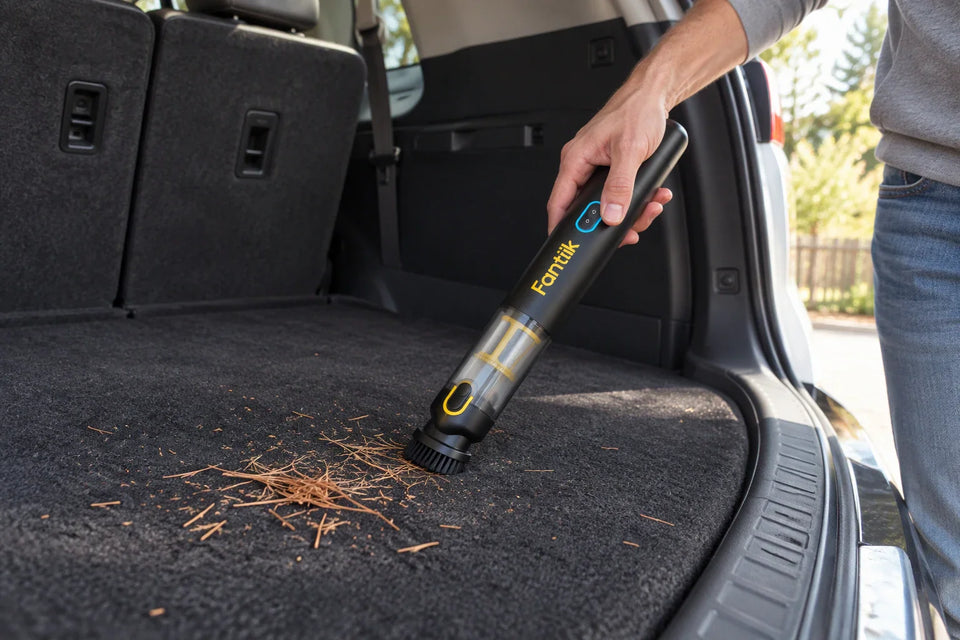 How to Vacuum Pine Needles From a Car After Camping
An ordered guide for vacuuming loose pine needles from cargo floors, carpet edges, and floor mats after camping,...
Leave a comment
This site is protected by hCaptcha and the hCaptcha Privacy Policy and Terms of Service apply.