












































Good road trip tire prep comes down to three checks, done in this order.
First, set each road tire to your vehicle's own cold-pressure target. Next, make sure the spare or the repair kit that came with the car is there and ready. Last, confirm the inflator you plan to carry has power, fits your tire valve, and is rated for the job.
Your door placard and owner's manual give the pressure targets. Each piece of gear's own manual gives its limits. If any item fails its check, fix it before you leave, not at the roadside.
Check Road Tires Cold Against the Vehicle's Guidance
Use the pressure your vehicle maker lists, measured on cold tires—never a universal PSI number. According to NHTSA, you'll find the vehicle pressure target and sidewall maximum in two different places: the target is in your owner's manual and door placard, while the sidewall lists only the tire's maximum capacity.
The number molded into the tire is the most air that tire can hold, not the right pressure for your car.
- Find the target. Read the placard or manual. Front and rear targets may be different, so note both.
- Wait for a cold reading. Driving warms the tires and raises the pressure. Under NHTSA's cold-reading timing, a tire counts as cold once the car has sat for at least three hours.
- Measure and write down each tire. Check all four road tires and compare each one with its own front or rear target.
- Adjust, then recheck. If a tire reads high, let air out a little at a time. If it reads low, find the difference between the reading and the target, add that much air, and measure again.
- Look for damage. Check the tread and sidewalls for cuts, punctures, bulges, cracks, or bumps.

You pass this check when every tire reads its target and shows no damage. Adding air does not fix a damaged tire. NHTSA says that if you find damage, you should take the vehicle to a tire professional before you count on it for the trip. For more upkeep habits between trips, see our routine tire maintenance tips.
Check the Spare or Supplied Tire-Repair Alternative
Count your backup as ready only after you've confirmed it's actually in the car and meets its own documented limits. NHTSA's pre-trip spare and damage check reminds drivers not to forget the spare, and to have a spare tire and jack kit before long trips. Some cars come with a sealant-and-compressor kit instead of a spare, so first figure out which one you have.
- Full-size or temporary spare: Inspect it for the same damage you checked on the road tires. Then check its pressure against the target in your vehicle's documentation, along with any limits on how you can drive on it. A temporary spare can have rules that differ from your road tires. It's not ready if it's damaged, if its pressure is off target, or if the jack or tools are missing.
- Supplied repair kit: Make sure every part is there, including the sealant bottle. Then read that kit's power, connection, and time limits in your manual. The 2022 Honda Insight repair-kit example shows how specific those limits get. That kit plugs into the accessory power socket and shouldn't run longer than 15 minutes. Its pressure targets depend on the listed tire size. If it can't reach the required pressure within 10 minutes, the car needs a tow. Those numbers apply only to that vehicle, so use the values for your own car. A kit is not ready if a part is missing or you don't know its limits.
Verify the Inflator's Power, Connection, and Task Fit
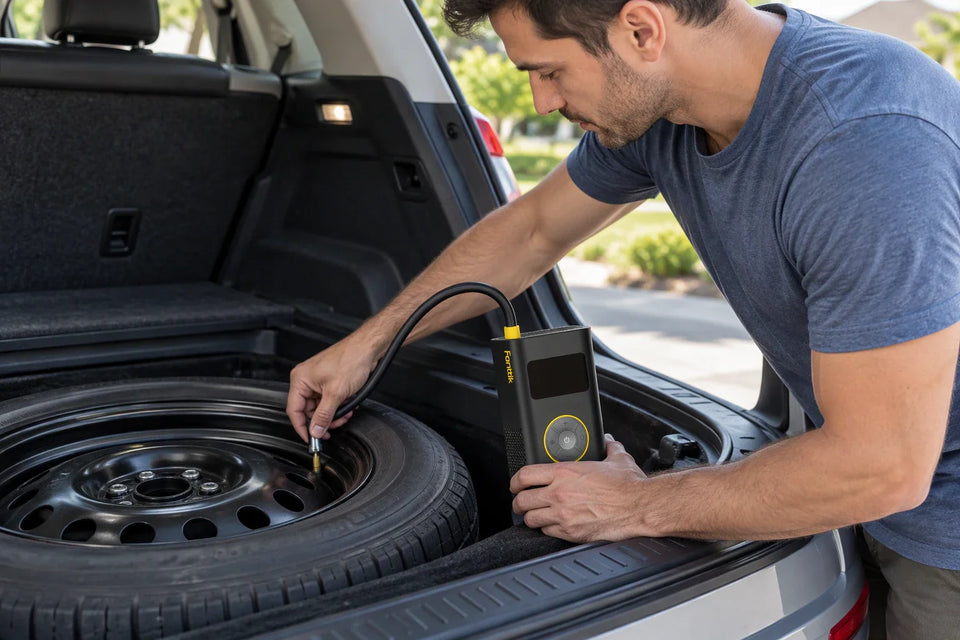
An inflator is trip-ready only when it powers on, seats on your valve, and its manual covers your tires and the amount of air you'd need to add. Run all three checks at home.
- Power. Charge it or plug it into its power source according to its instructions. Then turn it on and confirm the display or the motor responds. If you need its documentation, our Fanttik user manual hub lists manuals by model.
- Connection. Attach the hose or chuck to an actual tire valve. It should seat firmly without a steady hiss, and the gauge should show a pressure reading.
- Task fit. Compare what the manual says the inflator can do with your tire type, your vehicle's target pressure, and how much air you might need to add. A high maximum PSI tells you nothing about your car's correct pressure, how fast the inflator works, or whether it suits your tires. If a portable inflator isn't the right tool for the job, our inflator vs. air compressor guide explains how the two differ.

If any check fails, charge or repair the unit, find the right adapter, or bring an inflator whose manual covers your tires.
FAQs
How often should I check tire pressure outside of road trips?
NHTSA recommends inspecting tires for damage at least once a month, as well as before long trips. Tires can lose air slowly even without a puncture. A monthly reading catches that loss early.
What if I can't wait three hours for a cold reading?
Measure anyway, but keep in mind that warm tires read higher than they really are. Recheck after the car has sat for three hours and adjust then. Don't let air out of a warm tire just to match the cold target.
How do I know when tread is too worn for a long drive?
NHTSA recommends at least 2/32 inch of tread. Uneven wear can mean the tires need rotation or the wheels need alignment.
Where can I read more about planning tire safety for a trip?
Our road trip tire safety guide covers more on preparing for travel, including how to care for a battery-powered inflator.
Continue reading
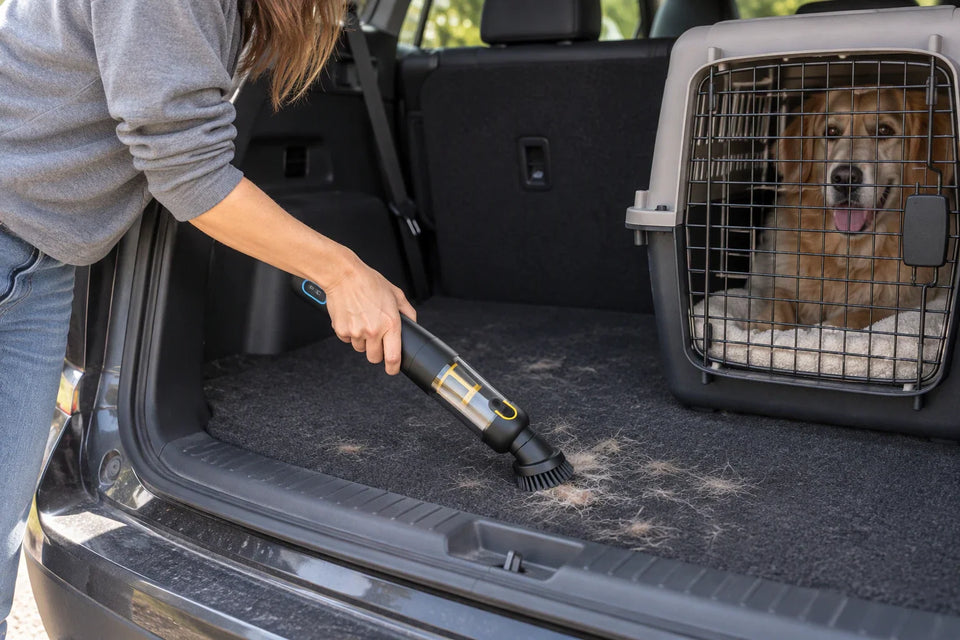 How to Vacuum Dog Hair From a Car’s Cargo Area
This step-by-step method covers prepping the cargo area, loosening embedded fur, cleaning edges and crate spots safely, and...
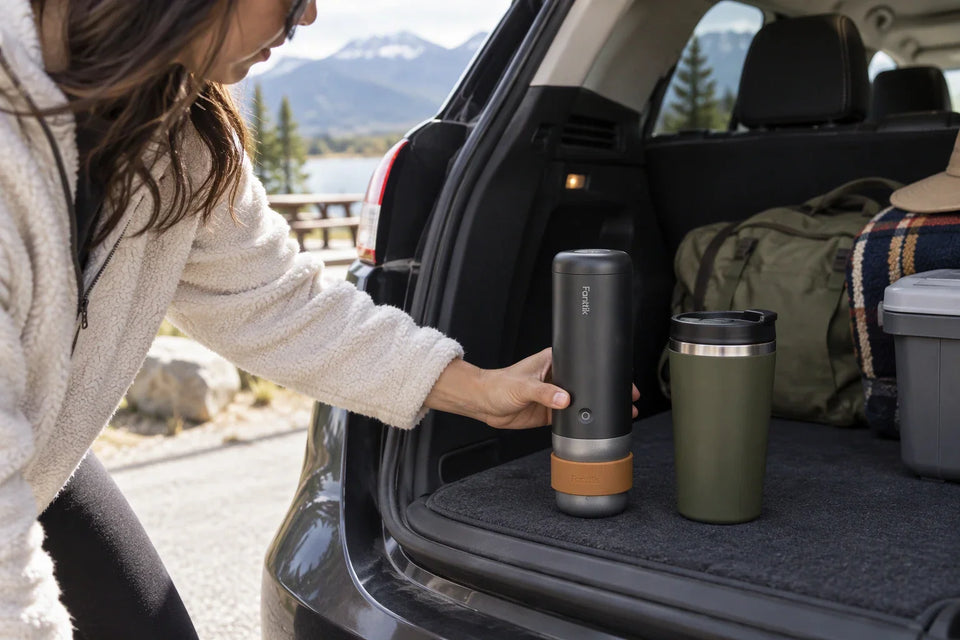 How to Make Coffee in a Parked Car During a Road Trip Stop
A stop-time routine for portable coffee makers: confirm your model's power and water needs, park before brewing, then...
Leave a comment
This site is protected by hCaptcha and the hCaptcha Privacy Policy and Terms of Service apply.