





























Quick Summary: 4 Steps to a Successful Modular Repair
For those looking to get back to cleaning immediately, follow this high-level workflow. Detailed technical instructions and safety protocols follow below.
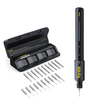
- Safety First: Disconnect power and wait at least 10 minutes for capacitor discharge; verify zero-voltage if you have a multimeter.
- Identify & Source: Use the unit’s serial number (not just the model name) to ensure the modular part matches your specific production run.
- Clean & Inspect: Before installing new belts or rollers, remove mineral deposits from pulleys and check the impeller for hair/debris.
- Calibrated Reassembly: Avoid over-tightening housing screws; use a torque wrench or the "quarter-turn" method to prevent cracking the polymer shell.
The Era of Modern Self-Reliance: Why Modular Repair Matters
In our experience managing high-performance yard tools, we have observed a fundamental shift in how homeowners approach maintenance. The era of "disposable" electronics is fading, replaced by a demand for modern self-reliance. When a robotic pool cleaner—a significant investment in your home’s ecosystem—stops climbing walls or begins to whine, the immediate instinct shouldn't necessarily be to ship it to a service center for weeks of downtime.
Key takeaway: Modular design empowers owners to restore performance through methodical part replacement.
We believe that true product authority is built on transparency and repairability. A modular design allows you to swap out high-wear components like drive belts and rollers without specialized engineering degrees. However, "DIY" does not mean "guesswork." To maintain the integrity of a precision machine, you must approach repairs with a methodical, data-informed mindset.
This guide serves as a technical benchmark for replacing modular parts. We will ground every step in real-world patterns identified from repair benches and customer support data. According to the 2026 Modern Essential Gear Industry Report, lifecycle reliability and spare parts availability are now primary markers of a trustworthy brand.
The Pre-Repair Protocol: Safety and Electrical Integrity
Before you loosen a single screw, you must address the inherent risks of working on electrical equipment designed for submersion. Robotic pool cleaners operate in a high-liability environment where water and electricity meet.
The 10-Minute Safety Buffer
A common oversight in pool robot repair is the residual charge held in the unit's internal capacitors. Even after unplugging the power supply, the motor control board can retain enough energy to cause an electrical shock or short-circuit sensitive components during disassembly.
- Heuristic Recommendation: We suggest a minimum 10-minute "cold" period to allow internal capacitors to discharge through the board's bleed resistors.
- Verification Step: For maximum safety, if the control board is accessible, use a digital multimeter to confirm that the voltage across the main capacitors has dropped to a safe level (typically < 5V DC) before touching internal circuitry.
GFCI Verification
If your robot is a corded model, its safety relies on the Ground Fault Circuit Interrupter (GFCI). Before starting work, use the "Test" and "Reset" buttons on your outlet.
- Trip Threshold: A functional GFCI should trip at a current leakage of approximately 30mA (aligned with IEC 60529 safety standards).
- Maintenance Note: An internal failure can occasionally leave a circuit live even if the button appears normal; use a dedicated GFCI outlet tester if you suspect a fault.
Identifying Your Hardware
Manufacturers often make "running changes" to internal designs. A common pitfall is ordering parts based solely on the model name.
- The Serial Number Rule: Always use the unit’s serial number to source parts. This ensures compatibility with modular components that may have iterative updates in gear ratios or belt tooth profiles.

Step-by-Step: Replacing Drive Belts and Tracks
Drive belts are the "tires" of your pool robot. If your robot is struggling to climb walls or is making a high-pitched whining noise, the belts may have stretched or lost their grip.
Diagnostic Heuristics
Based on general maintenance logs, drive belts often last 2–3 seasons, though this is an estimate subject to pool conditions.
- Surface Impact: Concrete and pebble-finish pools act as abrasives, potentially wearing down tracks faster than vinyl liners.
- The "Slippage" Test: If you can easily rotate the drive tracks by hand while the motor is off with almost zero resistance, it is a strong indicator that belt tension has failed.
The Replacement Process
- Power Down: Disconnect the power supply and wait the recommended 10-minute discharge period.
- Access the Drive Assembly: Most modular robots use a side-access panel. Use a precision screwdriver to remove the housing screws.
- Inspect the Pulleys: Before installing the new belt, check the drive pulleys for debris or calcified mineral buildup. Even a small pebble can cause a new belt to fail prematurely.
- Tensioning: Slip the new belt over the drive motor pulley first, then rotate the wheel assembly to "walk" the belt onto the secondary pulley.
- Alignment Check: Ensure the belt sits centered. A misaligned belt may fray against the housing during operation.
| Component | Common Sign of Failure | Estimated Lifespan (Seasons)* | Maintenance Action |
|---|---|---|---|
| Drive Belts | Whining noise, poor wall climbing | 2–3 | Replace when slipping |
| Roller Brushes | Visible bald spots, debris left behind | 1–2 | Inspect monthly |
| Filter Cartridges | Low suction, "dirty filter" alerts | 1 (approx.) | Deep clean weekly |
| O-Rings/Seals | Moisture inside motor pod | 3–5 | Lubricate with silicone |
| *Estimates based on typical residential use (3 cycles/week); individual results vary by water chemistry and pool surface. |
The "Critical Torque" Factor: Avoiding Housing Damage
When reassembling the motor housing, the most significant risk is often over-tightening. Over-tightening can lead to micro-cracks in the polymer housing, which may cause water ingress and motor failure.
The 8Nm Practical Baseline
While you should always consult your manufacturer's specific torque table if available, a common baseline for M6 mounting bolts on many robotic pump housings is approximately 8Nm (Newton-meters).
- Tool Guidance: If using a torque wrench, ensure it is calibrated for low-range measurements (2-20Nm).
- Alternative Method: If you do not have a torque wrench, tighten the screw until it is "finger tight" (seated), then add exactly a quarter-turn. This heuristic helps provide sufficient clamping force without deforming the plastic threads.
The Waterproofing Seal
Most high-end robots are designed to meet IP68 standards. Opening a sealed compartment breaks the factory seal.
- The Silicone Rule: Use only 100% silicone-based lubricant on O-rings. Avoid petroleum-based lubricants (like WD-40), as they can cause rubber and silicone seals to swell and degrade.
- Curing Time: If applying a liquid sealant, we recommend allowing at least 24 hours of curing time before submersion to ensure the seal is fully set.
Restoring Suction: Filter and Impeller Maintenance
Suction failure is frequently a flow-rate issue rather than a motor defect. If your robot is moving but not picking up debris, the problem often lies in the modular filter system or the impeller.
Deep Cleaning the Filter System
Standard rinsing may leave a "biofilm" or calcium deposits in the mesh.
- The Light Test: Hold your clean filter up to a bright light. If light does not pass through the mesh, it is likely clogged with microscopic particles.
- Chemical Restoration: A mild acidic solution (such as diluted white vinegar) can help dissolve calcium buildup that a standard hose cannot remove.
Impeller Inspection
The impeller is a modular fan that can be replaced if the blades are chipped.
- Common Obstruction: Hair and pool-cover strings often wrap around the impeller shaft, creating friction that increases motor current draw.
- Maintenance Tip: Check the impeller intake after heavy storms or high leaf-fall events.
Managing the Lifecycle: When to DIY vs. Professional Support
While we advocate for user-repairability, it is vital to recognize the boundaries of safe DIY maintenance, as emphasized by safety frameworks like the EU General Product Safety Regulation (EU) 2023/988.
Scenario A: The Ideal DIY Candidate
Replacing tracks, rollers, or filter baskets is generally safe for homeowners. These parts are "external" to the main electrical seal and pose minimal risk to the unit's core integrity when handled methodically.
Scenario B: The Professional Boundary
If you suspect a failure in the Main Control Board or the Sealed Motor Unit, proceed with caution. Opening these units often involves breaking specialized gaskets or ultrasonic welds that are difficult to replicate at home.
- Warranty Warning: Disassembling a sealed motor pod typically voids manufacturer warranties. If your unit is under coverage, contact the brand first.
Proactive Maintenance Model
To maximize the life of modular parts, we suggest tracking "run hours" to predict failure points.
Illustrative Model (Standard Pool Environment): Based on a 20,000-gallon concrete pool, 3 cycles per week.
| Parameter | Estimated Value | Unit | Rationale | | :--- | :--- | :--- | :--- | | Average Cycle Time | 2.5 | Hours | Typical residential cycle | | Weekly Run Time | 7.5 | Hours | 3 cycles per week | | Seasonal Run Time | ~180 | Hours | 6-month swimming season | | Belt Failure Range| 400–600 | Hours | Estimated polymer fatigue limit | | Filter Saturation | 40–60 | Hours | Typical window for micro-clogging |
Variable Factors:
- Water Chemistry: High chlorine levels (>5ppm) or low pH (<7.0) can accelerate the degradation of rubber parts by an estimated 20%.
- UV Exposure: Storing the robot in direct sunlight can cause tracks to become brittle significantly faster than shaded storage.
Building Trust Through Transparency
At the heart of modern self-reliance is the belief that you should understand the tools that maintain your home. By following a methodical approach to modular repair, you gain a deeper understanding of your hardware and ensure your robotic cleaner remains a high-performance asset for years to come.
Disclaimer: This article is for informational purposes only. Working with electrical devices near water involves inherent risks. Always follow the specific safety instructions in your product manual. If you are unsure of your ability to complete a repair safely, consult a qualified pool equipment technician. Fanttik is not responsible for damages or injuries resulting from improper DIY repairs.
References
Continue reading
 Defeating Sun Damage: Preserving Your Pool Robot’s Outer Shell
Covers material science of ASA/ABS polymers, sun-belt case studies, and practical maintenance protocols for long-term shell integrity.
Defeating Sun Damage: Preserving Your Pool Robot’s Outer Shell
Covers material science of ASA/ABS polymers, sun-belt case studies, and practical maintenance protocols for long-term shell integrity.
 Chemical Corrosion: How Pool Water Affects Robotic Components
Covers chlorine, pH, TDS effects on seals and metals, plus a rinse routine to extend equipment life by...
Chemical Corrosion: How Pool Water Affects Robotic Components
Covers chlorine, pH, TDS effects on seals and metals, plus a rinse routine to extend equipment life by...


Leave a comment
This site is protected by hCaptcha and the hCaptcha Privacy Policy and Terms of Service apply.