




























Understanding the Silent Erosion of Portable Power
Quick Summary: Is your jump starter still reliable? Extreme heat is the leading cause of "false confidence" in lithium-ion jump starters—where a unit shows 100% charge but fails under the load of a real emergency.
- The Rule of Thumb: If your unit is over 3 years old and has survived two or more summers in a hot trunk (120°F+), its internal chemistry is likely compromised.
- Immediate Action: Perform a "Voltage Sag Test" (details below) and check for any physical casing swelling before the next heatwave.
We often treat portable jump starters like insurance policies: we buy them, tuck them into the trunk, and expect them to work the moment a crisis hits. However, a lithium-ion jump starter is a dynamic chemical system reacting to its environment. While most drivers fear the "dead battery" of winter, our technical support teams and workshop tests consistently show that heat is the far more insidious enemy.
In our experience on the repair bench, the most dangerous failure isn't a unit that won't turn on. It is the unit that displays a "100% charge" but collapses the moment you turn the key. This phenomenon creates a "false confidence" that can leave you stranded. To ensure your equipment remains a reliable lifeline, we must look beyond the screen and understand the mechanics of thermal degradation.
The Chemistry of Heat: Reversible vs. Irreversible Loss
It is a common misconception that cold weather "kills" batteries. In reality, cold weather primarily increases internal resistance and slows chemical reactions, which is often a reversible capacity loss. Once the battery warms up, much of that performance typically returns. Heat, however, is a different story.
High temperatures accelerate the cumulative and irreversible chemical breakdown within lithium cells. According to research on Lithium-Ion Battery Lifetime, heat fuels parasitic reactions, such as the growth of the Solid Electrolyte Interphase (SEI) layer. This layer acts like "clogged pipes," permanently increasing internal resistance and reducing the speed at which energy can be delivered.
Expert Insight: Our technical perspective differentiates between capacity fade (how much energy is held) and power fade (how fast it can be delivered). Heat primarily drives power fade, which is critical for jump starters that require massive bursts of current (Amps) rather than long-term endurance (Watt-hours).
The Synergy of Heat and State of Charge (SOC)
One of the most frequent mistakes we see in customer returns is storing a jump starter at 100% charge in a hot vehicle. Research indicates that State of Charge (SOC) during heat exposure is a critical multiplier for degradation. A battery sitting at full charge in a 100°F (38°C) trunk can degrade significantly faster than one kept at 50% charge. High voltage combined with high heat exponentially accelerates lithium plating and electrolyte decomposition.
Modeling the "False Confidence" Scenario: The Desert Commuter
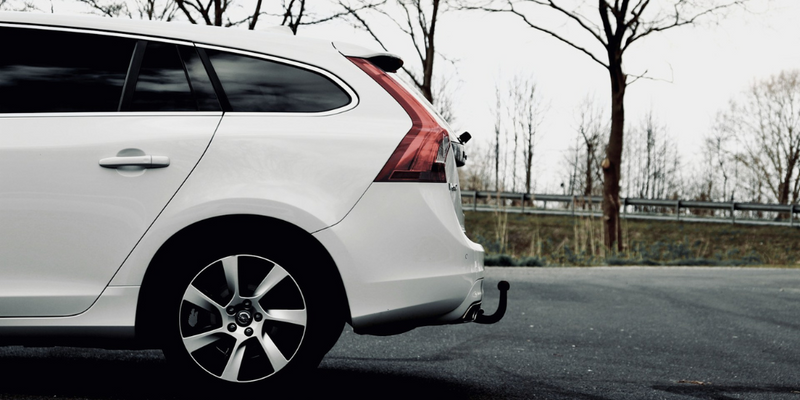
To demonstrate the impact of extreme heat cycles, we modeled a "Desert Climate Commuter" scenario. This represents a vehicle owner in a region like Phoenix, Arizona, where summer trunk temperatures can exceed 140°F (60°C).
Disclaimer on Modeling: The following values are representative estimates based on chemical kinetics (Arrhenius Equation) and internal shop heuristics. They are intended for illustrative purposes and may vary based on specific cell quality and BMS (Battery Management System) efficiency.
Method & Assumptions: The Heat Degradation Model
| Parameter | Illustrative Value | Unit | Rationale |
|---|---|---|---|
| Ambient Peak Temp | 115 | °F | Typical desert summer peak |
| Trunk Peak Temp | 145 | °F | Estimated greenhouse effect in closed vehicles |
| Exposure Duration | 3 | Years | Common replacement cycle for consumer lithium gear |
| Original Capacity | 74 | Wh | Based on premium jump starter specifications |
| Modeled Efficiency | 0.6 | Ratio | Estimated reduction from 0.7 due to aged cell resistance |
Analysis Results (Estimated):
- Operational Capacity Loss: We estimate a ~40% reduction in usable energy in this scenario. While the unit might still show "Full," its ability to sustain a high-current crank is severely compromised.
- Cranking Current Demand: A degraded vehicle battery (also aged by heat) requires more current to start. We modeled a jump current requirement of 600A (up from 400A for a healthy engine).
- The Power Gap: The aged jump starter, suffering from "voltage sag," may drop below 9 volts during the crank attempt. This is often insufficient to satisfy the vehicle’s ECU requirements or engage the starter solenoid.
Identifying the Signs: When to Renew Your Unit
Because a jump starter's failure is often invisible, we recommend a proactive inspection protocol. If your unit has survived more than two seasons of extreme heat, look for these three indicators.
1. The Voltage Sag Test (The Professional's Secret)
Experienced technicians do not trust the battery percentage icon alone. The most definitive sign of cell degradation is a significant voltage drop under load.
How to perform a DIY load test:
- Tooling: Use a digital multimeter with a "Min/Max" capture function or a basic battery load tester.
- Procedure: Connect your jump starter to a vehicle with a known-good battery (to act as the load).
- Measurement: Observe the voltage readout while an assistant attempts to crank the engine for 2 seconds.
-
The Threshold: A healthy unit should maintain a steady output. If the voltage dips more than 2-3 volts from its resting state during the crank, the internal cells have likely degraded.
- Example: If the resting voltage is 12.6V and it drops to 8.5V during the crank (a 4.1V sag), the unit is likely at the end of its reliable life. A sag of 0.4V per cell (roughly 1.2V to 1.6V for a 3-cell or 4-cell pack) is a common replacement heuristic in Battery Analyzer Methodologies.
2. Physical Deformation (The "No-Go" Signal)
The physical feel of the device is an underrated diagnostic tool. Lithium-polymer cells can "outgas" as they degrade, leading to internal pressure.
- The Bulge Test: Run your hand along the casing. If you feel any slight swelling or if the unit no longer fits easily into its original hard-shell case, it is a critical safety warning.
- The Mechanism: According to research on cell swelling, this is caused by parasitic chemical reactions that generate gas. Heat fuels these reactions. A swollen battery is a fire risk and must be disposed of at a certified battery recycling center immediately.
3. The "State of Charge" Drift
If your unit drops from 100% to 80% after just a few weeks of storage, or if it takes an unusually long time to reach a full charge, the internal BMS is likely struggling to calibrate against degraded cells. This inconsistency is a clear sign that the chemistry is no longer stable.
The Economic Rationality of Proactive Replacement
A common question we receive is: "If it still works, why should I replace it?" We suggest looking at this through a cost-benefit lens. A new, high-performance jump starter typically ranges from $100 to $200. In contrast, the cost of a single failure in the field can be significantly higher:
- Emergency Towing: $75–$250+ (depending on location).
- Missed Work/Commitments: High-stress and potentially costly.
- Safety Risk: Being stranded at night or in extreme weather.
If a unit is more than three years old and has been stored in a hot climate, the probability of failure during a "deep discharge" event increases significantly. As noted in the Fanttik 2026 Engineering Whitepaper, building "trust architecture" into your preparedness plan means making rational, evidence-based decisions about equipment lifecycles.
Best Practices for Extending Battery Life
While heat damage is irreversible, you can significantly slow the rate of decay with these storage habits:
- Avoid the "Full Charge" Trap: If the unit will sit in a hot car for months, store it at 50% to 70% charge. This reduces the electrical stress on the cells.
- Thermal Insulation: Store the unit in an insulated bag or a hard-shell case under the seat—rather than on the dashboard or in the spare tire well where heat accumulates. See our guide on Battery Insulation.
- The Quarterly Check: Every three months, bring the unit into a climate-controlled environment. Discharge it slightly (e.g., charge a phone) and then top it back up to your preferred storage level to "exercise" the chemistry.
- Pre-Conditioning: If you expect a cold snap, bring the unit inside the night before. A warm battery provides much higher cranking power than one that has been soaking in sub-zero temperatures, as detailed in our analysis of Extreme Cold Performance.
Compliance and Safety Standards
When selecting a replacement, look for units that adhere to international safety standards. The IEC 62133-2 standard is a global benchmark for the safety of portable secondary lithium cells. Furthermore, ensure the manufacturer complies with the EU General Product Safety Regulation (EU) 2023/988, which mandates rigorous traceability and safety obligations for consumer electronics.
Summary Checklist for Renewal
If you are unsure whether to keep or replace your current unit, use this expert checklist:
- Age: Is the unit older than 3-4 years? (Yes = High Risk)
- Climate: Has it been stored in a trunk during 2+ summers with temps >90°F? (Yes = High Risk)
- Physical: Is there any bulging or casing "creak"? (Yes = Immediate Replacement)
- Performance: Does the voltage sag more than 2V during a crank attempt? (Yes = Renew Now)
- Reliability: Has it failed to start a vehicle it previously handled with ease? (Yes = Renew Now)
Disclaimer: This article is for informational purposes only. Portable jump starters contain high-energy lithium batteries; always follow the manufacturer's specific safety instructions. If a battery shows signs of swelling or leaking, do not attempt to charge or use it. Consult a qualified automotive technician for vehicle battery diagnostics.
References
- European Union - General Product Safety Regulation (2023/988)
- International Electrotechnical Commission - IEC 62133-2:2017
- ScienceDirect - Calendar aging trends and temperature-SOC interaction
- IATA - Lithium Battery Shipping Guidelines
- Fanttik - Engineering Trust in a Cordless World (2026 Whitepaper)
Continue reading
 Must-Have BMS Safety Protections for Reliable Jump Starting
A guide to essential Battery Management System (BMS) protections that ensure safe and reliable portable jump starter operation.
Must-Have BMS Safety Protections for Reliable Jump Starting
A guide to essential Battery Management System (BMS) protections that ensure safe and reliable portable jump starter operation.
 Diagnosing Slow Charging Issues in Extremely Cold Garages
A guide diagnosing why lithium-ion jump starters fail to charge in unheated winter garages. Learn the technical causes...
Diagnosing Slow Charging Issues in Extremely Cold Garages
A guide diagnosing why lithium-ion jump starters fail to charge in unheated winter garages. Learn the technical causes...

Leave a comment
This site is protected by hCaptcha and the hCaptcha Privacy Policy and Terms of Service apply.