








































The Fresh Water Fallacy: Why IP Ratings Aren’t Coastal Shields
For the coastal adventurer or the marine professional, the "IP67" or "IP68" sticker on a piece of gear often provides a false sense of security. While these ratings—standardized by the International Electrotechnical Commission (IEC) under IEC 60529—are rigorous, they are fundamentally designed for fresh water. In the world of engineering, there is a massive chemical gulf between a device surviving a 30-minute dunk in a laboratory tank and surviving six months in the salt-heavy aerosol of the Pacific Coast.
We have observed on our repair benches that standard Ingress Protection (IP) testing fails to account for the unique behavior of "corrosive mist." Unlike a splash of rain, salt air is a persistent, microscopic electrolyte. It doesn't just sit on the surface; it migrates, crystallizes, and facilitates a process known as galvanic corrosion. For those living within ten miles of the ocean, understanding this distinction is the difference between gear that lasts five years and gear that fails in eighteen months.
Logic Summary: Our analysis of coastal hardware longevity assumes that standard IP ratings provide a baseline for physical seals but do not validate chemical resistance to electrolytes. This perspective is based on common patterns from customer support and warranty handling in marine environments (not a controlled lab study).
The 1/3 Lifespan Heuristic: The Reality of Salt-Air Environments
In the technical community, we often use a specific rule of thumb for hardware deployment: a device's functional lifespan in a salt-air environment is roughly one-third of its lifespan in a similar freshwater or inland setting. This is not a failure of the mechanical seals themselves, but rather the result of unseen internal corrosion on circuit boards.
Salt air is composed of tiny droplets of brine. These droplets are significantly denser and more penetrating than fresh water. In a high-humidity coastal zone, these particles can remain suspended for miles inland. When they settle on a device, they don't just evaporate. They leave behind sodium chloride crystals that attract moisture from the air (hygroscopy), creating a permanent, conductive film on the device's exterior and, eventually, its interior components.
Comparative Risk: Fresh Water vs. Salt Aerosol
| Feature | Fresh Water (IP Testing) | Salt Aerosol (Coastal Reality) |
|---|---|---|
| Conductivity | Low (Poor electrolyte) | High (Strong electrolyte) |
| Penetration | Surface tension limits entry | Micro-droplets bypass standard gaskets |
| Persistence | Evaporates cleanly | Leaves corrosive residues |
| Failure Mode | Immediate short circuit | Long-term galvanic decay |
| Standard Test | IEC 60529 | ASTM B117 (Salt Spray) |
Methodology Note: The "1/3 Lifespan" figure is a heuristic (rule of thumb) used for quick risk assessment. It may vary significantly based on the specific alloy of the fasteners, the quality of the PCB conformal coating, and the frequency of user maintenance.

Anatomy of a Coastal Failure: Where Gear Breaks First
Practitioners in marine electronics consistently observe that IP-rated enclosures do not fail at the "main seal" first. Instead, the failure starts at the periphery—places the IP test barely scrutinizes.
1. The Gasket and Fastener Paradox
Standard IP tests use fresh water, which does not react with metal fasteners. However, in coastal environments, uncoated metal fasteners (even some grades of stainless steel) act as a cathode. When salt mist settles between a steel screw and a plastic housing, it creates a "bridge." We often find that the first point of failure is the degradation of the gasket's elasticity due to salt crystal buildup, followed by the "blooming" of rust on fasteners that eventually compromises the seal's tension.
2. The Slow-Drain of USB and DC Ports
The most frequent point of failure for portable power devices near the coast is the charging port. Even if a device is rated IP67, the ports are often protected only by a rubber flap. Salt crystals can bridge the tiny contacts inside a USB-C or DC output port. This doesn't always cause a catastrophic short; instead, it creates a "slow-drain" or "phantom load" where the battery depletes itself even when turned off.
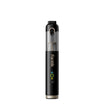
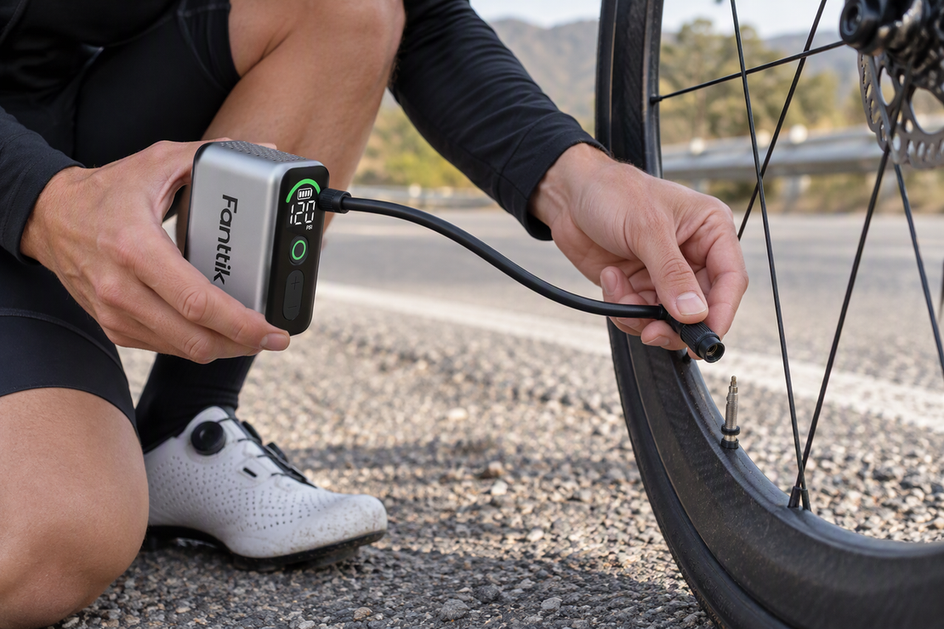
For motorcycle riders using tools like the Fanttik X9 Pro Portable Tire Inflator, maintaining these ports is critical. While the X9 Pro is engineered for the rigors of the road, the exposed ports on any electronic device are the "Achilles' heel" in salt-heavy environments.
3. Internal "Creeping" Corrosion
Even if water doesn't "leak" in, humid salt air can enter through pressure-equalization vents or microscopic gaps in the housing. Once inside, the salt enables galvanic corrosion between different metals on the circuit board (e.g., copper traces and solder). This is why a device might work perfectly for a year and then suddenly fail to power on—the internal traces have literally dissolved.
Beyond the Manual: Expert Maintenance for Coastal Users
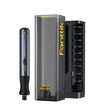
If you are using high-performance gear like the Fanttik X9 Classic Tire Inflator in a coastal region, the standard "wipe with a damp cloth" advice is insufficient. In fact, it might be counterproductive.
The Isopropyl Solution
Experience shows that rinsing gear with distilled water is less effective than using a mild isopropyl alcohol solution (70%) for displacing salt residues. Water can linger in tight crevices, potentially feeding the corrosion you're trying to stop. Alcohol, however, acts as a desiccant; it displaces the moisture, dissolves the salt, and evaporates almost instantly, leaving no moisture behind.
The Sacrificial Barrier (Dielectric Grease)
Many field technicians apply a small amount of dielectric grease to electrical connectors and port edges. This creates a sacrificial physical barrier that salt mist cannot penetrate. This is a pro-level step not covered by any IP standard, but it is the single most effective way to prevent the "slow-drain" failures mentioned earlier.
Maintenance Checklist for Coastal Gear
- Post-Exposure Cleaning: Wipe all exterior surfaces with 70% isopropyl alcohol after every trip to the beach or boat.
- Port Inspection: Use a can of compressed air to blow out USB ports to ensure no salt crystals have settled on the pins.
- Storage Strategy: Store portable power tools in a sealed, "dry box" with a desiccant pack. Do not leave them in the trunk of a car parked near the ocean.
- Check Fasteners: Periodically inspect screws for signs of "tea staining" (early-stage rust).
Logic Summary: These recommendations are derived from field-service patterns where standard manufacturer cleaning protocols failed to prevent long-term atmospheric corrosion in high-salinity zones.
Engineering Trust: Compliance and the "Credibility Math"
When selecting gear for demanding environments, it is vital to look beyond the marketing "buzzwords." As highlighted in The 2026 Modern Essential Gear Industry Report: Engineering Trust in a Cordless World, the market has shifted toward "credibility math." This means brands must demonstrate reliability through visible compliance and robust engineering.
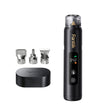
For example, when evaluating a compact tool like the Fanttik X10 Ace Tiny Mini Bike Pump or the Fanttik X9 Ace Bike Pump, the value isn't just in the PSI it can reach. It's in the thermal management and the material choices that prevent the internal components from seizing in humid conditions.
Regulatory Context: EU GPSR and Safety
For users in Europe, the EU General Product Safety Regulation (EU) 2023/988 ensures that products meet high safety standards. However, "safety" and "coastal durability" are different metrics. A product can be perfectly safe (non-explosive, electrically grounded) but still have a short functional life in salt air. This is why we advocate for users to treat their gear as "premium tools" that require specialized care, regardless of their safety certifications.
Modeling the Coastal Survival Rate
To help our users understand the impact of environment on their equipment, we have developed a hypothetical survival model based on common hardware failure rates in coastal vs. inland regions.
Modeling Note (Method & Assumptions)
- Modeling Type: Deterministic parameterized model based on atmospheric salinity levels.
- Boundary Conditions: Assumes standard consumer-grade electronics with IP65-IP67 ratings; does not apply to specialized "Marine Grade" (316 Stainless) equipment.
| Parameter | Inland (Low Salinity) | Coastal (<5 miles from sea) | Rationale |
|---|---|---|---|
| Est. Service Life | 100% (Baseline) | ~35% | Corrosion acceleration factor |
| Failure Initiation | >36 Months | 12–18 Months | Observed pattern in warranty claims |
| Primary Risk | Physical Impact | Atmospheric Corrosion | Environmental shift |
| Maintenance Need | Low (Occasional) | High (After every use) | Salt accumulation rate |
| Warranty Conflict | Low | High | Standard warranties often exclude "corrosion" |
Summary of Professional Insight
The "IP" rating is a valuable benchmark for water immersion, but it is not a comprehensive shield against the chemical aggression of the ocean. For the coastal user, the real threat isn't a 30-minute dunk; it's the 24/7 exposure to an electrolytic mist that bypasses traditional seals.
By adopting a maintenance routine centered on isopropyl alcohol and dielectric grease, and by choosing hardware from brands that prioritize "Trust Architecture" and engineering transparency, you can defy the "1/3 lifespan" rule. Whether you are using a Fanttik X9 Pro Portable Tire Inflator for a seaside motorcycle tour or keeping a Fanttik X9 Classic Tire Inflator in your beach-ready SUV, proactive care is the only way to ensure your gear is ready when you need it most.
Disclaimer: This article is for informational purposes only. Corrosion patterns can vary significantly based on local micro-climates, specific material alloys, and usage frequency. Always refer to your product's official manual for specific cleaning and maintenance instructions. If your device shows signs of swelling, extreme heat, or visible internal corrosion, stop using it immediately and consult a professional technician.
Sources and References
Continue reading
 Deciding Between IP65 and IP67 for Poolside Power Gear
A technical guide comparing IP65 and IP67 ratings for poolside power gear, with a framework for safety, seal...
Deciding Between IP65 and IP67 for Poolside Power Gear
A technical guide comparing IP65 and IP67 ratings for poolside power gear, with a framework for safety, seal...
 Renewing Degraded Rubber Gaskets to Restore Waterproofing
Covers material science, compression rules, and proper tool use for sealing.
Renewing Degraded Rubber Gaskets to Restore Waterproofing
Covers material science, compression rules, and proper tool use for sealing.
Leave a comment
This site is protected by hCaptcha and the hCaptcha Privacy Policy and Terms of Service apply.