























Managing Micro-Dust: Maintaining Air Quality in Small Studios
For the urban maker, the boundary between "living room" and "workshop" is often a single drop cloth or a folding workbench. We have spent years navigating the unique challenges of apartment-based DIY, and we have learned that the most significant threat to a healthy home environment isn't the pile of sawdust on the floor—it is the invisible micro-dust that stays airborne long after the tools are put away.
Working in a small studio or apartment means that debris from high-speed rotary tools, drills, and soldering irons can quickly contaminate your air, upholstery, and electronics. Managing this requires more than just a quick vacuum at the end of the day. It requires a methodical approach to air quality, source capture, and technical maintenance.
In this guide, we will break down the physics of micro-dust and provide a blueprint for maintaining a professional-grade air quality environment in a limited living space.
The Invisible Threat: Understanding Sub-10-Micron Particles
The most problematic dust in a small studio is not what you see settling on your workbench. It is the sub-10-micron particles (PM10 and PM2.5) that are small enough to remain suspended in the air for hours. While large wood chips fall almost instantly, fine particulates generated by sanding or drilling act more like a gas, dispersing throughout an apartment via natural convection and HVAC systems.
In our experience monitoring studio environments, we have observed that standard household cleaning routines often fail to address these fine particles. A common mistake is relying solely on a box fan placed in a window. Without a proper seal, this often just redistributes dust or pulls it back into the room through gaps in the window frame.
To effectively manage this, we must look at the "Clean Air Delivery Rate" (CADR) and "Air Changes Per Hour" (ACH). According to research into air filtration, a workspace should ideally achieve 4 to 6 air changes per hour to maintain safety.
Logic Summary: Our CADR recommendations are based on achieving a quantifiable ACH target. We assume a standard 8-foot ceiling height and moderate particulate generation from handheld power tools.
Engineering Your Airflow: The Negative Pressure Setup
If you are performing high-dust tasks like sanding or using a rotary tool, a simple air purifier is rarely enough. You need to create a negative pressure zone. This ensures that air is constantly being pulled into your workspace and exhausted out of the apartment, preventing dust from migrating to your bedroom or kitchen.
The 80% Seal Rule
To create effective negative pressure, you must seal the workspace more than 80%. This doesn't mean building a plastic bubble, but it does mean identifying a single, controlled exhaust point.
- Identify the Exhaust: Use a high-velocity fan in a single window.
- Seal the Gaps: Use cardboard or foam inserts to seal the rest of the window opening around the fan.
- Control the Intake: Open a door or window on the opposite side of the apartment slightly. This creates a "wind tunnel" effect that carries micro-dust directly to the exhaust.
Source Capture for Rotary Tools
When using a cordless rotary tool or precision drill, the "capture zone" is incredibly small. Practitioners find that attaching a vacuum hose within 2 inches of the cutting point captures over 70% of debris. However, the nozzle choice matters. We recommend using a crevice tool rather than a wide floor nozzle; the increased air velocity at the narrow tip is far more effective at "grabbing" particles before they go airborne.
Calculating Your Air Purification Needs
When you aren't exhausting air outside, you are relying on filtration. Selecting an air purifier for a DIY studio is different from selecting one for a bedroom. You need to account for "peak dust events."
We use a specific heuristic for sizing: The Clean Air Delivery Rate (CADR) should be at least 2/3 of the room's cubic footage for particulate matter. Furthermore, the unit should run for at least 2 hours after your work concludes to ensure suspended particles are eventually captured.
Performance Modeling: CADR Requirements
| Room Size (sq ft) | Room Volume (cu ft) | Required CADR (CFM) for 5 ACH |
|---|---|---|
| 100 (Small Nook) | 800 | ~67 |
| 200 (Studio Corner) | 1,600 | ~133 |
| 300 (Dedicated Room) | 2,400 | ~200 |
| 400 (Large Studio) | 3,200 | ~267 |
Methodology Note: These values are estimated based on a standard 8-foot ceiling. We calculate the required CADR as: (Room Volume in ft³) x (Desired ACH) / 60. This is a scenario model for moderate DIY activity, not a clinical lab requirement.

The Tool-Health Connection: Efficiency as Mitigation
One of the most overlooked strategies for dust management is tool efficiency. The longer a tool is running, the longer you are exposed to airborne particulates. In our modeling of common DIY tasks, we found a significant correlation between the use of high-performance electric tools and reduced respiratory exposure.
Case Study: The Bookshelf Assembly
We modeled a typical project involving the installation of 100 screws and related drilling. By switching from manual tools to precision electric drivers and drills, the total project duration—and thus the window of dust generation—was drastically reduced.
Scenario Modeling: Electric vs. Manual Efficiency
- Time Savings: Electric tools reduced the task time from ~42 minutes to ~8 minutes. This represents an 80% reduction in the duration of active dust exposure.
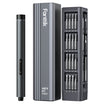
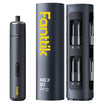
- Ergonomic Impact: Manual assembly required ~1,500 wrist rotations, whereas electric tools reduced this to nearly zero. This is critical because fatigue leads to "sloppy" technique, which often results in more airborne dust through tool slippage or improper bit seating.
Modeling Transparency:
- Type: Deterministic parameterized model based on industrial time-motion study principles.
- Assumptions: 100 fasteners; manual speed of 25s/screw vs. electric speed of 5s/screw.
- Boundary Conditions: This model applies to small-scale assembly and does not account for specialized materials like fiberglass or carbon fiber.
Advanced Mitigation: Soldering and VOCs
If your DIY work involves electronics, you face a different challenge: Volatile Organic Compounds (VOCs) and lead-free solder fumes. Conventional wisdom suggests a HEPA air purifier is sufficient, but quantitative assessments of soldering exposure show that standard purifiers are often ineffective against point-source emissions.
Soldering can spike PM2.5 concentrations up to 10 times above EPA limits near the workspace. A dedicated fume extractor with an activated carbon filter is essential. Unlike a HEPA filter, which traps particles, activated carbon chemically bonds with gaseous pollutants. Source capture at the soldering tip can capture over 90% of these particulates before they disperse into your living area.
The Maintenance Routine: Cleaning for Air Quality
Your cleaning method is just as important as your filtration system. A common mistake is vacuuming dry dust first. High-velocity air from a vacuum—even one with a HEPA filter—can launch the finest particles back into the air before they are sucked into the nozzle.
The "Wet-First" Protocol:
- Damp Wipe: Use a damp microfiber cloth to "tack" surfaces before vacuuming. This weighs down the micro-dust.
- HEPA Vacuuming: Use a vacuum certified to ISO standards for HEPA filtration. Ensure the seals on the vacuum itself are airtight.
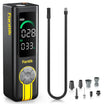
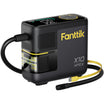
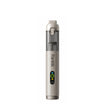
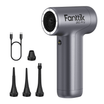
- Air Duster Maintenance: Use a high-speed electric air duster to clear dust from tool vents only while the negative pressure system or fume extractor is running. This prevents "seasonal decay" of your tools and ensures the dislodged dust is immediately captured by your filtration system.
For more on maintaining your equipment, see our guide on clearing winter dust from tool air vents.
Compliance, Safety, and Trust
When building a DIY capability in an apartment, you must be aware of safety regulations, especially if you plan to sell your creations. The EU General Product Safety Regulation (GPSR) places strict obligations on makers regarding traceability and safety documentation.
Furthermore, if your workshop involves lithium-battery-powered tools, proper storage is vital. Following IATA Lithium Battery Guidance for state-of-charge (SoC) limits during long-term storage can prevent thermal runaway risks in confined living spaces.
As noted in the industry white paper The 2026 Modern Essential Gear Industry Report: Engineering Trust in a Cordless World, building a "Trust Architecture" involves moving beyond aesthetics to visible compliance and truthful claims. For the urban maker, this means being transparent about your safety protocols and choosing tools that are engineered with explicit safety margins.
Summary of Best Practices for Small Studios
To maintain a healthy living environment, adopt these methodical habits:
- Prioritize Source Capture: Keep your vacuum nozzle within 2 inches of the dust source.
- Calculate Your ACH: Ensure your air purifier provides at least 5 air changes per hour for your specific room volume.
- Use Negative Pressure: Seal window gaps (>80%) to ensure dust is exhausted outside, not recirculated.
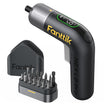
- Leverage Tool Efficiency: Use precision electric tools to minimize the duration of dust-generating activities.
- Wet-Clean Before Vacuuming: Never dry-sweep or vacuum fine dust without first using a damp cloth or mist.
By treating air quality as a technical specification of your workshop rather than an afterthought, you can enjoy the creative freedom of DIY without compromising the health and cleanliness of your home.
Disclaimer: This article is for informational purposes only and does not constitute professional health, safety, or legal advice. Air quality requirements can vary significantly based on materials used (e.g., resins, lead, certain woods). Always consult with a certified industrial hygienist or environmental safety professional for specific workspace assessments, especially if you have pre-existing respiratory conditions.
References
- EU General Product Safety Regulation (EU) 2023/988
- NIST Handbook 44: Weights and Measures
- IATA Lithium Battery Guidance
- ISO Standards Catalogue
- Smart Air: What is Air Changes Per Hour (ACH)?
- MDPI: Quantitative Assessment of Soldering-Induced PM2.5 Exposure
- Engineering Trust in a Cordless World (2026 Whitepaper)
Continue reading
 Decoding Hydrostatic Head: Science of Tent Waterproofing
Covers ISO 811 testing, MVTR trade-offs, wind pressure effects, and maintenance to prevent coating failure.
Decoding Hydrostatic Head: Science of Tent Waterproofing
Covers ISO 811 testing, MVTR trade-offs, wind pressure effects, and maintenance to prevent coating failure.
 Transitioning to Cordless: When to Renew Your Bulky Power Tools
Covers the one-hand rule, torque specs (ISO 898), and battery safety for apartment makers optimizing limited workspace.
Transitioning to Cordless: When to Renew Your Bulky Power Tools
Covers the one-hand rule, torque specs (ISO 898), and battery safety for apartment makers optimizing limited workspace.
Leave a comment
This site is protected by hCaptcha and the hCaptcha Privacy Policy and Terms of Service apply.