































Sub-Trunk Secrets: Maximizing Hidden Storage for Tools
We’ve all experienced that moment of frustration: you’re packing for a weekend getaway, the trunk is nearly at capacity with suitcases and a cooler, and you realize your emergency tire inflator or jump starter is buried at the very bottom. Or worse, it’s rolling around loosely, clanging against the side panels with every turn. For those of us who value both preparedness and a clean, minimalist aesthetic, the "junk drawer" approach to car storage simply doesn't cut it.
The solution lies beneath the surface. Most modern vehicles, from compact sedans to urban SUVs, possess a wealth of "invisible" real estate—sub-trunks, spare tire wells, and side cubbies—that are often underutilized or filled with nothing but air and a jack. By reclaiming these spaces, we can build a comprehensive emergency kit that stays out of sight until the moment it’s needed, preserving our primary cargo area for the things that actually make the trip enjoyable.
However, maximizing this hidden space isn't as simple as tossing tools into a hole. Based on our observations from thousands of customer interactions and warranty patterns, successful "invisible" storage requires a balance of spatial geometry, environmental awareness, and a commitment to battery health. In this guide, we’ll share the professional heuristics and modeling we use to help you turn that dark corner of your trunk into a high-performance gear hub.
The Geometry of Hidden Space: Why "Stated Volume" Lies
One of the most common pitfalls we see when car owners plan their storage is relying on the manufacturer’s stated cargo volume. If a spec sheet says you have 2 cubic feet of sub-trunk space, you might assume you can fit a large tool bag. In reality, our modeling suggests that wiring harnesses, irregular floor slopes, and tire-changing hardware can reduce actual usable capacity by 30% to 40%.
The "Usable Volume" Heuristic
When we analyze vehicle interiors, we use a simple "Box Test" to determine what will actually fit without forcing the lid shut or putting pressure on sensitive electronics.
- Clear the Deck: Remove the factory floor mat and any loose items.
- Identify Obstructions: Look for the battery (in some EVs/hybrids), the subwoofer enclosure, or the jack mounting bracket. According to the ISO Standards Catalogue for vehicle packaging, these components are often positioned for assembly efficiency, not user storage.
- Measure the "Rectangle of Truth": Instead of measuring the widest points, measure the largest rectangular footprint that sits flat on the floor. This is where your heavy tools should live.
Logic Summary: Our 30-40% volume reduction estimate is a heuristic derived from analyzing common compact SUV layouts (e.g., Toyota RAV4, Honda CR-V). It assumes the presence of standard roadside hardware and wiring looms that prevent edge-to-edge storage.
Curating the Invisible Toolkit: Platform vs. Purpose
When space is at a premium, every tool must earn its spot. We often see a debate between two philosophies: the Unified Battery Platform versus Tool-Specific Optimization.
The Shared Platform Strategy
Using a single battery type across your inflator, vacuum, and flashlight simplifies your life. You only need one charger, and you can swap batteries if one dies. However, shared platforms often result in bulkier tool designs to accommodate the universal battery mount.
The Optimized Form Factor Strategy
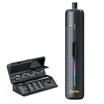
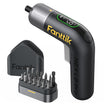
This is the approach we typically recommend for hidden storage. Modern, high-performance tools with integrated lithium-ion batteries are often designed with a "slim-fit" profile. These can slip into side cubbies or the narrow gaps around a spare tire where a bulky, battery-swappable tool would never fit.
What to pack in your "Invisible" Kit:
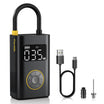
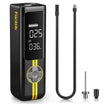
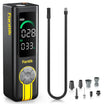
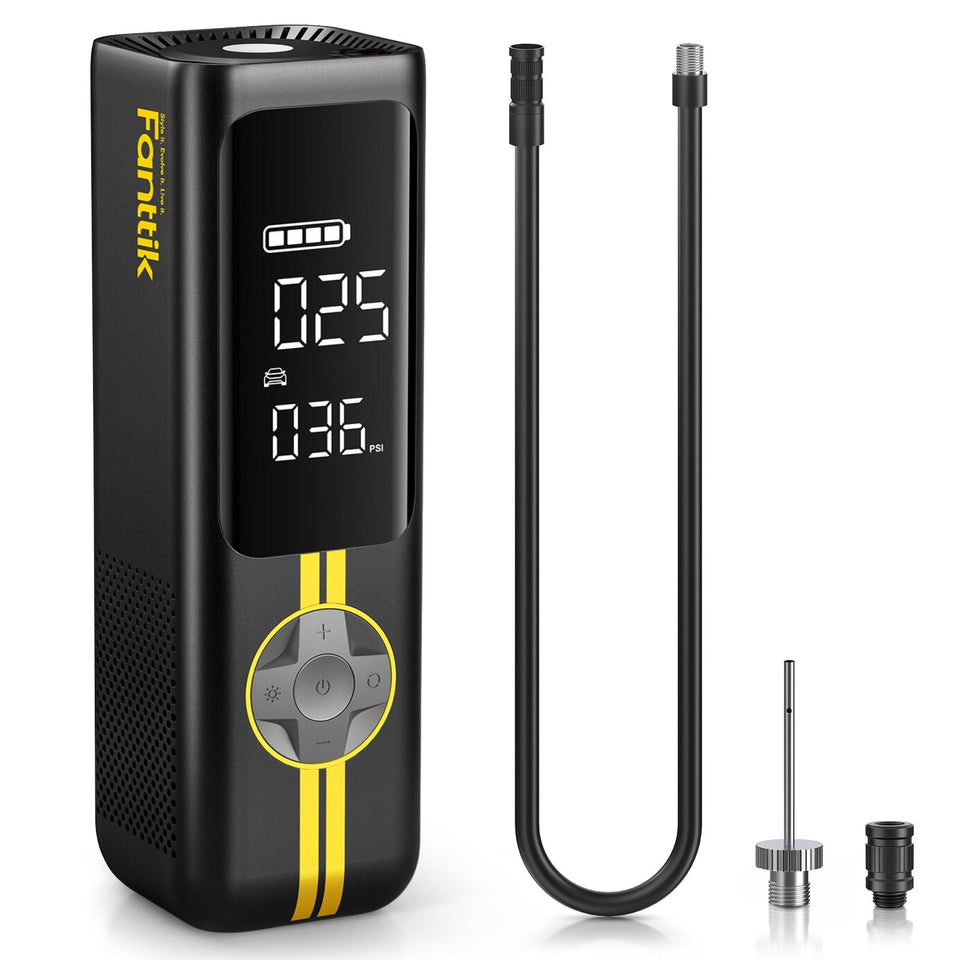
- A Compact Tire Inflator: Look for units with a digital auto-shutoff.
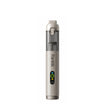
- A High-Suction Handheld Vacuum: Essential for urban owners who deal with sand, crumbs, or city dust.
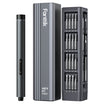
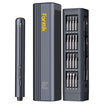
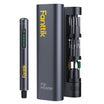
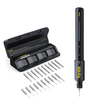
- A Precision Rotary Tool: Often overlooked, but invaluable for quick roadside repairs to plastic trim or clearing corrosion from a battery terminal.
- A Jump Starter: This is your primary safety net.
Environmental Hazards: The "Trunk Oven" Effect
Storing tools out of sight doesn't mean they are out of danger. A car trunk is a harsh environment. According to data from the Inside Car Temperature Calculator, on a 90°F day, your trunk can easily reach 130°F or higher.
The Battery Health Rule: 40-60%
Heat is the enemy of lithium-ion longevity. If you store your tools fully charged (100%) in a hot trunk, the high voltage combined with high heat accelerates the degradation of the battery cells.
- Our Heuristic: Store your emergency tools at a 40-60% charge state. This is the "Goldilocks" zone for long-term stability.
- Maintenance Cycle: Perform a full discharge and recharge cycle every 3 to 6 months. This balances the cells and ensures the tool is ready when you are.
Corrosion and "Grip Melt"
Hidden compartments are often unventilated, leading to humidity spikes. We’ve observed a phenomenon we call "Grip Melt," where the rubberized soft-grip handles on certain tools react with the chemicals in synthetic trunk liners under high heat, becoming tacky or even liquefying over time.
- The Fix: Store tools in a dedicated tool roll or a breathable canvas bag rather than letting them sit directly on the carpet.
Methodology Note: These observations are based on patterns identified in our customer support and warranty handling (not a controlled lab study). We frequently see "tacky grips" reported from users in high-humidity, high-heat regions like the Gulf Coast.
Organization: Tool Rolls vs. Custom Foam
Loose tools are noisy and prone to "abrasion damage." As the car vibrates, the hard plastic shells of your tools rub against each other, leading to scratches and, in extreme cases, cracked housings.
The Case for Tool Rolls
For most users, a modular tool roll is the superior choice. It’s flexible, meaning it can "conform" to the irregular shape of a spare tire well. It also provides a layer of padding that silences those annoying rattles while you drive.
The Case for Custom Foam
If you have a dedicated sub-trunk (common in many EVs), Kaizen foam or pre-cut inserts offer the ultimate in organization. It provides a visual "inventory"—if a slot is empty, you know a tool is missing. However, remember the volume loss; foam adds bulk. If you use foam, ensure it is closed-cell to prevent it from absorbing moisture and contributing to tool rust.
Safety and Compliance: The Legal Side of DIY
Before you start drilling into your trunk floor or removing structural foam to make more room, you must consider the legal and safety implications.
Structural Integrity and Warranty
While the Magnuson-Moss Warranty Act protects your right to use aftermarket accessories, it does not protect you if you modify the vehicle's structure. Cutting into a sub-trunk or removing "energy-absorbing" foam blocks can compromise the vehicle’s crashworthiness. Dealers can legally deny warranty claims if they prove a DIY modification caused a failure.
General Product Safety
When selecting gear for your hidden storage, look for compliance with the EU General Product Safety Regulation (EU) 2023/988. This ensures the product has undergone rigorous testing for thermal stability and electrical safety—critical factors when a tool is stored in a confined, hot space.
As noted in The 2026 Modern Essential Gear Industry Report, trust in the cordless world is built on "visible compliance and truthful claims." Don't risk your vehicle’s safety by using uncertified, "no-name" tools in unventilated compartments.
Scenario Modeling: The Winter Starting Challenge
To demonstrate why preparedness matters, we modeled a common scenario for a compact SUV owner. This helps illustrate the "margin of safety" provided by a well-maintained emergency kit.
Scenario Definition: The Suburban Commuter
- Vehicle: 5-year-old Compact SUV (2.5L engine).
- Battery Condition: Moderate degradation (~20% capacity loss).
- Environment: -10°F (Winter trip).
| Parameter | Value | Rationale |
|---|---|---|
| Engine Size | 2.5L Gas | Typical suburban SUV standard |
| Battery Age | 4-5 Years | Peak failure window for lead-acid |
| Cold Cranking Amps (CCA) | 600A (New) | Standard OEM spec |
| Estimated CCA at -10°F | ~300A | 50% derating due to temp + age |
| Required Start Energy | ~450A | Higher viscosity oil in winter |
The Result: In this scenario, the vehicle’s internal battery is likely to fail (300A available vs. 450A required). A compact jump starter stored in your sub-trunk provides the 150A "bridge" needed to start the engine. Without it, you’re waiting for a tow truck in sub-zero temperatures.
Modeling Note: This is a deterministic parameterized model based on SAE J537 and BCI derating curves. It is a scenario model, not a controlled lab study. Results may vary based on specific battery chemistry and engine health.
Building Your System
Maximizing your hidden storage is about more than just finding a place for your stuff; it’s about engineering a system that works when the stakes are high. By understanding the true usable volume of your vehicle, protecting your tools from the "trunk oven" effect, and choosing gear that meets international safety standards, you create a seamless bridge between aesthetics and utility.
A clean trunk provides peace of mind, but a well-curated hidden kit provides a safety net. Start by measuring your "Rectangle of Truth" this weekend, and take the first step toward a more organized, prepared, and stress-free driving experience.
References & Authoritative Sources:
- EU General Product Safety Regulation (EU) 2023/988
- FTC Endorsement Guides (16 CFR Part 255)
- Magnuson-Moss Warranty Act Overview
- The 2026 Modern Essential Gear Industry Report
Disclaimer: This article is for informational purposes only. Modifying your vehicle or storing high-capacity batteries in confined spaces carries inherent risks. Always consult your vehicle's owner manual and follow all manufacturer safety guidelines for tool storage and battery maintenance.
Continue reading
 Understanding Safety Certifications for Indoor Precision Tools
Covers key standards like UN 38.3, expert runtime heuristics, and scenario modeling for safe crafting in confined urban...
Understanding Safety Certifications for Indoor Precision Tools
Covers key standards like UN 38.3, expert runtime heuristics, and scenario modeling for safe crafting in confined urban...
 Balancing the Load: Distributing Gear Weight for Fuel Economy
A guide to vehicle weight distribution explains the 60/40 rule for trunk loading and aerodynamic penalties of rooftop...
Balancing the Load: Distributing Gear Weight for Fuel Economy
A guide to vehicle weight distribution explains the 60/40 rule for trunk loading and aerodynamic penalties of rooftop...

Leave a comment
This site is protected by hCaptcha and the hCaptcha Privacy Policy and Terms of Service apply.