































Sidewall Stress: Spotting Seasonal Dry Rot During Inflation
Quick Safety Audit: Seasonal temperature shifts (approx. 1 PSI per 10°F change) do more than alter tire pressure—they accelerate "dry rot." While inflating your tires this season, perform a 5-minute structural audit: check the inner sidewalls for hairline fissures and use the "Flex Test" to identify rubber fatigue. Experts recommend a professional inspection once tires reach 6 years of age, regardless of tread depth.
Every change of season brings a familiar ritual for the proactive driver: adjusting tire pressure. As ambient temperatures drop or climb, the air inside your tires follows the laws of physics, necessitating a top-off or a slight bleed to maintain the manufacturer's recommended PSI. However, based on common patterns observed in vehicle maintenance and customer support, many drivers treat this as a simple chore of "filling the tank."
In reality, the moment you connect a portable inflator to your tire valve is a critical window for a safety audit. Seasonal temperature swings can accelerate the chemical and mechanical degradation of rubber known as dry rot. If you are only looking at tread depth, you are missing a significant part of the safety equation.
In this guide, we detail how to transform your routine seasonal inflation into a methodical sidewall inspection. We will explore the physics of seasonal stress, the practical "7-year vigilance window" for aged rubber, and why critical cracks are often hidden where you least expect them.
The Physics of Seasonal Stress: Why Pressure Matters
The relationship between temperature and tire health is governed by the Ideal Gas Law. A widely accepted industry heuristic suggests that for every 10°F change in ambient temperature, a tire's internal pressure typically shifts by approximately 1 PSI (based on general automotive standards for seasonal temperature adjustments).
While a 4 PSI drop on a cold autumn morning might seem minor, the mechanical consequences can be significant. Under-inflation increases the "footprint" of the tire, which in turn increases the degree of flexing in the sidewall flex zones during every rotation.
The Feedback Loop of Degradation
Under-inflation doesn't just impact fuel economy; it can create a destructive feedback loop:
- Mechanical Fatigue: Low pressure increases cyclic strain. According to a 2020 study on fatigue life prediction of tire sidewalls, this strain energy density is a primary factor in how quickly cracks initiate in the rubber compound.
- Surface Exposure: An under-inflated tire bulges more at the bottom. This can increase the surface area of the sidewall exposed to UV radiation and atmospheric ozone.
- Chemical Weakening: Ozone and UV rays break down polymer chains. As rubber loses elasticity, it becomes more brittle.
- Crack Propagation: Once the rubber is brittle, the increased flexing from low pressure can cause microscopic cracks to pull apart and grow into visible fissures.
Note on Methodology: Our analysis of seasonal stress assumes a 1 PSI shift per 10°F based on standard gas law heuristics. We categorize the resulting degradation as a synergistic effect where mechanical fatigue often accelerates chemical oxidation.

Decoding Dry Rot: The "7-Year Vigilance Window"
Conventional wisdom often suggests replacing tires based on tread wear. However, for drivers with low annual mileage, the "calendar age" of the tire is often more critical. While organizations like the NHTSA and various manufacturers suggest a replacement window between 6 and 10 years, our field observations indicate a 7-year mark as a practical threshold where the risk of structural failure requires much closer monitoring.
Why the Inside Sidewall is Often Missed
A common oversight is inspecting only the "face" of the tire—the side facing the street. In practice, significant dry rot often starts on the inside sidewall, hidden from view by the vehicle's chassis.
The inside sidewall is subject to different thermal conditions and may receive less "exercise" (the centrifugal force that helps distribute anti-oxidant waxes within the rubber) if the vehicle sits for long periods. During your seasonal inflation, use a mirror or flashlight to inspect the inner flex zone.
Identifying "Flex Zone" Cracks
Dry rot often manifests as hairline cracks running parallel to the rim in the "flex zone"—the area of the sidewall that bends the most under load.
- Surface Weathering: Fine, shallow cracks over the surface (often cosmetic, but worth monitoring).
- Structural Dry Rot: Deep fissures in the flex zone or near the bead (where the tire meets the rim). These can signal a high risk of catastrophic failure.
The 5-Minute Inspection Protocol During Inflation
Because a portable inflator may take several minutes to reach the correct pressure, you have a built-in window to perform a professional-grade inspection. We recommend these methodical steps:
1. The "Flex Test"
While the tire is still under-inflated (before starting the inflator), use your thumb to firmly push on the sidewall in the flex zone.
- The Goal: Observe if the pressure of your thumb causes hairline cracks to "open up."
- Why it works: Aged rubber may look solid when static, but the mechanical stress of your thumb mimics the stress of a pothole. If cracks become visible under thumb pressure, the tire's structural integrity may be compromised.
2. The Inner Sidewall Sweep
While the inflator is running, use a flashlight to look at the inner sidewall. In our experience with vehicle maintenance, tires on vehicles parked outdoors often show noticeably higher degradation on the side facing consistent sun or salt air.
3. The Valve Stem Check
Gently wiggle the valve stem. If you see cracks at the base of the stem where it enters the rim, you may have a "slow leak" in development. This is a common failure point that is often ignored until a flat occurs.
4. The DOT Age Test
Use the standard "Lincoln's Head" penny test for tread depth, but remember: Tread is for grip; sidewalls are for structure. A tire with ample tread can still fail if the sidewall is dry-rotted. Always check the DOT date code on the sidewall (the last four digits represent the week and year of manufacture).
Modeling the 7-Year SUV Scenario: A Practical Example
To demonstrate the potential impact of maintenance, we modeled a common scenario: a safety-conscious owner of a 7-year-old SUV (e.g., a Ford Explorer or Toyota 4Runner) with tires reaching their aging threshold.
Scenario: The 7-Year SUV Owner
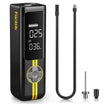
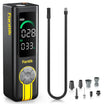
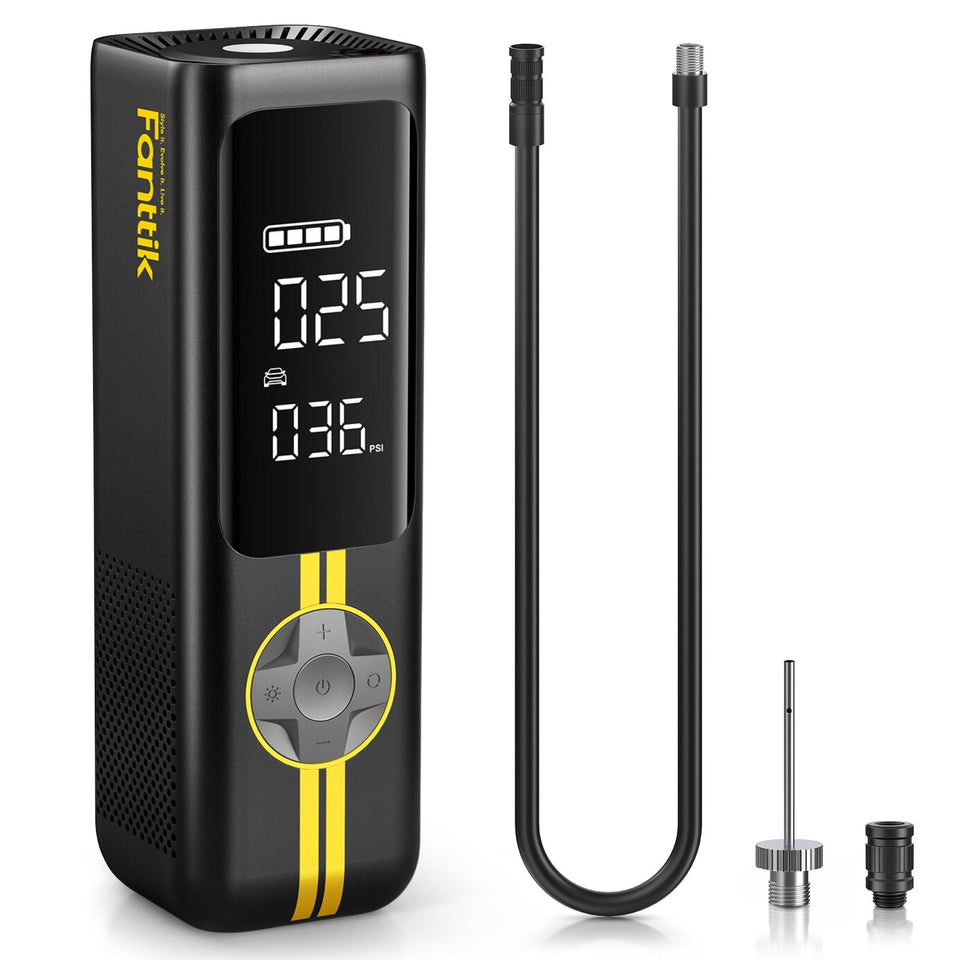
In this model, the driver experiences a seasonal pressure drop from 36 PSI down to 20 PSI. Using a high-performance portable tool like the Fanttik X8 Apex, we analyzed estimated time and safety implications.
| Parameter | Estimated Value | Unit | Rationale |
|---|---|---|---|
| Tire Size | 265/70R17 | Metric | Standard SUV sizing |
| Internal Volume | ~60.6 | Liters | Calculated via ISO geometry |
| Pressure Delta | 16 (20 to 36) | PSI | Typical seasonal loss + neglect |
| Inflation Time | 8 - 10 | Minutes | Per tire (X8 Apex flow rate) |
| Est. Annual Fuel Waste | $40 - $65 | USD | 6 PSI under-inflation penalty* |
| Est. Annual Tire Wear Cost | ~$130 | USD | Accelerated degradation* |
*Based on DOE-derived fuel penalty formulas and average tire replacement costs; figures are estimates for illustrative purposes.
Quantitative Insights
- Inflation Time: Correcting this level of under-inflation takes approximately 9 minutes per tire. This provides ample time to check all four tires thoroughly while the tool operates.
- ROI of Maintenance: Between fuel savings and preventing premature tire replacement, a portable inflator can often pay for itself within a single year of consistent use.
- Thermal Safety: Theoretical modeling of adiabatic compression suggests air entering the tire can reach high temperatures during long sessions. For aged rubber, it is a best practice to allow 5-minute cooling intervals between tires to avoid adding unnecessary thermal stress to existing dry rot.
Methodology Note: This is a scenario model, not a controlled lab study. Assumptions include a 22 MPG SUV and national average fuel prices ($4.20/gal).

Engineering Trust: The Role of Reliable Tools
When dealing with aged tires and high-pressure requirements, equipment reliability is paramount. As noted in internal industry reviews, such as the Fanttik Engineering Trust Whitepaper, automotive gear must perform predictably under stress.
For safety-conscious drivers, a portable inflator can serve as a diagnostic tool. A quality digital gauge allows you to spot "abnormal" pressure loss. If one tire is consistently lower than the others, it may be a sign of a structural crack or a failing valve stem rather than simple temperature fluctuations.
Compliance and Safety Standards
When selecting maintenance gear, look for evidence of rigorous testing. Standards such as ISO 9001 for quality management and IEC 60529 (IP ratings) provide assurance of tool durability. Furthermore, products that align with the EU General Product Safety Regulation (EU) 2023/988 meet high international benchmarks for consumer protection.
Proactive Maintenance Checklist
To stay ahead of sidewall stress, we recommend integrating these habits into your quarterly routine:
- Quarterly Pressure Checks: Check pressure every 90 days or whenever the temperature shifts by 20°F.
- The "3-Foot Rule": When parked long-term, try to avoid standing water or extremely hot asphalt, as these environments can accelerate polymer breakdown.
- Avoid Harsh "Dressings": Some glossy tire shines contain petroleum distillates that may strip protective waxes from the rubber. Stick to mild soap and water.
- Calibrate Your Gear: Periodically compare your portable inflator's reading with a high-quality standalone gauge to ensure continued accuracy.
Beyond the Daily Driver: Spare Tire Neglect
The spare tire is the most common victim of dry rot. Because it is rarely "exercised," the anti-oxidant chemicals in the rubber may not circulate effectively, making it brittle faster than active tires. Spare tire neglect is a frequent cause of roadside crises; always include the spare in your seasonal inflation and flex-test routine.
Summary of Safety Risks and Avoidance
| Risk Factor | Potential Impact | Mitigation |
|---|---|---|
| Under-inflation | Increases sidewall flex | Maintain PSI within ±1 of manufacturer spec |
| UV/Ozone Exposure | Weakens chemical bonds | Park in shade when possible; avoid harsh cleaners |
| Age (6-7+ Years) | Increased probability of fatigue | Heightened inspection frequency; professional audit |
| Inside Sidewall Rot | Hidden structural failure | Use a mirror/flashlight during seasonal inflation |
By treating seasonal inflation as a structural audit, you transition from reactive to proactive maintenance. The 10 minutes spent performing a "flex test" could be the difference between a safe holiday road trip and a dangerous roadside emergency.
Disclaimer: This article is for informational purposes only and does not constitute professional automotive repair or safety advice. Tire failure can result in serious injury or death. Always consult your vehicle's owner's manual and have your tires inspected by a certified professional if you suspect structural damage or dry rot. If your tires are more than 6 years old, a professional inspection is highly recommended regardless of visual condition.
References
- EU General Product Safety Regulation (EU) 2023/988
- ScienceDirect: Fatigue Life Prediction of Tire Sidewalls
- Fanttik: Engineering Trust & Compliance Whitepaper 2026 (Internal Data)
- US Dept of Energy: Proper Tire Pressure Saves Fuel
- Michelin USA: How to Inspect a Car Tire
- NHTSA: Tire Safety Ratings and Recommendations
Continue reading
 How a Battery Management System Extends DIY Tool Life
A BMS prevents overcharging and overheating to extend cordless tool battery life. Learn the 40-60% storage rule and...
How a Battery Management System Extends DIY Tool Life
A BMS prevents overcharging and overheating to extend cordless tool battery life. Learn the 40-60% storage rule and...
 Humidity and Hoses: Preventing Internal Corrosion in Wet Seasons
A guide to protecting portable tire inflators from internal moisture damage during wet seasons, ensuring emergency gear reliability...
Humidity and Hoses: Preventing Internal Corrosion in Wet Seasons
A guide to protecting portable tire inflators from internal moisture damage during wet seasons, ensuring emergency gear reliability...

Leave a comment
This site is protected by hCaptcha and the hCaptcha Privacy Policy and Terms of Service apply.