
























The Winter Pressure Puzzle: Why Your Dashboard and Gauge Don't Match
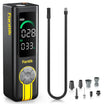
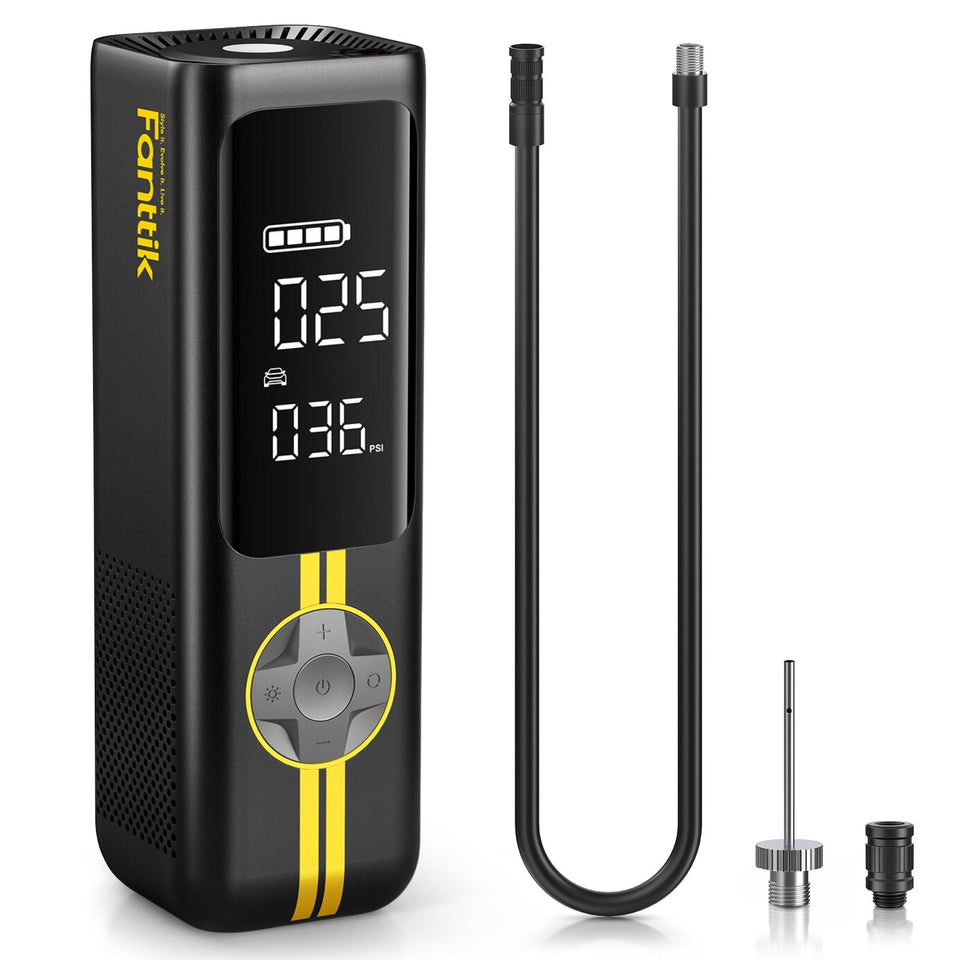
It is a crisp, sub-zero Tuesday morning. You start your car, and the dreaded yellow horseshoe—the Tire Pressure Monitoring System (TPMS) light—glows on your dashboard. You pull out your portable digital inflator, connect it to the valve stem, and see a reading that is 3 PSI higher than what your car just reported.
This discrepancy often creates immediate concern. Is the car’s sensor failing? Is the portable inflator inaccurate? Or is there a hidden mechanical issue within the tire?
For safety-conscious drivers, these conflicting numbers represent a breakdown in the "Trust Architecture" we rely on for winter vehicle preparedness. In our experience supporting drivers in extreme climates, we find that modern self-reliance depends on making technical data transparent rather than just following a warning light.
In this guide, we will move beyond the generic "cold weather affects tires" advice. We will explore the physics of thermal mass, the engineering tolerances of sensors, and a specific "Mountain Commuter" model to help you determine which number to trust when your safety is on the line.
The Physics of Discrepancy: Thermal Mass and Measurement Points
The single most common reason for a discrepancy between your car’s dashboard and a portable gauge isn't a sensor failure. It is a fundamental difference in where and how the measurement is taken.
Internal vs. External Measurement
Your vehicle's TPMS sensor is typically a "Direct" system, meaning a physical sensor is mounted inside the wheel, often integrated into the inner portion of the valve stem. It measures the air mass deep within the tire cavity. Conversely, a portable inflator or a pencil gauge measures the air pressure at the very tip of the external valve stem.
The Thermal Mass Heuristic: The 20°F Rule
In winter, "thermal mass" becomes the primary variable. The metal valve stem and the tire’s outer sidewall are exposed to the ambient air and cool down faster than the large volume of air trapped inside the tire.
Based on patterns observed from our technical support data and field troubleshooting, we suggest a practical rule of thumb: For every 20°F drop in ambient temperature from the last time the car was driven for 30+ minutes, expect a 1–2 PSI difference between a "cold" portable gauge reading and the TPMS reading.
Calculation Note: This heuristic is an approximation based on the Ideal Gas Law ($PV=nRT$). It assumes a constant tire volume and typical passenger tire air mass, where a change in temperature ($T$) results in a proportional change in pressure ($P$). The 1–2 PSI range accounts for the temperature gradient between the tire's core and the external valve.

Precision Standards: TPMS vs. Digital Inflators
To resolve the conflict, we must understand the engineering tolerances of the tools involved.
TPMS Accuracy Limits
While TPMS is a vital safety system, it is engineered for "warning" rather than laboratory precision. Industry documentation suggests that most factory TPMS sensors have an accuracy range of ±1 to ±2 PSI. Furthermore, as sensors age (typically 5–7 years), battery depletion can cause the signal to "drift," leading to accuracy degradation.
The Digital Reference Standard
In contrast, a high-quality portable digital inflator is often a more precise measurement tool. Professional-grade digital sensors are frequently verified against standards such as NIST Handbook 44 (a government-maintained standard for measuring devices).
Which to trust? In most scenarios, a high-quality digital gauge should be treated as your reference standard, provided it is in good working order. TPMS is a "safety net" for sudden drops; the inflator is your tool for "precision calibration."
Quick Field Self-Test for Your Inflator
Before assuming your inflator is the absolute truth, perform this quick 1-minute check:
- The Consistency Test: Measure the same tire three times in a row. A quality digital sensor should show a variance of no more than ±0.5 PSI.
- The Cross-Check: Occasionally compare your inflator’s reading against a manual "pencil" gauge or a recently calibrated pump at a professional tire shop. If the readings are within 1 PSI, your inflator is reliable for winter maintenance.
Deep Dive: The Mountain Commuter Scenario
To demonstrate how these discrepancies manifest, we modeled a scenario for a "Mountain Commuter" living at 7,000 feet who faces extreme 40°F temperature swings.
Modeling the Impact
For this driver, the "truth" about tire pressure affects traction on black ice and fuel economy during steep climbs.
| Parameter | Value/Range | Unit | Rationale/Source |
|---|---|---|---|
| Elevation | 7,000 | Feet | High-altitude atmospheric effects |
| Temp Swing | -10 to 30 | °F | Typical high-altitude winter fluctuation |
| TPMS Tolerance | ±2 | PSI | Standard OEM sensor specification |
| Gauge Accuracy | ±0.5 | PSI | High-performance digital sensor spec |
| Amb. Pressure | 11.3 | PSI | Standard Barometric Formula at 7,000ft |
Quantitative Insights for High-Altitude Drivers
At 7,000 feet, atmospheric pressure is approximately 11.3 PSI (compared to 14.7 PSI at sea level). This affects how a portable gauge "feels" the pressure compared to the TPMS's absolute pressure sensor.
Furthermore, we estimate that a mountain commuter driving 18,000 miles annually with an 8 PSI under-inflation faces:
- Estimated Annual Fuel Waste: ~$180–$270. Calculation: Based on US DOE efficiency penalties of ~0.2%–0.3% per 1 PSI of under-inflation (Government Research).
- Tire Wear Costs: ~$80–$120 in premature tread replacement. Based on industry heuristics regarding accelerated shoulder wear.
- Safety Margin: A 3-4 minute inflation time per tire in sub-zero temps, which is a critical exposure window for the driver.
The "Morning Ritual" Protocol for Accuracy
To eliminate the anxiety of conflicting readings, standardize your measurement environment. Experienced technicians follow a specific "Morning Ritual":
- Measure Before the Sun: Check your pressure in the morning before the car has been driven and before direct sunlight hits the tires. Even 15 minutes of driving can raise internal temperatures, causing the TPMS and gauge to diverge further.
- The Overnight Soak: Ensure the vehicle has sat for at least 8–12 hours. This allows the thermal mass of the wheel, the internal air, and the valve stem to reach equilibrium.
- The Placard Rule: Always set your target pressure according to the sticker on your driver-side door jamb (the "Placard Pressure"). Never use the "Max PSI" listed on the tire sidewall for daily driving.
- Prioritize the Inflator: If the inflator says 35 PSI and the car says 32 PSI after a cold overnight soak, trust the inflator. The car's sensor is likely experiencing "cold-start lag" or signal drift.
Beyond Pressure: The Winter Battery Connection
The discrepancy between your car and your tools often extends to your battery. In the same -10°F conditions that affect your tires, a standard 3.5L V6 engine requires roughly 650–700 amps to crank. However, a typical battery’s capacity drops by nearly 50% in extreme cold.
Our modeling shows a "Power Gap" of approximately 350–400 amps in sub-zero conditions. This is why seasonal maintenance must be holistic—checking your tires with a portable inflator should go hand-in-hand with ensuring you have a jump starter capable of providing a 2x safety margin (at least 800 sustained amps).
Compliance and Safety Standards
When choosing a portable inflator, look for evidence of engineering rigor. Devices should ideally align with:
- UL 2527 (Safety Standard): For portable power tools and inflators.
- IEC 60529 (Technical Standard): For dust and water resistance (IP ratings), ensuring sensors remain accurate after exposure to road salt.
- EU 2023/988 (Government Regulation): The General Product Safety Regulation, which mandates that safety claims regarding pressure accuracy are verifiable.
Summary: How to Handle the Discrepancy
When your car and your inflator disagree this winter, follow this hierarchy of trust:
- The 3-PSI Rule: If the difference is 3 PSI or less, it is likely due to thermal mass and measurement point differences. Set the pressure using your digital inflator in the morning.
- The Morning Standard: Always trust a measurement taken after an overnight soak over a measurement taken after driving.
- The Diagnostic Threshold: If the discrepancy is 5 PSI or greater, visit a tire professional to check for TPMS sensor drift or a slow leak (such as a bead leak) that the car's system may be struggling to calibrate.
Disclaimer: This article is for informational purposes only and does not constitute professional automotive repair or safety advice. Tire pressure requirements vary by vehicle; always refer to your vehicle's owner's manual. If your TPMS warning light remains on after proper inflation, consult a certified mechanic immediately.
Sources
- U.S. Department of Energy (Government Research): Fuel Economy and Tire Pressure Guidelines
- NIST (Government Standard): Handbook 44: Specifications for Measuring Devices
- EUR-Lex (Legal/Regulatory): General Product Safety Regulation (EU) 2023/988
- Tireclopedia (Industry Encyclopedia): TPMS Accuracy and Working Principles
- Internal Technical Data: Observations on sensor variance from Fanttik customer support and field testing.
Continue reading
 Humidity and Hoses: Preventing Internal Corrosion in Wet Seasons
A guide to protecting portable tire inflators from internal moisture damage during wet seasons, ensuring emergency gear reliability...
Humidity and Hoses: Preventing Internal Corrosion in Wet Seasons
A guide to protecting portable tire inflators from internal moisture damage during wet seasons, ensuring emergency gear reliability...
 Extreme Climate Specs: Selecting Inflators for Harsh Winters
Covers motor torque in cold, thermal seal contraction, and hose material integrity, grounded in industry standards like EU...
Extreme Climate Specs: Selecting Inflators for Harsh Winters
Covers motor torque in cold, thermal seal contraction, and hose material integrity, grounded in industry standards like EU...

Leave a comment
This site is protected by hCaptcha and the hCaptcha Privacy Policy and Terms of Service apply.