
































The Science of Speed Ratings: More Than Just a Number
For the average trailer owner, a tire's speed rating—often a letter like 'L' (75 mph) or 'M' (81 mph) found on the sidewall—is viewed as a hard, static limit. However, in the high-consequence world of towing, we must understand that this rating is not an absolute constant. It is a thermal boundary condition. According to the standard Tire code - Wikipedia, a speed rating is only valid when the tire is maintained at its specified load index and, most critically, its correct cold inflation pressure.
When you tow a trailer at highway speeds, the tire undergoes rapid cycles of deformation and recovery as it contacts the road. This process, known as hysteresis, generates heat. A tire’s speed rating represents the maximum speed at which the tire can dissipate this heat effectively without suffering structural degradation. If the pressure is incorrect, the entire thermal equation shifts.
The Thermal Equilibrium Problem
In our experience troubleshooting roadside failures, the most common misconception is that a tire is "fine" as long as it isn't flat. In reality, the interaction between pressure and speed is multiplicative and nonlinear. Engineering data suggests that a tire at 90% of its speed rating but at 70% of its correct cold pressure may fail faster than one at 110% speed but at 100% correct pressure. This is because under-inflation exponentially increases heat generation from sidewall flex, as detailed in the NHTSA report on The Pneumatic Tire.
Logic Summary: Our analysis of trailer tire dynamics assumes a baseline load index at 100% capacity. The relationship between pressure and speed is modeled as a thermal equilibrium problem: under-inflation increases hysteretic heat generation, while speed increases the frequency of those heat cycles, leading to a "thermal runaway" scenario.

The 15% Rule: How Under-Inflation Compromises Your Rating
One of the most startling "gotchas" in trailer maintenance is the "15% Rule." Based on common patterns from customer support and field observations, a trailer tire that is just 15% under-inflated can effectively have its speed rating halved.
Consider a tire rated for 81 mph (M-rating). If that tire is specified for 80 PSI cold but is running at 68 PSI, its ability to safely handle heat is so severely compromised that sustained speeds of even 60 mph could lead to a catastrophic blowout. This happens long before there are any visual signs of under-inflation, such as bulging sidewalls.
Why Visual Inspections Fail
Unlike passenger car tires, which have flexible sidewalls that "squat" when low, high-load trailer tires (Load Range E or G) have extremely stiff, reinforced sidewalls. We often see owners mistakenly believe their tires are properly inflated because they "look full," only to find they are 20 PSI low when checked with a precision gauge. This hidden under-inflation is the leading cause of "mystery blowouts" on the highway.
| Inflation Status | Effective Speed Rating Impact | Heat Generation Risk |
|---|---|---|
| 100% Correct (Cold) | 100% of Rated Speed | Baseline / Optimized |
| 10% Under-inflated | ~25% Reduction in Safety Margin | Elevated |
| 15% Under-inflated | ~50% Reduction in Effective Rating | High / Critical |
| 20% Under-inflated | Failure imminent at highway speeds | Extreme |
Note: Estimates based on typical hysteretic heat modeling for ST (Special Trailer) tires under 80-90% load capacity.
The "Cold Start" Protocol and Temperature Dynamics
Precision in pressure management requires an understanding of ambient temperature. A fundamental heuristic we use is the 1-for-10 Rule: for every 10°F change in ambient temperature, a tire’s pressure will change by approximately 1 PSI.
This becomes a critical safety factor during seasonal transitions. If you last used your trailer in the heat of August (90°F) and pull it out for a trip in November (40°F), your tires have likely lost 5 PSI just from the temperature drop, even without any leaks.
The Common "Warm Check" Mistake
The most frequent error we encounter is checking tire pressure after driving to a gas station. Even a short 3-mile drive can raise a tire's internal temperature enough to increase the pressure by 4-5 PSI. If you adjust your tires to the "correct" number while they are warm, you are effectively setting a cold baseline that is 5 PSI too low.
The Expert Workflow:
- Check on the Day of Use: For trailers stored seasonally, pressure must be corrected on the morning of the trip, not the night before.
- The "Cold" Definition: "Cold" means the trailer has been stationary for at least three hours and is not in direct sunlight.
- Account for Sun Load: If one side of the trailer has been sitting in the sun, those tires will read higher than the shaded side. Always check and adjust in uniform shade if possible.

Tooling for Precision: Why Digital Matters
To maintain the precise tolerances required for high-load trailer tires, the tools you use matter. Traditional "stick" or "pencil" gauges, common in gloveboxes, rely on a calibrated spring. Over time, these springs lose tension, and dirt can enter the housing, leading to inaccuracies of 3-5 PSI.
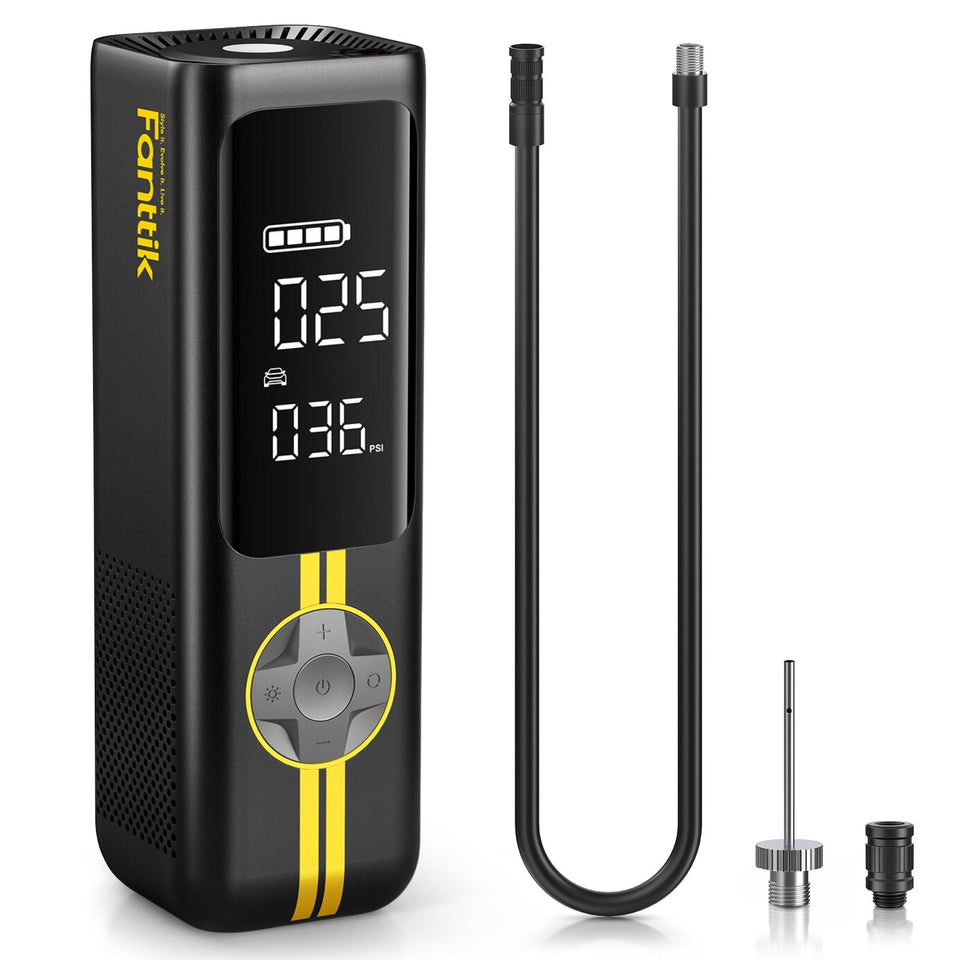
In the context of the 15% rule mentioned earlier, a 5 PSI error on an 80 PSI tire is significant. We recommend using high-quality digital gauges or portable inflators with piezo-resistive sensors. These sensors provide consistent, repeatable readings that are not affected by the mechanical wear common in analog tools.
Heuristic for Gauge Selection
When selecting a pressure management tool, look for a "Full Scale" accuracy rating. For trailer tires that often require 80–115 PSI, a gauge rated only up to 60 PSI will be useless. Ensure your equipment is rated for at least 20% above your maximum required PSI to ensure the sensor is operating in its most accurate linear range.
Compliance, Safety, and Engineering Trust
In the modern landscape of automotive gear, the burden of safety is increasingly shifted to the user. While international standards like ISO Standards provide the framework for tire manufacturing, the real-world application is governed by the owner's diligence.
As highlighted in the industry whitepaper The 2026 Modern Essential Gear Industry Report: Engineering Trust in a Cordless World, the transition toward compact, cordless maintenance tools has made self-reliance easier, but it has not removed the need for technical expertise. Reliability is a function of "credibility math"—using the right data (pressure) with the right tool (digital sensors) to achieve a predictable outcome (safety).
Regulatory Context
For small business owners and commercial towers, compliance with the EU General Product Safety Regulation (EU) 2023/988 emphasizes the importance of using equipment that meets rigorous safety and traceability standards. Ensuring your trailer maintenance equipment is compliant with these broader safety directives is a key step in risk mitigation.
Proactive Risk Mitigation: A Checklist for Towers
To prevent catastrophic failures and ensure your speed ratings remain valid, adopt the following professional routine:
- Verify the Load Range: Ensure your tires are "ST" (Special Trailer) rated. Passenger (P) or Light Truck (LT) tires have different sidewall flex characteristics and may not support the same speed/pressure ratios.
- The "Same-Day" Rule: Never assume pressure is stable from a previous trip. Check the morning of departure.
- Speed Buffering: Even if your tires are perfectly inflated, we suggest driving at 5–10 mph below the maximum speed rating. This provides a "thermal buffer" for unexpected road heat or slight load imbalances.
- Monitor Tread Depth: Use a dedicated gauge to measure tread depth across the center and shoulders. Uneven wear is often the first sign of chronic under-inflation, even if the pressure "feels" right. According to Audi's technical maintenance guidelines, consistent measurement is the only way to detect early alignment or inflation issues.
Summary of Modeling Assumptions
The safety thresholds discussed in this article are based on scenario modeling rather than controlled laboratory studies. To help you apply this to your own setup, we have outlined our primary assumptions below.
| Parameter | Value or Range | Unit | Rationale |
|---|---|---|---|
| Baseline Pressure | 80 | PSI | Standard for Load Range E Trailer Tires |
| Ambient Temp Delta | 10 | °F | Standard meteorological fluctuation |
| Warm-up Delta | 4–5 | PSI | Typical hysteretic heat gain after 15 mins driving |
| Under-inflation Threshold | 15% | % | Critical point for structural integrity loss |
| Load Index | 90% | % | Typical "fully loaded" trailer scenario |
Methodology Note: This model assumes the tires are within their 5-year service life and have no existing internal belt damage. If your tires are older than five years, the "15% Rule" becomes even more aggressive, and failure may occur at even lower speeds or higher pressures.
Disclaimer: This article is for informational purposes only and does not constitute professional automotive or legal advice. Always consult your vehicle and trailer manufacturer’s manual for specific inflation and load requirements. Towing involves inherent risks; ensure all equipment is inspected by a qualified professional regularly.
Sources
Continue reading
 Metal Valve Stem Upgrades: Ensuring Safety for High-PSI Loads
Covers material science, TPMS integration, and torque specs for reliable high-pressure tire systems in towing applications.
Metal Valve Stem Upgrades: Ensuring Safety for High-PSI Loads
Covers material science, TPMS integration, and torque specs for reliable high-pressure tire systems in towing applications.
 Evaluating Driver Bit Cam-Out During Unstable Trailside Repairs
A technical guide on preventing stripped fasteners during unstable overlanding repairs, with expert torque buffers and tool selection...
Evaluating Driver Bit Cam-Out During Unstable Trailside Repairs
A technical guide on preventing stripped fasteners during unstable overlanding repairs, with expert torque buffers and tool selection...

Leave a comment
This site is protected by hCaptcha and the hCaptcha Privacy Policy and Terms of Service apply.