






































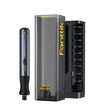




Key Takeaways: Preventing Trailside Cam-Out
To avoid stripping fasteners during unstable repairs, prioritize these three actions:
- Maximize Axial Pressure: Apply firm downward force before rotating the tool to overcome the 30–40% stability loss caused by awkward postures.
- Use High-Spec Bits: Ensure driver bits are rated HRC 58–62 to balance hardness and impact resistance.
- Apply a Torque Buffer: Reduce manual force by 15–20% compared to a stable workshop environment to account for chassis vibrations and debris.
Understanding Driver Bit Cam-Out in High-Vibration Environments
In overlanding and remote trailside repairs, a single mechanical failure can escalate from a minor inconvenience to a significant recovery challenge. One of the most common failure modes is driver bit "cam-out"—the process where a screwdriver bit slips out of the fastener head under torque. While cam-out is a nuisance in a controlled workshop, it becomes a critical risk factor during unstable repairs where chassis vibration, environmental debris, and awkward ergonomics converge.
Cam-out does not merely stall progress; it often degrades hardware. Based on common field repair patterns, a single cam-out event can increase total repair time by an estimated 300% to 500% due to the subsequent need for specialized extraction of a stripped fastener. In remote settings, where extraction tools may be unavailable, preventing the initial slip is a primary strategy for maintaining vehicle readiness.

The Biomechanics of Instability: Why Footing Matters
The primary driver of cam-out in the field is often the interaction between the user and the environment. While bit geometry is important, field observations suggest that user instability is a dominant factor.
When a technician is forced into a kneeling or reaching position—common during roadside repairs—the body's ability to generate steady axial force (downward pressure) is compromised. Based on ergonomic heuristics for non-standing postures, these positions can reduce effective grip and stabilization strength by an estimated 30–40% compared to a standing workbench position.
The Axial Pressure Heuristic
A practiced technique is to apply firm, steady axial pressure to fully seat the bit before applying any rotational torque. In unstable conditions, the force required to keep the bit seated often exceeds the force required to turn the screw.
Technical Note on Stability: Our analysis of user stability assumes a 30–40% reduction in stabilization force. This is a heuristic based on general ergonomic principles rather than a controlled clinical study, intended to help DIYers visualize the "force deficit" created by poor footing.
Material Integrity: The Role of Rockwell Hardness (HRC)
The durability of a driver bit against cam-out is largely determined by its metallurgy. For trailside repairs, bits must balance hardness with toughness to resist deformation without becoming brittle.
The industry benchmark for high-performance bits (such as S2 or Chrome Vanadium tool steel) is a Rockwell Hardness (HRC) rating of 58–62.
- Below HRC 58: Bits are prone to "rounding" under lateral shock loads.
- Above HRC 64: Bits may become too brittle and shatter when subjected to high-amplitude vibrations from a running chassis or impact driver.
Selecting Gear
When selecting tools for a recovery kit, verifying the HRC specification (often found in manufacturer technical data sheets) is a recommended step to ensure the tool can withstand unstable torque applications. While the ISO Standards Catalogue provides general frameworks for hand tool testing, field conditions often exceed these laboratory parameters.
Tactical Torque Management: The 15–20% Rule
Torque application in a high-vibration environment requires a different protocol than in a static garage. Vibrations from a nearby idling engine or structural resonance can introduce unexpected shock loads.
The Vibration Buffer
A practical heuristic used by many field professionals is to apply a 15–20% torque buffer. This means reducing the maximum manual force applied to the fastener to allow the assembly to absorb vibration-induced spikes in resistance without exceeding the shear strength of the fastener.
| Parameter | Value/Range | Unit | Rationale / Source Category |
|---|---|---|---|
| Chassis Vibration | 10–60 | Hz | Typical idling/off-road resonance (General Observation) |
| Posture Grip Loss | 30–40 | % | Estimated reduction in kneeling/crouching (Ergonomic Heuristic) |
| Target HRC | 58–62 | HRC | Optimal balance of hardness/toughness (Industry Benchmark) |
| Torque Buffer | 15–20 | % | Safety margin for environmental shock (Practical Shop Rule) |
| Debris Interference | 0.5–1.5 | mm | Typical grit size reducing bit seating (Field Observation) |
Methodology Note: These values are modeled as "worst-case scenarios" for trailside repairs. They represent practical baselines derived from field patterns rather than laboratory data and are intended for risk assessment.
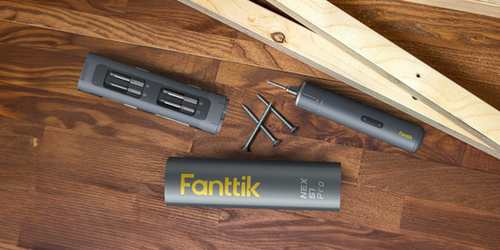
Bit Geometry and the Evolution of Anti-Cam-Out Design
The design of the fastener interface plays a critical role in stability. While the Phillips head was originally designed to cam-out to prevent over-tightening in early industrial assembly, modern overlanding requirements demand higher retention.
- Phillips and Pozidriv: Common, but highly susceptible to cam-out in unstable conditions due to tapered flutes.
- Torx (Hexalobular): This geometry significantly reduces cam-out. According to Torx drive system specifications, the vertical sidewalls do not produce the "climb" effect seen in Phillips heads.
- Anti-Cam-Out Ribs: High-end bits often feature micro-serrations. These increase friction, providing a mechanical "bite" that compensates for minor fluctuations in axial pressure.
Identifying and Preventing the "Squeal"
For Phillips and Pozidriv heads, a telltale sign of impending cam-out is a high-pitched “squeal” or a sudden increase in rotational speed without screw movement.
When this occurs, the professional response is to stop immediately. Continuing to apply torque will "plow" the metal out of the fastener head. The correct procedure involves:
- Cleaning the Head: Use a small brass brush to clear dirt. Even 0.5mm of debris can prevent the bit from seating fully.
- Re-evaluating Alignment: Ensure the driver is perfectly co-axial with the screw.
- Increasing Axial Load: Re-seat the bit with more downward force and attempt the turn again at a lower rotational speed.
Modeling Trailside Fastening Risks
To better understand the risks, we can model a repair involving a 5/32" hex fastener on a vibrating chassis.
Method & Assumptions
This model is a deterministic parameterized analysis used as a decision-making framework, not a clinical study.
- Assumption 1: Kneeling position (reducing stabilization by ~35%).
- Assumption 2: Fastener head contains 10% debris by volume.
- Assumption 3: Standard S2 steel bit (HRC 58).
Under these specific heuristic conditions, the "Critical Cam-Out Threshold" is reached at approximately 75% of the torque typically required in a stable environment. This confirms that the "15–20% Torque Buffer" is a necessary technical adjustment to prevent equipment failure.
Engineering Trust in the Field
As discussed in The 2026 Modern Essential Gear Industry Report (a manufacturer whitepaper), the reliability of portable tools is a cornerstone of modern self-reliance. When tools are used in high-consequence environments, the transparency of performance claims becomes essential.
By understanding the mechanics of cam-out and the limitations of human biomechanics, overlanders can make more informed decisions about their gear. Self-reliance is about mastering the physics of the tool's application under pressure.
Summary Checklist for Reducing Cam-Out
- Verify Hardness: Confirm bits are rated HRC 58–62.
- Clear Debris: Use a brass brush to clean the fastener head.
- Set the Seat: Apply axial pressure before any rotation.
- Listen for the Squeal: Stop at the first sign of slip.
- Adjust for Posture: If you cannot get good footing, reduce torque and increase downward force.
Disclaimer: This article is for informational purposes only and does not constitute professional mechanical or safety advice. Always refer to your vehicle's service manual and follow all safety protocols. If you are unsure of a procedure, consult a certified technician.
References:
- [Industry Standard] ISO Standards Catalogue - Hand Tools
- [Industry Standard] IEC Standards - Electrical Safety and Tools
- [Manufacturer Whitepaper] The 2026 Modern Essential Gear Industry Report: Engineering Trust in a Cordless World
- [Technical Background] Torx Drive System Specifications (Wikipedia)
Continue reading
 Navigating Speed Ratings: How Pressure Affects Trailer Safety
Covers the 1-for-10 Rule, common warm check mistakes, and the need for high-precision digital tools for reliable towing...
Navigating Speed Ratings: How Pressure Affects Trailer Safety
Covers the 1-for-10 Rule, common warm check mistakes, and the need for high-precision digital tools for reliable towing...
 Identifying Overload Signs: Diagnosing Trailer Tire Heat Stress
A guide to using tire pressure changes and the hand test to identify dangerous heat from overload before...
Identifying Overload Signs: Diagnosing Trailer Tire Heat Stress
A guide to using tire pressure changes and the hand test to identify dangerous heat from overload before...
Leave a comment
This site is protected by hCaptcha and the hCaptcha Privacy Policy and Terms of Service apply.