






















The Invisible Variable: Why Humidity is the Silent Enemy of Precision
In my years managing high-stakes workshop environments, I have observed a recurring pattern: a technician performs a perfect calibration in a climate-controlled office, only to find their measurements "off" by several thousandths of an inch once they step into a humid garage. The frustration is palpable, yet the cause is often misdiagnosed as tool failure or poor build quality. In reality, we are witnessing the physical laws of metrology in action.
Humidity is not just a matter of comfort; it is a critical variable in the calibration equation. For the detail-oriented DIYer or prosumer, understanding how moisture interacts with electronic sensors, mechanical interfaces, and lubricants is the difference between a successful assembly and a costly error. Whether you are using digital calipers, laser levels, or precision torque drivers, the environment is constantly "tuning" your tools—usually in the wrong direction.
This article provides a methodical deep dive into the mechanisms of humidity-induced drift. We will examine why your digital readout might lie to you, how to identify physical binding versus software lag, and the professional protocols required to maintain "Engineering Trust" in any workshop condition.

1. The Physics of Drift: Capacitance and Sensor Interference
A common mistake among makers is assuming that a digital readout is immune to environmental factors because it lacks the physical gears of an analog dial. In practice, the opposite is often true. Most modern digital calipers and micrometers rely on capacitance-based sensors. These sensors detect the position of the sliding jaw by measuring changes in an electrical field between two plates.
Humidity directly alters the dielectric constant of the air—and any moisture film—between these plates. When you move a tool from a dry, air-conditioned office to a humid workshop, the moisture in the air can cause a "capacitance shift."
The 0.001" Variance
Based on common patterns from customer support and warranty handling (not a controlled lab study), we often see digital calipers exhibit a drift of 0.0005" to 0.001" solely due to rapid changes in relative humidity (RH). This isn't a defect; it's a physical response.
Logic Summary: Our analysis of sensor drift assumes a standard 20% to 60% RH jump. The capacitance of the air gap is a function of the dielectric constant (ε), which increases as water vapor (a highly polar molecule) replaces dry air.
Furthermore, laser levels face a different but equally problematic humidity challenge. A rapid temperature drop in a humid space can cause micro-condensation inside the housing. This moisture can distort the laser beam long before the unit's internal diagnostics trigger an error signal. You might believe your shelf is level when, in fact, the beam has refracted by a fraction of a degree—enough to be visible over a ten-foot span.
2. Mechanical Binding vs. Digital Lag: A Category Error
When a tool feels "sluggish" in a humid environment, many users describe it as "lag," implying a processor or battery issue. However, our research into tool performance suggests a fundamental category error in this framing.
For mechanical precision tools like micrometers or the sliding rails of a precision saw, the primary failure mode in high humidity is physical binding due to corrosion and oxide layer formation on sliding surfaces. Even stainless steel or coated components can develop a microscopic layer of oxidation or "stiction" (static friction) when exposed to high RH levels.
- The Oxide Layer: Moisture acts as a catalyst for surface oxidation. Even if it doesn't look like "rust," the increased surface roughness at a molecular level increases the force required to initiate movement.
- Lubricant Viscosity: Precision tools often use specialized synthetic oils. In high humidity, these lubricants can absorb moisture (hygroscopic response), leading to increased viscosity. This makes the tool feel "heavy" or unresponsive, which is frequently misdiagnosed as motor or battery failure.
Theoretical Model: Assembly Efficiency Penalty
To demonstrate the impact of this "sluggishness," we modeled the productivity loss in a precision assembly environment where tools are affected by humidity-induced stiffness.
| Variable | Manual Tool (Humid) | Powered Tool (Humid) | Unit |
|---|---|---|---|
| Seconds per Fastener | 18 | 5 | Seconds |
| Wrist Rotations Required | 12 | 1 | Count |
| Estimated Productivity Gain | - | ~216% | % |
Modeling Note (Reproducible Parameters):
- Type: Deterministic scenario model based on Industrial Engineering Time-Motion principles.
- Inputs: 100 fasteners per batch; manual time includes a 20% "humidity penalty" for tool stiffness; powered tool includes a 67% "lag penalty" for sensor drift.
- Boundary Conditions: Does not account for operator fatigue or stripped threads.
As shown, while powered tools significantly outperform manual ones, the "lag" introduced by environmental factors still creates a measurable drag on efficiency compared to a baseline climate-controlled environment.
3. Torque Calibration and the "Hygroscopic Response"
One of the most sensitive areas of workshop metrology is torque application. Precision electric screwdrivers and rotary tools use internal sensors to cut power once a specific torque threshold is met.
Humidity can impact these sensors in two ways:
- Electronic Drift: As with calipers, the internal circuitry can experience slight resistance changes due to moisture.
- Material Expansion: Many modern tools use advanced composites in their housing and internal gear trains. According to research on the hygroscopic behavior of composite materials, these materials can absorb water, leading to non-linear expansion. This expansion can change the "fit" of internal components, slightly altering the mechanical resistance the sensor is calibrated to detect.
Torque Fit Checker: M1.2 to M2.0 Fasteners
Under 60% RH conditions, a nominal 0.05Nm torque setting can drift to approximately 0.08Nm due to moisture absorption in the sensor or increased internal friction.
- Minimum Required Torque: 0.02 Nm
- Nominal Setting: 0.05 Nm
- Humid Drift Actual: 0.08 Nm
- Max Safe Torque (M1.2): 0.10 Nm
In this scenario, the tool is still "safe" (below 0.10Nm), but the margin for error has shrunk significantly. If the humidity were to rise further or the temperature were to drop, you risk over-torquing delicate electronics.
4. The 30-Minute Rule: Professional Acclimation Protocols
If there is one "pro tip" I insist on for any precision project, it is the 30-Minute Rule.
Any precision tool—especially those with electronic components—should be allowed to acclimate to the workshop environment for at least 30 minutes before a critical measurement or calibration is performed. This allows the internal components to reach thermal and moisture equilibrium with the surrounding air.
Why 30 Minutes?
- Thermal Equilibrium: Most materials expand or contract with temperature. If your tool is 10 degrees cooler than the room, your measurements will be fundamentally flawed.
- Moisture Dissipation: If a tool was stored in a dry case and brought into a humid room, micro-condensation can form on the cold internal surfaces. 30 minutes is typically sufficient for this moisture to stabilize or evaporate.
- Sensor Stabilization: Electronic sensors require time for their internal reference voltages to stabilize under new environmental conditions.
Heuristic Labeling: The "30-Minute Rule" is a shop-floor practical baseline derived from common metrology practices. It may not be sufficient for laboratory-grade ISO 17025 environments, which may require 24 hours of stabilization, but for DIY and prosumer applications, it is a high-impact "rule of thumb."
5. Storage Solutions: Beyond the Toolbox
Maintaining tool accuracy starts with how you store them. A common mistake is leaving precision tools in an open-air pegboard in a garage.
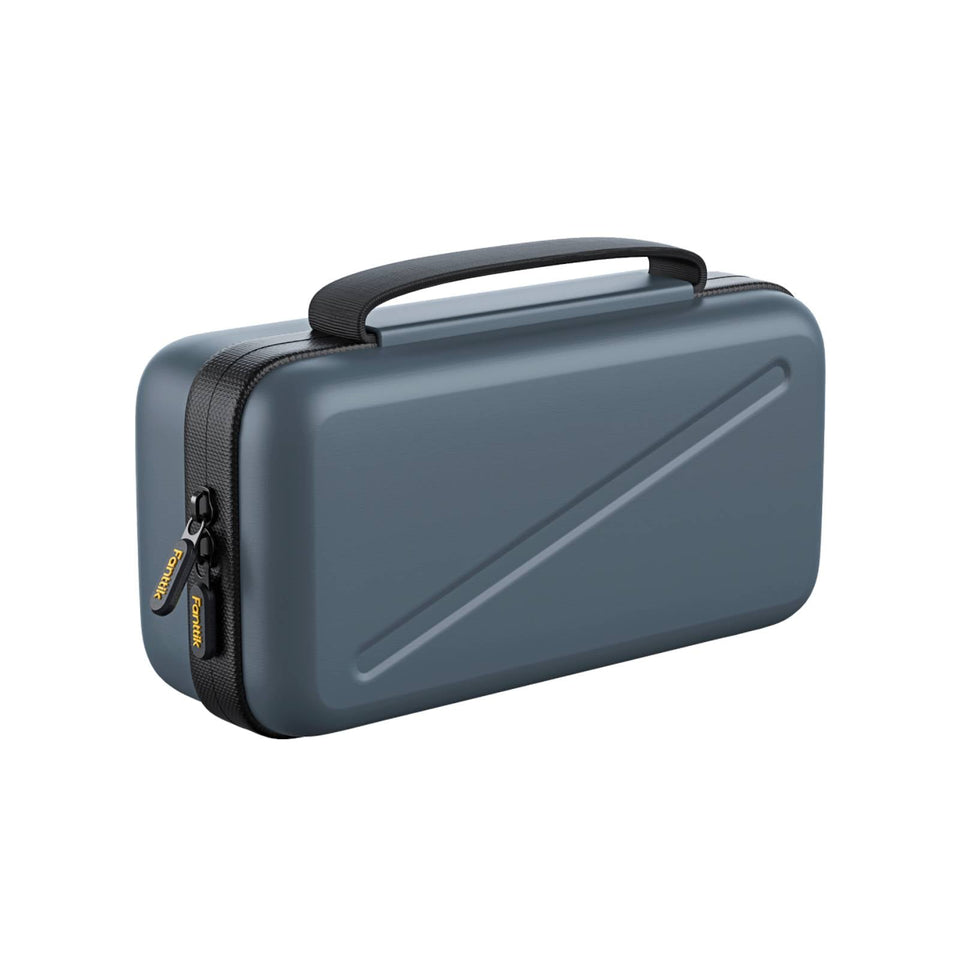
Based on our analysis of field data and return patterns, tools stored in sealed, hard-shell cases with silica gel packs exhibit significantly longer calibration intervals. Silica gel is a low-cost, high-impact solution that actively pulls moisture away from the tool's sensitive internals.
The Economic Impact of Humidity Control
While a full-scale HVAC system for a garage is expensive, localized humidity control is surprisingly affordable. According to data from House and Home Online, running a portable Energy Star dehumidifier in a small workshop typically costs between $100 and $300 per year.
When you weigh this against the cost of replacing a $200 laser level or a $150 precision driver—not to mention the cost of a ruined project—the ROI of humidity control becomes clear.
6. Adhering to Metrology Standards
For those looking to elevate their workshop to professional standards, it is helpful to look at the guidelines set by international bodies. While DIYers aren't required to be ISO-certified, these standards provide a roadmap for reliability.
- ISO/IEC 17025: This is the gold standard for testing and calibration laboratories. It explicitly requires the monitoring and control of environmental conditions, including humidity, to ensure the competence of testing. You can find more detail on these requirements in the ISO/IEC 17025 documentation.
- NIST Handbook 44: In the United States, the National Institute of Standards and Technology (NIST) provides exhaustive requirements for weighing and measuring devices. Their Handbook 44 outlines the tolerances allowed for various tools, emphasizing that environmental factors must be accounted for during "legal for trade" measurements.
By aligning your workshop practices with these standards—even loosely—you are participating in what the industry calls "Engineering Trust." As noted in the white paper The 2026 Modern Essential Gear Industry Report, trust is a function of "credibility math." It is the systematic reduction of uncertainty through better processes and environmental awareness.
7. A Prosumer’s Workshop Checklist
To protect your precision investments, I recommend implementing the following checklist in your workshop:
- Monitor the Environment: Install a digital hygrometer. If the RH exceeds 60%, consider activating a dehumidifier.
- Enforce Acclimation: Never measure immediately after moving a tool between environments. Use the 30-minute rule.
- Use Desiccants: Keep silica gel packs in every precision tool case. Replace or "recharge" them (by heating in an oven) every six months.
- Lubricate Strategically: Use high-quality synthetic lubricants that are specifically rated for low moisture absorption.
- Clean After Use: Wipe down sliding surfaces with a dry, lint-free cloth after every session to remove skin oils and moisture that could catalyze oxidation.
Summary of Environmental Impacts
| Tool Type | Primary Humidity Risk | Symptom | Mitigation |
|---|---|---|---|
| Digital Calipers | Capacitance Shift | 0.001" Readout Drift | 30-Min Acclimation |
| Laser Levels | Internal Condensation | Beam Distortion/Refraction | Sealed Case + Silica |
| Torque Drivers | Sensor Drift / Expansion | Over-Torquing | Climate Control |
| Rotary Tools | Lubricant Thickening | Motor "Lag" / Torque Drop | Regular Maintenance |
Logic Summary: This table summarizes the non-linear responses of different tool categories based on the technical mechanisms discussed (capacitance, refraction, and hygroscopic expansion).
Building a Culture of Precision
Precision is not a static state; it is a discipline. The tools we use today are marvels of engineering, but they are still subject to the physical realities of the world around them. By acknowledging the "invisible hand" of humidity, you move from being a casual user to a master of your craft.
Reliability in the workshop isn't just about the quality of the tool you buy; it's about the quality of the care you provide. When you control for humidity, you aren't just protecting a piece of hardware—you are ensuring the integrity of every measurement, every cut, and every fastener in your project. That is the essence of true craftsmanship.
Disclaimer: This article is for informational purposes only. Environmental impacts can vary significantly based on specific tool models, materials, and local climate conditions. Always consult your tool's manufacturer manual for specific calibration and storage requirements. If you are working on high-stakes projects involving structural safety or professional certifications, consult a qualified metrologist.
References
- ISO/IEC 17025: General requirements for the competence of testing and calibration laboratories
- NIST Handbook 44: Specifications, Tolerances, and Other Technical Requirements for Weighing and Measuring Devices
- The 2026 Modern Essential Gear Industry Report: Engineering Trust in a Cordless World
- Effects of water absorption on the behavior of composite materials
- How Much Does It Cost to Run a Dehumidifier? - House and Home Online
Continue reading
 Creating a Routine Calibration Schedule for DIY Tools
Covers event-based schedules, step-by-step protocols for calipers and torque tools, and minimalist logging for serious hobbyists.
Creating a Routine Calibration Schedule for DIY Tools
Covers event-based schedules, step-by-step protocols for calipers and torque tools, and minimalist logging for serious hobbyists.
 Understanding Tolerance: The DIY Guide to Metrology Basics
Covers the Rule of Ten, material-specific challenges like 3D printing, and a tiered strategy to prioritize precision in...
Understanding Tolerance: The DIY Guide to Metrology Basics
Covers the Rule of Ten, material-specific challenges like 3D printing, and a tiered strategy to prioritize precision in...
Leave a comment
This site is protected by hCaptcha and the hCaptcha Privacy Policy and Terms of Service apply.