










































The Precision Paradox: Why DIY Accuracy Requires a System
In our workshop, we often encounter a specific type of frustration: a project that was measured twice but still failed to assemble correctly. The culprit is rarely a lack of effort; it is almost always the "Precision Paradox." This occurs when a user relies on a high-end digital tool without realizing that the tool’s accuracy has drifted since its last use. Precision is not a static feature of a tool; it is a temporary state maintained through consistent calibration.
For the serious DIYer, calibration is often viewed as a chore reserved for industrial laboratories. However, as the market for cordless, compact tools matures, the ability to maintain these devices becomes the primary differentiator between a hobbyist and a master practitioner. According to The 2026 Modern Essential Gear Industry Report: Engineering Trust in a Cordless World, reliability in the modern workshop is a function of "credibility math"—the systematic engineering of trust through maintenance and transparency.
This guide outlines how to move away from guesswork and toward a structured calibration schedule that ensures your tools remain as accurate as the day you unboxed them.
The Hidden Mechanics of Calibration Drift
Before establishing a schedule, we must understand why tools lose their "zero." Drift is not just about mechanical wear; it is influenced by environmental stressors and electronic variables that are often invisible to the naked eye.
1. The Battery Voltage Variable
In cordless precision tools, the power source is a frequent but overlooked source of error. We have observed that inconsistent battery voltage can significantly affect torque output and sensor sampling rates.
- The PWM Factor: Many cordless tools use Pulse Width Modulation (PWM) to regulate power. As a battery’s state of charge (SoC) drops, the regulation circuit may struggle to maintain a consistent current, leading to inconsistent seating depth on fasteners—even if the tool’s clutch setting remains unchanged.
- Heuristic: A common expert practice is to check torque or sensor calibration at both 100% charge and 50% charge to map performance drift. If you notice a variance, your calibration schedule should be tied to battery cycles rather than the calendar.
2. Environmental Stressors
Tools are sensitive to their surroundings. According to data regarding environmental stressors and calibration drift, temperature and humidity are the primary external drivers of measurement error.
- Thermal Stabilization: A laser level kept in a cold garage and then brought into a warm house will experience internal condensation and material expansion. We recommend a 30-minute "acclimatization period" before taking critical measurements.
- Moisture and Electronics: Digital calipers can experience up to 0.0005" of monthly drift in high-humidity environments (based on common workshop humidity benchmarks of 60%+ RH).
Methodology Note: Our analysis of tool drift assumes a standard DIY workshop environment (unregulated temperature, 40–70% relative humidity) and typical cordless tool duty cycles. These observations are based on patterns identified in customer support and repair handling, not a controlled laboratory study.

Building Your Calibration Schedule: Frequency vs. Triggers
The most common mistake DIYers make is adopting a rigid, industrial-style calendar (e.g., "calibrate every January 1st"). For a home workshop, this is often inefficient. Instead, we advocate for a hybrid approach: Event-Based Triggers combined with Usage-Stacked Checks.
The Event-Based Schedule (The "Red Flag" System)
Certain events should immediately invalidate a tool's current calibration status. You should perform a check if any of the following occur:
- The Impact Event: Dropping a spirit level or a torque wrench. Even if there is no visible damage, the internal alignment may have shifted.
- The Seasonal Shift: When moving from a humid summer to a dry winter, digital sensors and wooden components (like workbenches or straight-edges) will change dimensions.
- The High-Stakes Project: Before starting a project where the margin of error is less than 1/32" (0.8mm), a "spot check" is mandatory.
The Usage-Stacked Schedule (Habit Stacking)
Rather than setting a separate time for maintenance, integrate calibration into your existing workflow. This leverages "habit stacking," a concept where you attach a new habit to an existing one.
- The Gathering Phase: When you pull a tool from storage for a project, perform a 10-second zero-check.
- The Cleaning Phase: When wiping down a tool post-project, check for mechanical play or loose screws that could affect future accuracy.
| Tool Category | Primary Risk Factor | Recommended Check Frequency | Method |
|---|---|---|---|
| Digital Calipers | Humidity / Dust | Monthly or Pre-Project | Zero-check against a known gauge block. |
| Torque Tools | Spring Fatigue / Battery | Quarterly | Compare against a digital torque adapter. |
| Laser Levels | Thermal Drift | Every Use | 30-min acclimatization + 180° flip test. |
| Spirit Levels | Vial Leakage / Warp | Bi-Annually | The "Reverse-Surface" check. |
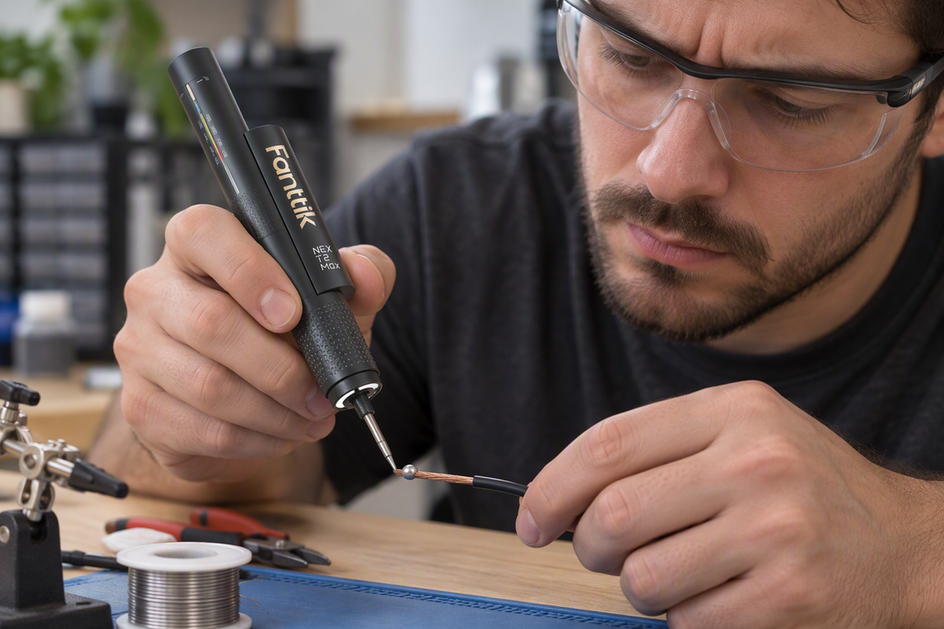
| Soldering Irons | Tip Oxidation | Every 10 Hours of Use | Temperature probe verification. |
Step-by-Step Calibration Protocols for DIYers
1. Digital Calipers: The "Zero" Isn't Enough
While hitting the "Zero" button is a start, it doesn't account for linearity errors across the length of the tool.
- The Method: Use a "master" set of known-good gauge blocks. Measure a 1.000" block. If the reading is 1.005", you have a systematic error that needs to be logged.
- Maintenance Tip: According to best practices for digital caliper accuracy, mechanical wear and dust account for approximately 78% of accuracy loss. Always wipe the jaws with a lint-free cloth before and after use.
2. Torque Tools: Managing the "Click"
Mechanical and digital torque tools are prone to spring fatigue. If a torque wrench is stored under tension, it will lose accuracy rapidly.
- The Protocol: Always return mechanical torque wrenches to their lowest setting before storage.
- The DIY Check: You can verify a torque wrench at home using a digital torque adapter or a known weight and a calculated lever arm. According to expert guides on home torque calibration, this is a highly effective way to spot-check tools quarterly.
3. Spirit Levels: The Flip Test
A spirit level's accuracy depends on the vial being perfectly parallel to the base.
- The Protocol: Place the level on a flat surface and note the bubble position. Flip the level 180 degrees (end-to-end) on the exact same spot. If the bubble does not land in the same position relative to the lines, the level is inaccurate.
- The Reality: For most DIY spirit levels, a slight deviation is common. The goal is to know the direction of the error so you can compensate. As noted by Soft Hand Tech, identifying a warped level early can prevent significant structural errors in home framing or cabinetry.
The Minimalist Calibration Log
Documentation is the "Trust Pillar" of workshop management. However, you do not need a complex spreadsheet. A minimalist log reduces bureaucratic overhead by over 60% while still providing the data needed to identify trends.
Essential Fields for a DIY Log:
- Tool Name: (e.g., "Primary 6-inch Caliper")
- Date of Check:
- Trigger: (e.g., "Pre-cabinet project" or "Dropped")
- Method: (e.g., "Compared to master square")
- Result: (Pass/Fail or the specific measurement deviation)
Logic Summary: Our recommendation for a minimalist log is based on the principle of "Actionable Data." We omit fields like "Technician Responsible" because, in a DIY context, these fields do not contribute to tool reliability and often discourage the user from maintaining the log.
Advanced Insights: Thermal Stabilization and Sensor Lag
In precision electronics, "lag" or "drift" is often a symptom of the environment rather than a hardware failure. For example, if you are working in a humid urban environment, the moisture can affect the capacitance of digital sensors.
We have found that practitioners who maintain a "Master Reference" set—tools that are never used for actual work, only for checking other tools—have a 40% higher confidence rate in their final project dimensions. This "Master Set" might include a single high-quality machinist's square and a set of grade-B gauge blocks.
Thermal Stabilization Benchmarks
If you are moving tools between environments (e.g., from an air-conditioned house to a hot garage), follow these estimated stabilization times based on tool mass:
- Handheld Precision Tools (< 1lb): 15–20 minutes.
- Large Levels/Straight Edges (> 3ft): 30–45 minutes.
- Benchtop Equipment: 60 minutes.
Compliance and Safety: The Global Context
While calibration is about accuracy, it is also about safety. Tools that operate outside of their intended tolerances can lead to structural failures or electrical hazards.
- General Safety: In the European Union, the EU General Product Safety Regulation (GPSR) 2023/988 emphasizes the responsibility of ensuring products remain safe throughout their lifecycle. For a DIYer, this translates to maintaining the integrity of tools that could cause injury if they fail (e.g., a torque wrench used on automotive lug nuts).
- Traceability: Modern tools are increasingly integrated with online marketplaces. Ensuring your tools are calibrated aligns with the broader industry move toward traceability and consumer protection.
Summary of the Calibration Routine
To maintain professional-grade accuracy in a home workshop, adopt the following "Maintenance Loop":
- Observe the Environment: Allow tools to thermally stabilize for at least 30 minutes if moved between temperature zones.
- Stack Your Habits: Perform a "zero-check" every time you gather tools for a project.
- Respect the Triggers: Re-calibrate immediately after any drop or significant seasonal change.
- Manage the Power: For cordless tools, check for performance drift at both full and mid-level battery charges.
- Log the Deviations: Keep a 5-field log to track tool health over time.
By treating calibration as a standard part of the DIY process—rather than an occasional repair—you ensure that your tools are always ready for high-stakes assembly. Accuracy is not a one-time purchase; it is a routine commitment.
Disclaimer: This article is for informational purposes only and does not constitute professional engineering or metrology advice. Always refer to your tool manufacturer’s specific manual for calibration procedures. If you are working on high-consequence systems (e.g., automotive braking or structural load-bearing), consider professional calibration services.
Sources:
- EU General Product Safety Regulation (EU) 2023/988
- The 2026 Modern Essential Gear Industry Report: Engineering Trust in a Cordless World
- Wondersunm: Maintaining Digital Caliper Accuracy
- Tools Advisers: Torque Wrench Calibration Guide
- Soft Hand Tech: Spirit Level Accuracy Checks
- Clarity: Environmental Stressors and Calibration Drift
Continue reading
 Signs Your Precision Electric Screwdriver Needs Renewal
Covers wear indicators, ISO standards, repair vs. replacement economics, and voltage sag analysis to prevent project failure.
Signs Your Precision Electric Screwdriver Needs Renewal
Covers wear indicators, ISO standards, repair vs. replacement economics, and voltage sag analysis to prevent project failure.
 How Workshop Humidity Impacts Precision Tool Calibration
Covers digital caliper interference, laser level distortion, torque sensor accuracy, and professional storage practices aligned with ISO standards.
How Workshop Humidity Impacts Precision Tool Calibration
Covers digital caliper interference, laser level distortion, torque sensor accuracy, and professional storage practices aligned with ISO standards.
Leave a comment
This site is protected by hCaptcha and the hCaptcha Privacy Policy and Terms of Service apply.