











































To lose less air when you take a pump off, release the head in one quick, clean motion. Keep your fingers off the valve tip, and close a Presta valve as soon as the head is off. With a lever-lock head, push the lever down and pull the head straight off fast.
In a typical Presta setup, a brief puff as the head comes free is often pressure escaping from the pump rather than your tire. If air continues escaping once the pump is detached, check the valve next.
How to Remove a Bike Pump With Less Air Loss
The right motion depends on your valve type and how the pump head locks on, whether using a floor model or a portable bike pump. Trek's steps cover the most familiar setup, a lever-lock head. You'll find them in its guide to pumping bike tires:
- Prepare the valve before pumping. A Schrader valve (the wide, car-style type) needs no opening step. For a Presta valve (the narrow type with a small nut on top), unscrew the end to open it.
- Pump to your pressure. Watch the gauge and stop in the range printed on the tire sidewall.
- Release the lever. Press the pump-head lever down.
- Pull the head off quickly. Pull straight off the valve. Don't wiggle it or ease it off slowly.
- Close a Presta valve. Screw the small nut back down.

With Presta valves, the main avoidable loss comes from pressing the valve plunger by accident. The plunger is the tip that lets air out when it's pushed. Keep it clear while you remove the chuck (the pump head) and while you tighten the knurled nut. Even when you do all of this right, a tiny pressure change can still happen while the valve closes.
Threaded heads change the picture. In the experience of Road Bike Rider's contributor, unscrewing a threaded chuck from a Presta valve on a frame pump almost always cost some tire pressure. A lever or push-on diaphragm head was less likely to cause loss. That is one rider's report, not a measured test. Still, if you keep losing air while unscrewing a Presta chuck, it's a reason to try a lever or push-on head. The lever-lock steps above apply only to lever heads, so don't use that quick-pull motion on a screw-on head.
How to Tell a Pump-Head Release From a Valve Leak
- A single puff as a Presta chuck comes off. In the Presta setup Road Bike Rider describes, that puff can be pump pressure escaping. Tire pressure closes the valve almost instantly, as long as the plunger wasn't pressed during removal or while tightening the nut. That explanation covers this Presta case. It doesn't mean every hiss is harmless.
- Air that keeps escaping after the head is off. First check that the Presta nut is closed. Then inspect the valve stem and base for damage. REI notes that a cut, cracked, or severely worn stem or base may leak, and that tube then needs replacing.
- A slow loss you can't pin down. If you take the tube out, inflate it and check a removed tube for escaping air. Hold it near your face to feel or hear a hiss, or put it under water and look for bubbles.

FAQs
Why does my pump gauge show tire pressure before I start pumping?
Once the head is attached, the tube and pump become one closed space. Air already in the tube flows into the pump until the pressure evens out, so the gauge shows your current PSI. That shared air in the pump is also why you hear a puff when you disconnect.
Should I pump a little past my target pressure?
Some riders do. Road Bike Rider's contributor pumps slightly higher, such as 82 PSI to finish at 80, to cover the small loss while the valve closes. He says there's no science behind the exact amount, so think of it as a personal habit, not a rule. Stay within the range printed on your tire.
Do I need to open a Schrader valve before pumping?
No. Trek's instructions say a Schrader valve is ready to pump once the cap is off. Only Presta valves need opening first. You can check a Presta valve by pressing the core briefly. A small burst of air means it's open.
How do I know the pump head is sealed before I pump?
Wiggle the head after locking it. If the valve moves around inside, push the head down farther. Air hissing out while you pump also means the seal isn't tight yet, so reseat the head and try again.
Continue reading
 How to Store a Cordless Pressure Washer After a Cleaning Job
A step-by-step put-away routine for cordless washers: handle trapped water and pressure, look after hose fittings, and keep...
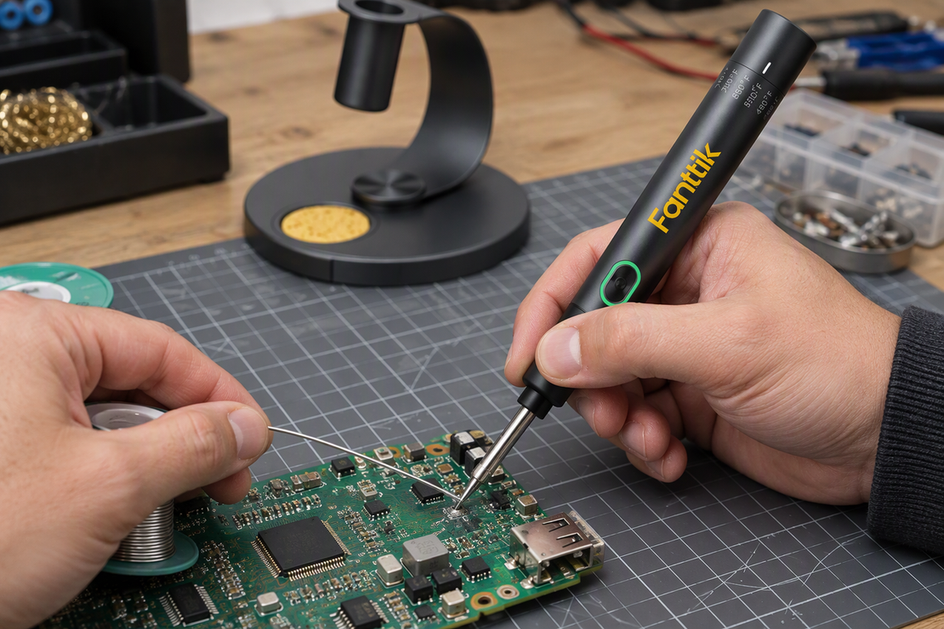 How to Choose Between a Heat Gun and a Soldering Iron for a Documented Task
Pick a soldering iron for tip contact at a joint and a heat gun for directed hot air....

Leave a comment
This site is protected by hCaptcha and the hCaptcha Privacy Policy and Terms of Service apply.