









































Choose a precision electric screwdriver when your work is small electronics, watches, phones, or similar delicate repairs that need low, controllable torque and compact access. Choose a broader compact driver when you're assembling furniture, fixing appliances, or handling general household fastening that needs more torque range and longer bits. If your project involves drilling or heavy, repeated driving, neither kind of electric screwdriver is the right category.
That split comes down to your hardest recurring task, not whichever spec sheet looks biggest. The sections below walk through torque control, bit fit, and workflow so you can match a set to your actual fasteners instead of a headline number.
Which Electric Screwdriver Type Fits Your Work?
Precision sets and broader compact drivers solve different jobs, and the right pick depends on the smallest fastener you handle regularly and the largest one you handle routinely. A quick side-by-side makes the trade-offs clear before you look at torque and bits in more depth.
| Precision electric screwdriver | Broader compact driver | |
|---|---|---|
| Best-fit work | Small electronics, watches, phones, cameras | Furniture, appliances, household repairs |
| Torque-control priority | Very low, fine-adjustable settings | Wider range covering light-duty jobs |
| Access & handling | Compact body for tight spaces | Longer reach, general-purpose grip |
| Bit/accessory pattern | High bit count in small precision sizes | Fewer, longer household-oriented bits |
| Not-fit condition | Larger household fasteners or drilling | Fasteners below its lowest listed setting |
Precision Electric Screwdrivers for Small Fasteners
Precision tools are built for electronics, PC, watch, phone, and camera repair, where the fastener is tiny and the material is easy to strip. Our E2 Ultra precision screwdriver is documented for these exact scenarios, with five torque settings from 0.05 to 0.6 N·m, a 270 RPM motor, and a 50-piece S2 magnetic bit set sized for small precision work. It's the wrong choice once your routine work moves to larger household screws or actual drilling.
Broader Compact Drivers for Household Fastening
Furniture assembly, appliance repairs, and general household tasks call for more torque headroom and bits long enough to reach recessed screws. Our S2 Pro Max cordless screwdriver documents seven torque settings from 0.5 to 6 N·m along with 16 selected long household bits and a 90-degree angle adapter for tight corners. Its lowest listed setting, 0.5 N·m, is still well above the E2 Ultra's lowest setting, so for the tiniest screws in phones, glasses and watches, the precision driver remains the better match.
How Much Torque Control Do You Need?
Start with the lowest useful setting your most delicate recurring fastener needs, then confirm the tool's upper range still covers your largest routine job. Maximum torque tells you the tool's ceiling, not the correct setting for any single screw.

Slip Control Is Not the Same as Exact Torque
A torque-adjustable driver typically uses a slip mechanism: once the preset level is reached, the bit keeps spinning instead of driving the screw further. That limits how much torque you can apply, but the torque actually delivered to a joint still depends on the material, the fastener condition, and how steadily you hold the tool. Treat a documented maximum torque figure as the tool's capacity, not a promise about what any individual screw needs.
Match the Range to the Joint
- Identify the most delicate fastener you work with regularly.
- Check that the tool's lowest documented setting suits that fastener, not just its highest one.
- Confirm the upper range comfortably covers your largest routine fastening task.
- Don't dial up the torque setting to compensate for a bit that's the wrong size or poorly seated; fix the seating first.
Will the Bits Fit Your Fasteners?
A set only works if its bits match your actual screws, so check the recess profile and size before you check anything else. Bit count and magnetic hold matter less than getting the profile right.
Start With the Fastener Profile and Size
Look at the recess shape on the screws you actually own: Phillips, Pozidriv, Torx, and hex are not interchangeable even when a bit looks close. Torx and hex bits also come in distinct numbered or lettered sizes, so confirm the exact size system your fasteners use rather than assuming a nearby size will seat correctly. Getting this step right matters more than the total bit count in a kit, and proper seating also protects torque accuracy, as explained in this bit alignment guide.
Treat Magnetic Hold as a Convenience Feature
Magnetic retention helps position a screw before you start driving, especially in tight spots, but it doesn't fix a mismatched profile or a bit that's not properly seated. Debris in the recess or a worn bit tip can still cause slipping even with strong magnetic hold. For either Fanttik kit, confirm the exact bit sizes and any replacement-bit compatibility on the current product page before assuming it covers a specific fastener you already own.
Does Speed Matter More Than Handling?
Pick the tool that gives you the right access, grip, and battery workflow for the job, not the one with the highest advertised RPM. Speed and torque work together, and neither one alone tells you how a tool will perform once it meets resistance.
RPM Is Only One Speed Metric
A higher no-load RPM means the bit spins faster with nothing to resist it, which can shorten idle time between screws. Once the bit engages a fastener, actual driving speed depends on torque, joint resistance, and how well the bit stays seated, so RPM by itself doesn't predict how fast a job will go under load.
Check the Workflow Details
- Can you reach the fastener without twisting your wrist or the tool's body into an awkward angle?
- Is the grip comfortable for how long you'll be holding the tool during the job?
- Does the battery capacity and Type-C charging fit how often and how long you actually work?
- Do the included bits, adapters, lights, or storage case solve a task you actually have, rather than sitting unused?
When Is an Electric Screwdriver the Wrong Tool?
Reach for a manual precision driver, a drill, or an impact driver when the job genuinely needs a different mechanism, not just more power. An electric screwdriver set is built for light-duty fastening within its documented torque range.
Choose a Manual Precision Screwdriver When Feel Matters Most
A manual driver can be the better call for the most delicate electronics work, especially if the electric tool you're considering doesn't document a low enough setting for that fastener. This isn't a claim that manual tools are always more accurate; it's specific to jobs where slow, direct hand feedback outweighs the convenience of powered driving.
Choose a Drill or Impact Driver for a Different Workload
Pick a drill when the task actually involves drilling holes or needs chuck versatility for swapping bit types. Pick an impact driver for heavier or repeated high-load driving, such as long deck screws or lag bolts. An electric screwdriver set stays the right tool only for light-duty fastening inside the torque range it documents; forcing it into drilling or heavy driving work is a mismatch, not a performance test.
What Should You Verify Before Buying?
Before you buy, run through five quick checks so the set you pick actually matches your fasteners instead of just its spec sheet.
- List the fastener profiles and sizes you actually work with most often.
- Decide whether your work leans toward precision electronics, general household fastening, or a genuine mix of both.
- Confirm the tool's lowest setting suits your most delicate fastener and its upper range covers your largest routine job.
- Check the current product page or manual for exact bit profiles, sizes, and any included accessories.
- Verify current battery capacity, charging type, and warranty details before you complete the purchase.
If the set you're considering passes all five checks for your actual fasteners, it's ready to buy. If it fails on torque range or bit fit, look at the other branch or a different tool category before checking out.
FAQs
Are Phillips and Pozidriv bits interchangeable?
No. Phillips and Pozidriv have different tip geometries, and forcing one into the other's recess can strip the screw or damage the bit. Check the recess shape on your actual fasteners and confirm you have the matching bit before buying replacements.
Can one electric screwdriver set handle both electronics and furniture assembly?
Only if its lowest torque setting is low enough for your delicate electronics work, its upper range covers your household fastening, and its included bits cover both fastener groups. If any one of those doesn't hold up, using two separate tools, a precision set and a broader compact driver, is the more reliable setup.
Does a higher RPM mean a screwdriver drives screws faster under load?
No. Listed RPM measures free-spinning speed without resistance, which only helps move screws faster during initial threading. Once a fastener meets resistance, driving progress depends on available torque, motor load behavior, and continuous bit engagement.
Continue reading
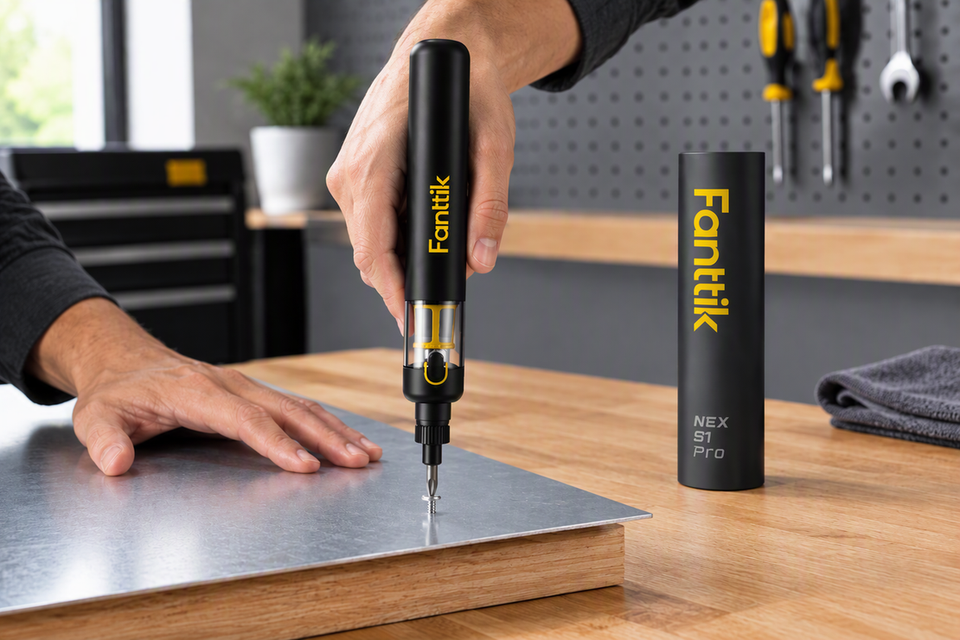 How to Drive Screws Into Thin Sheet Metal Without Stripping Threads
A step-by-step method for driving self-tapping screws into thin sheet metal, sizing pilot holes correctly, and stopping before...
How to Hand-Solder SMD Components on a PCB
A practical walkthrough for placing and soldering small SMD parts like 0805 resistors and SOIC chips, with temperature...
How to Drive Screws Into Thin Sheet Metal Without Stripping Threads
A step-by-step method for driving self-tapping screws into thin sheet metal, sizing pilot holes correctly, and stopping before...
How to Hand-Solder SMD Components on a PCB
A practical walkthrough for placing and soldering small SMD parts like 0805 resistors and SOIC chips, with temperature...

Leave a comment
This site is protected by hCaptcha and the hCaptcha Privacy Policy and Terms of Service apply.