








































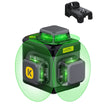

Use a laser distance meter when the span is long and clear, you're measuring alone, and the beam can reach the opposite wall. A tape measure still works for a room dimension when you have a stable place to hook the tape and a clear path along the wall or floor. Neither tool wins everywhere, so pick the one that fits the span you actually need to measure.

The rest of this guide covers what changes that choice. It looks at obstacles in the path, the difference between range and accuracy, and a quick way to check a wall reading before you order flooring, furniture, or trim.
Which Tool Fits Your Room-Measuring Task?
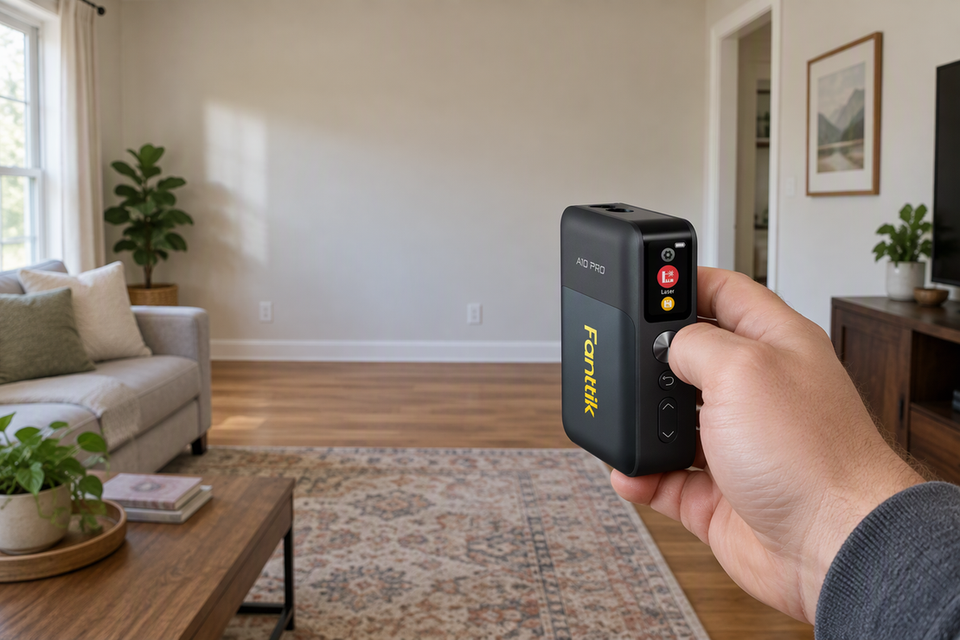
A laser distance measure works for a clear wall-to-wall dimension. You hold it against one surface and aim it at the opposite wall. That makes it a practical option for the basic length and width of an open room. It doesn't mean a laser beats a tape on every job, and the rest of this section explains where the difference shows up.
The clearest difference is who has to hold what. One practical guide explains that on an unanchored long span, you'll need someone else to hold the far end of the tape. The same guide says a laser distance meter can take long measurements without a second person, as long as the beam can reach the endpoint.

Here's how that plays out. Say you're measuring a 14-foot living room by yourself and the far wall has no edge to catch the tape's hook. The tape will sag or slip unless a helper holds it. A dedicated laser measuring tool, set against the near wall, can take that reading solo if nothing blocks the beam. Now picture a small bedroom with a door frame or baseboard to hook onto. Here a tape does the same job without the laser's line-of-sight requirement.
So the choice comes down to the situation. Solo, long, and clear favors a laser. A span with a good anchor point keeps a tape fully workable. Beyond those two cases, the evidence doesn't rank the tools, so start with the span in front of you.
How Do Obstacles and Target Conditions Change the Choice?
Obstacles matter differently for each tool, because each one needs a different kind of clear path. A tape needs a physical path from end to end. A laser needs a clear line of sight to its endpoint.
On the tape side, the guide notes that obstacles can block a tape's physical path, and it names furniture and posts as examples. In a furnished room, a sofa pushed against the wall, a dresser, or a support post can stop a tape from running straight between corners. When that happens, the tape either bends around the object or gets measured in pieces, and every extra piece is another chance to lose track.
On the laser side, the rule is the reverse and just as firm. The laser only helps if its beam reaches the spot you want to measure to. A dresser in the beam's path doesn't give you a wall-to-wall reading. You get the distance to the dresser. So a cluttered room doesn't automatically make the laser the better pick. It only does when you can find a clear line from one wall to the other, such as above the furniture, as long as you keep the tool pointed straight across.
Here's a quick way to match the room to the tool:
- Clear floor or wall path with an anchor point: a tape measure works.
- Long span, no anchor, working alone, clear line of sight: a laser distance meter fits.
- Path blocked for the tape but open for the beam: a laser can reach the far wall.
- Path blocked for both: measure in segments with either tool, then add them up (see the check below).
These branches apply to laser distance measures specifically. If your distance meter uses another method, go by its own documentation.
Does Range Tell You How Accurate a Measurement Is?
No. Range and accuracy answer two separate questions, and a large number for one says nothing about the other.
Range is the longest distance a tool can measure. For room measuring tools, range answers one yes-or-no question: can this tool reach across the longest room you plan to measure? Most indoor rooms are well short of the maximum range listed for many laser meters. So once a tool covers your longest span, extra range doesn't change much for room work.
Accuracy describes how close a reading comes to the true distance. It's usually listed as a plus-or-minus value, like a tolerance. This is the number that matters when a small error costs money, such as cutting baseboard or fitting a cabinet into an alcove. Compare it to how much error your project can absorb, not to the range figure.
When you read a spec sheet, find the two numbers on separate lines. For example, this laser distance meter spec sheet lists a maximum range and a plus-or-minus accuracy figure as two different specs. Check the range against your longest wall. Then check the accuracy against the tightest fit in your project.
How Can You Check a Room Measurement Before Relying on It?
Add up the pieces and compare the total to the overall measurement. The two numbers should match. This works with a tape or a laser, and it catches a misread number or a skipped segment before you buy materials.
The idea comes from a University of Oregon architectural field-measurement guide. For a building facade, it says to add the string of segment measurements and compare the sum to the overall width, and that the two should match. The guide was written for facades, not rooms. The same arithmetic still carries over to an interior wall that has a window or doorway in it.
Illustrative example (made-up numbers): On a wall with one window, you measure:
- Corner to the near window edge: 38 in
- Window width: 48 in
- Far window edge to the other corner: 61 in
Those add up to 38 + 48 + 61 = 147 in, or 12 ft 3 in. Next, measure the whole wall from corner to corner. If that reading is also 147 in, your segments agree. If it's off by more than your project can tolerate, remeasure the segment that was hardest to reach or aim at first, since that's where a slipped tape or blocked beam would hide.
This check shows whether your readings add up. It won't show whether the tool itself is off. A tool with a consistent error can still produce segments that sum neatly.
FAQs
Are all distance meters laser measures?
Not necessarily. The long-span and line-of-sight points in this guide come from laser distance measures, which need a clear beam to the endpoint. If your meter works another way, use its own instructions for what it needs to get a reading.
How do I convert room measurements from inches to feet?
Divide the total inches by 12. The whole number is feet, and the remainder is inches. For example, 147 in divided by 12 is 12 with 3 left over, so 12 ft 3 in. Write down both forms if a store or installer asks for one or the other.
What should I write down while measuring a room?
Label each wall, then record each segment and the overall corner-to-corner reading beside it. Keeping both lets you run the segment-sum check later without going back into the room.
Can I measure a furnished room without moving everything?
Often, yes. If a laser has a clear line above the furniture to the opposite wall, it can take the reading. If neither tool has a clear path, measure in segments around the obstacle and add them. Then confirm the total wherever you can get one clean corner-to-corner reading.
Continue reading
 How to Choose a Soldering Iron for Hobby Electronics
A task-first guide for hobby makers: why pencil-style irons suit general PCB work, how set point differs from...
How to Choose a Soldering Iron for Hobby Electronics
A task-first guide for hobby makers: why pencil-style irons suit general PCB work, how set point differs from...
 Preventing Stripped Screws in Laptops and Consoles: Using Precision Electric Drivers Safely
Step-by-step guide to driving laptop and console screws with a powered precision driver, using official service guides, bit...
Preventing Stripped Screws in Laptops and Consoles: Using Precision Electric Drivers Safely
Step-by-step guide to driving laptop and console screws with a powered precision driver, using official service guides, bit...
Leave a comment
This site is protected by hCaptcha and the hCaptcha Privacy Policy and Terms of Service apply.