









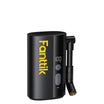
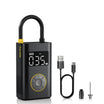
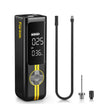


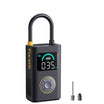
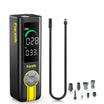
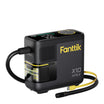









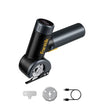

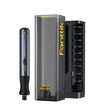
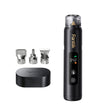
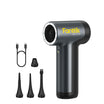

If you mostly add air at home before rides, a floor pump is the simpler fit. If you want air you can take with you, a portable electric pump is the format built to travel. In short, the floor pump stays in your garage, shop, or car, and the electric pump is worth it only when it is small enough to go where you ride.

Neither format wins outright in this bike pump comparison. Your valve type, your tire's recommended pressure, and where you will actually keep the pump can all change the answer.
Which Pump Fits Your Routine?
Choose a floor pump for a home-based routine and a portable electric pump for a carry-based one. The deciding question is where you are standing when the tire needs air.
For home use, the floor pump has a clear role. Bicycling's pump guide describes floor pumps as ideal for use at home, in the shop, or kept in your car. That matches the pre-ride habit of checking pressure and topping off before you roll out of the driveway.
Small top-offs also favor the floor pump. In a lab-tested, affiliate-linked review, OutdoorGearLab found that adding just a few pounds of pressure was much easier with a floor pump than with the electric model it tested. Attaching the electric pump to the valve took longer, and the rider had to wait for its compressor to build pressure.
For rides away from home, the electric pump changes the trade. That same review noted the tested electric pump inflates hands-free, so you are not doing the pumping by hand at the roadside. It also flagged battery life as its main concern with that type of pump. So a carry routine only works if the pump is charged when you leave.
Portability is not automatic, either. Some electric inflators are small and light enough for a jersey pocket or saddle bag. Others are bigger and heavier and belong in a toolbox, gear bag, or trunk. If carrying is your whole reason for going electric, the size of the specific model decides whether it rides on your bike or stays in the car.

Does One Pump Cover Home and Ride Needs?
One pump can cover both jobs when it fits your bike and is with you wherever you need air. A second pump is an option for convenience, not a requirement.
Think about where the gaps in your routine actually are. Here are two illustrative examples:
- You drive to rides. You inflate at home and sometimes need a top-off at the trailhead or group-ride start. A floor pump that rides in your trunk can handle both spots, as long as you never need air mid-ride.
- You commute or ride far from the car. A flat or soft tire can happen miles from home. Only a pump on the bike or in your bag helps there. A portable electric pump that is small enough to carry can also top off at home, but you give up the quicker feel of a floor pump for small adjustments, and you have to keep it charged.
A two-pump setup makes sense when moving one device back and forth becomes the problem. Some riders keep the floor pump at home for quick pre-ride top-offs and leave the portable pump packed in the ride bag. That way neither one gets left in the wrong place. If your routine never takes you beyond reach of your car or garage, one floor pump may be all you need.
Which Bike and Pump Details Can Change the Choice?
Even the right format fails if the pump does not match your tire. Run these checks before you commit to either type:
- Valve type. Bikes use Presta or Schrader valves. REI's pump buying advice notes that bike pumps generally can handle either type, but lower-priced pumps may need an adapter for one of them. Look at the pump head or included adapters and match them to your valve.
- Recommended pressure vs. pump capability. Your correct tire pressure depends on tire size, sidewall thickness, rider weight, and riding conditions. Find the range for your tire, then confirm the pump's documented pressure capability covers it. Treat the pump's maximum rating as a ceiling, not a target.
- Air volume. A larger tire holds more air, so it takes more pumping to reach the same pressure. A high maximum PSI does not tell you how quickly a pump fills a high-volume tire, so judge those two numbers separately.
- Carry size. Compare the pump's real size and weight with where it will live: jersey pocket, saddle bag, frame bag, or car trunk. If it only fits in the trunk, it does the same job as a floor pump in the car.
- Readiness. An electric pump needs a charged battery when you need it, so add charging to your pre-ride routine. If you use a target-pressure preset, the steps for using a portable tire inflator show the attach, set, and recheck pattern. For longer fills, it helps to know why compact inflators need cooling and to follow the model's rest guidance.
Apply the same checks to the listed specs of any model you shortlist, including the pumps in our bike pump collection. If a pump misses your valve or pressure needs, rule it out, however convenient its size.
FAQs
Can a portable electric pump replace a floor pump at home?
Yes, if it connects to your valve, reaches your tire's recommended pressure, and is charged when you need it. The trade-off is speed on small jobs. In one tested comparison, a floor pump was much easier for adding a few pounds of pressure because the electric pump took longer to attach and build pressure.
What does a pump's maximum PSI rating actually tell you?
It tells you the highest pressure the pump is rated to reach. It does not show how fast the pump inflates, how much air it moves, or whether it suits your tire. Use it only to confirm the pump can reach your tire's recommended pressure, and never as the pressure to inflate to.
Will a portable electric pump fit in a jersey pocket?
Some will and some won't. Some electric inflators are light enough for a jersey pocket or saddle bag, while bulkier ones are better kept in a gear bag or trunk. Check the model's listed dimensions and weight against the pocket or bag you actually ride with.
Continue reading
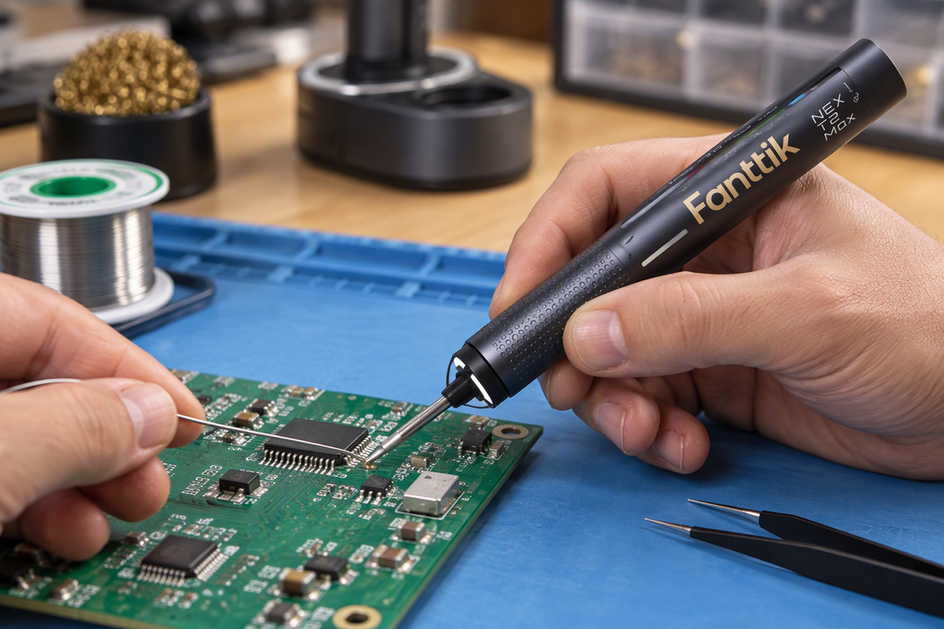 How to Prevent Solder Bridges Between Closely Spaced PCB Pins
A step-by-step hand-soldering approach for closely spaced pins, based on a 0.5 mm-pitch TQFP example, plus how to...
How to Prevent Solder Bridges Between Closely Spaced PCB Pins
A step-by-step hand-soldering approach for closely spaced pins, based on a 0.5 mm-pitch TQFP example, plus how to...
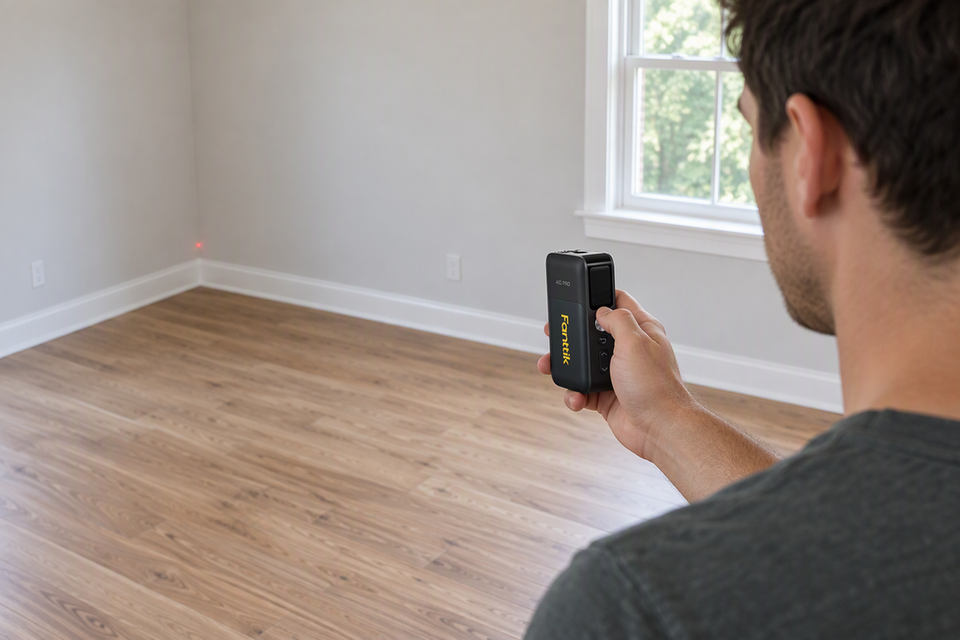 How to Check Whether a Room Is Square With a Laser Distance Meter
A step-by-step method for measuring two room diagonals from the same corner points, what matching readings mean, and...
How to Check Whether a Room Is Square With a Laser Distance Meter
A step-by-step method for measuring two room diagonals from the same corner points, what matching readings mean, and...
Leave a comment
This site is protected by hCaptcha and the hCaptcha Privacy Policy and Terms of Service apply.