












































A laser distance meter and a tape measure often disagree because they aren't measuring the exact same span the same way. Different start or end points, a different reference point on the laser, uneven aim, or a change in target surface can all produce two honest but non-matching numbers. A mismatch alone doesn't prove either tool is faulty.
Before you blame one tool, compare a single marked span with both tools. If the fit really matters, confirm it with the tape before you cut or commit material.
Why Laser and Tape Readings Can Differ
The simplest explanation is that the two readings cover different distances. A tape runs from its hook to the blade mark, while a laser measures from its reference point to where the dot hits. If the endpoints or target planes do not match perfectly, the tools describe two different spans.

The laser's starting point matters just as much. Many meters can measure from different points on the housing, such as the front or back edge. If the meter measures from the back edge and your tape starts at the front, the gap between the readings is roughly the length of the device, not an error.
Target conditions also play a role for the laser. The ISO standard for handheld laser distance meters notes that target conditions can affect performance: higher target reflectivity improves the signal-to-noise ratio at the receiver, and bright background light can degrade it. In plain terms, a cleaner returning signal gives the meter an easier job. These are possible contributors to a mismatch, so check whether both readings used the same surface under similar light rather than treating any one factor as the cause.
How to Compare a Laser Measure and Tape
Use one marked span and change only the tool. This turns two loose numbers into a fair comparison.
- Mark both endpoints. Put a pencil mark or tape tab at the start and the end, on surfaces both tools can reach.
- Match the reference point. Check your meter's display or manual to see which edge it is measuring from right now. Set the tape's zero at that exact plane. Don't assume every meter uses the front or the back edge.
- Aim at the same spot. Keep the laser dot on your end mark, and hold the meter square to the target. The standard's laboratory procedure uses the standard's alignment checks: the dot must hit the target's center mark, and the target must sit perpendicular to the beam. That is a lab setup, not a home tolerance, but the same idea applies. If the dot drifts or the angle changes, you are measuring a different line.
- Keep the target and light the same. Repeat the laser reading on the same surface under the same lighting. If the second reading moves, look at aim and target before the tool.
- Confirm a critical fit with the tape. For a cabinet opening, a trim piece, or anything you will cut, run the tape across the actual endpoints of the fit before committing material. This is a direct physical check of that span. It doesn't mean a tape is always more accurate.

If the readings now agree, the earlier gap came from setup. If they still differ after matching every step, repeat once more and note the difference before deciding a tool needs attention. For room-scale jobs, our guide to measuring a room with tools covers when each tool is easier to use on long, clear spans and blocked tape paths.
Range and Accuracy Are Different Metrics
Range tells you how far a meter is specified to measure. Accuracy tells you how close a reading is expected to be under stated conditions. The ISO standard treats range and accuracy are distinct as separate kinds of performance information.
That difference changes how you read a spec sheet. A long maximum range says nothing by itself about how close a 10-foot reading should be. Being well inside the range also doesn't guarantee a particular reading is right if the aim or reference point is off. Neither number explains why your laser and tape disagree. For that, go back to the setup checks above. When you care about laser measure accuracy for a fit, look at the accuracy spec and its conditions, not the range figure.
FAQs
Can the target material affect a laser reading?
Yes, it can. The ISO standard explains that target reflectivity and materials matter: more reflective targets give a better signal-to-noise ratio. It also flags that the laser can penetrate into some materials, with white marble as an example. If you're measuring to stone or an unusual surface, try a flat, opaque surface held at the same spot and compare.
Can sunlight affect an outdoor laser measurement?
It can. Indoors, background light is usually low enough to ignore. Outdoors, the standard notes that reflected sunlight may affect performance by lowering the signal-to-noise ratio. When comparing outdoor readings, take both under similar light, such as shade, before deciding which number to trust.
Can weather affect a laser measurement?
Air temperature, air pressure, and humidity can influence both range and laser measure accuracy. The standard notes that weather can influence long-distance measurements most, because meters calculate distance using preset conditions. For short indoor spans, check setup first. Weather is more worth noting on long outdoor measurements.
Continue reading
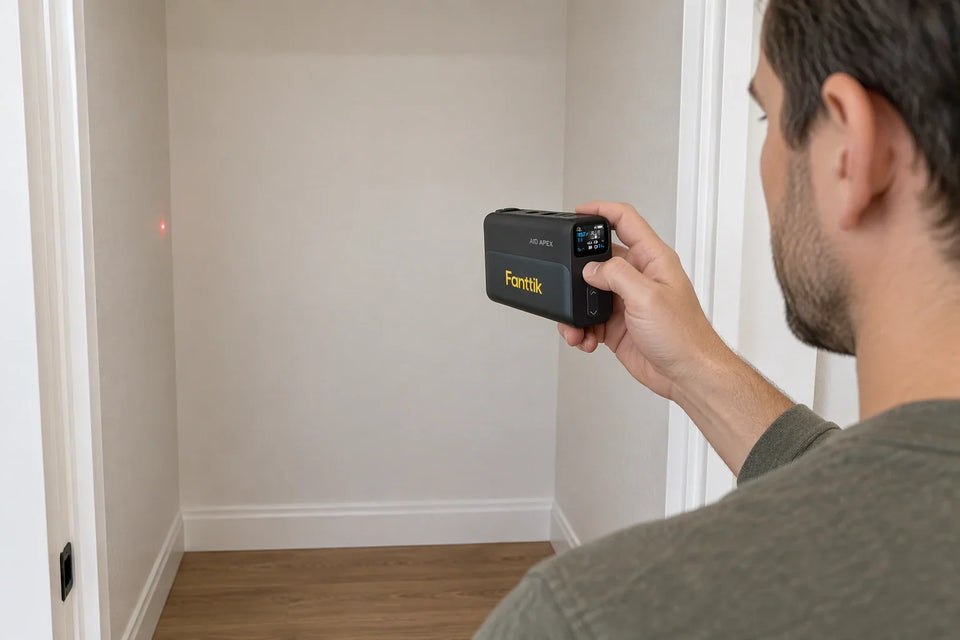 Measuring a Closet for Shelves: Capture the Usable Opening and Obstructions
A step-by-step way to sketch your closet, record clear width, depth, and height, separate the door opening from...
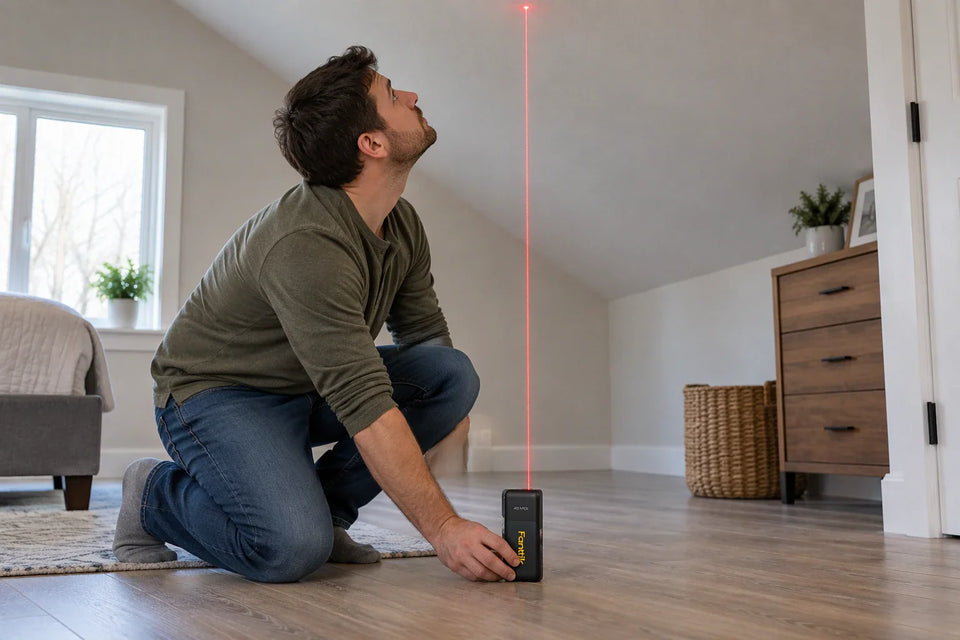 Measuring a Sloped Ceiling Height With a Laser Distance Meter
Pick labeled floor stations, aim the laser straight up from one consistent reference point, and log every ceiling...
Leave a comment
This site is protected by hCaptcha and the hCaptcha Privacy Policy and Terms of Service apply.